Mother’s Day usually arrives wrapped in flowers, cards, hugs, and sentimental speeches.
But The Carol Burnett Show had a very different idea of what motherhood really looked like.
Instead of giving mothers a peaceful tribute, this compilation throws them into total emotional chaos.
It turns family love into panic.
It turns parenting into survival.
It turns one ordinary household complaint into a full-blown domestic disaster.
And somehow, through every scream, insult, breakdown, and absurd twist, it still feels strangely honest.
That is what made Carol Burnett’s comedy so powerful.
It was ridiculous on the surface, but underneath the jokes, there was always something painfully recognizable.
The compilation opens with a mother who receives what should have been a sweet message from her son.
Instead, the letter becomes the beginning of a comedy nightmare.
Her son Bobby writes that the family toilet tissue is not soft enough, so he has gone to the library forever.
It is an absurd line, but the joke lands because the mother reacts with complete seriousness.
Then her daughter Lulu joins the rebellion.
She has run off with a motorcycle gang because they apparently have softer toilet tissue.
The mother suddenly realizes that her entire family had been warning her, but she refused to change brands.
What begins as a tiny household detail becomes a fake tragedy of family abandonment.
Then the situation gets even worse.
A special delivery arrives from her husband.
He explains that he could no longer mentally cope with the toilet tissue crisis.
He has quit his job and run away with a lady chiropractor.
The two of them are now living in Arizona, working the earth and praying for a good harvest.
It is pure nonsense, but it is written like a devastating breakup letter.
That contrast is what makes the sketch so funny.
The most ordinary domestic product becomes the reason a marriage collapses, children disappear, and neighbors demand eviction.
The mother is left standing there as if her life has been destroyed by one bad shopping decision.
Then comes the adoption sketch, where one hopeful couple is trying to choose a child.
At first, the scene looks simple.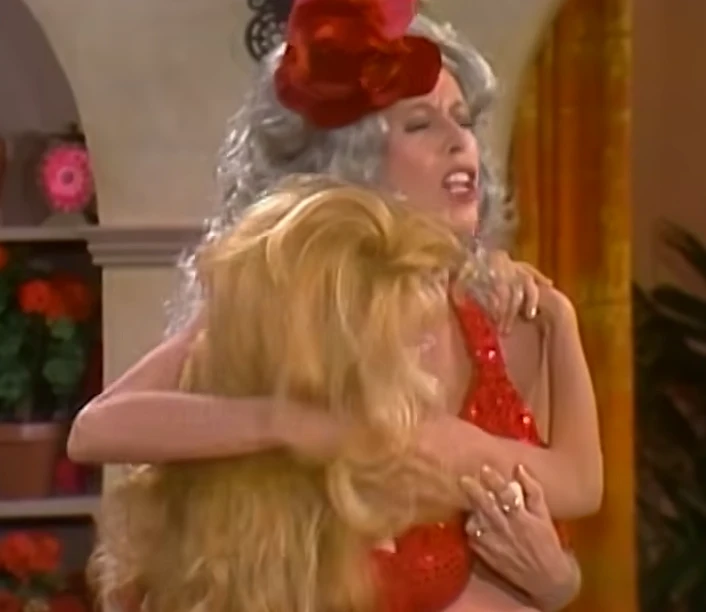
A couple wants a son.
They want someone young, athletic, and suitable for their family.
But one older boy refuses to let the decision happen quietly.
He tries to play it cool, but then he begins describing his painful childhood.
He says he never had a mommy to cry out to when he was hurt.
He never had a daddy to play catch with.
So he had to throw the ball, go get it, throw it again, and go get it again.
The joke stretches longer and longer until it becomes impossible not to laugh.
The boy is clearly manipulating the couple, but there is also a tiny emotional truth inside the performance.
Every parent knows that children can be dramatic.
Every child knows exactly where the emotional weak spot is.
That scene turns adoption into a wildly uncomfortable comedy negotiation.
Then the compilation moves into even stranger family territory.
One mother explains that she has twin sons.
One is a werewolf.
The other is the lead singer in a rock group.
When the moon is full, she says, you cannot tell them apart.
It is a perfect Carol Burnett-style punchline because it takes supernatural horror and teenage rebellion and makes them the same parenting problem.
The message is simple and hilarious.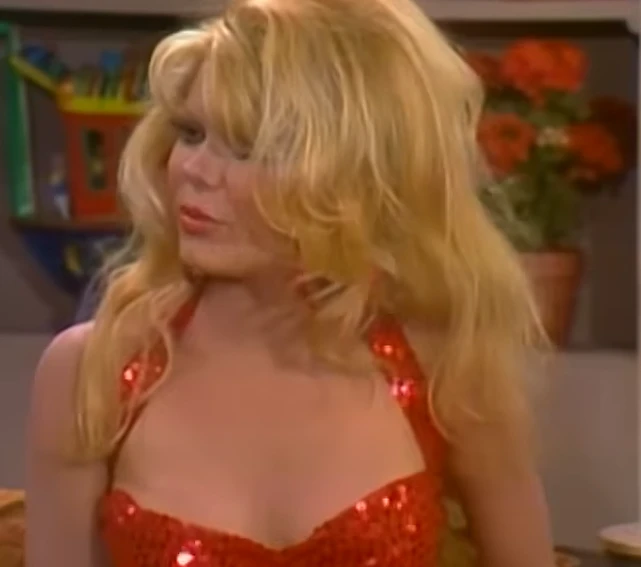
Raising children is so exhausting that even a werewolf might not be the worst possibility.
Another scene brings in a strict mother with soap in her hand and suspicion in her voice.
Her daughter comes home, and the interrogation begins immediately.
Where has she been.
What has she been doing.
And who has she been doing it with.
The mother threatens to wash her daughter’s mouth out with soap if she does not tell the truth.
But when she learns her daughter has only appeared on a show, she instantly changes tone.
Suddenly, her daughter is pure, innocent, and untouched by sin.
Then she notices the man in the room.
The mother’s suspicion returns at full speed.
The scene becomes a rapid-fire attack on manners, morality, and male behavior.
It is old-fashioned, exaggerated, and wildly theatrical.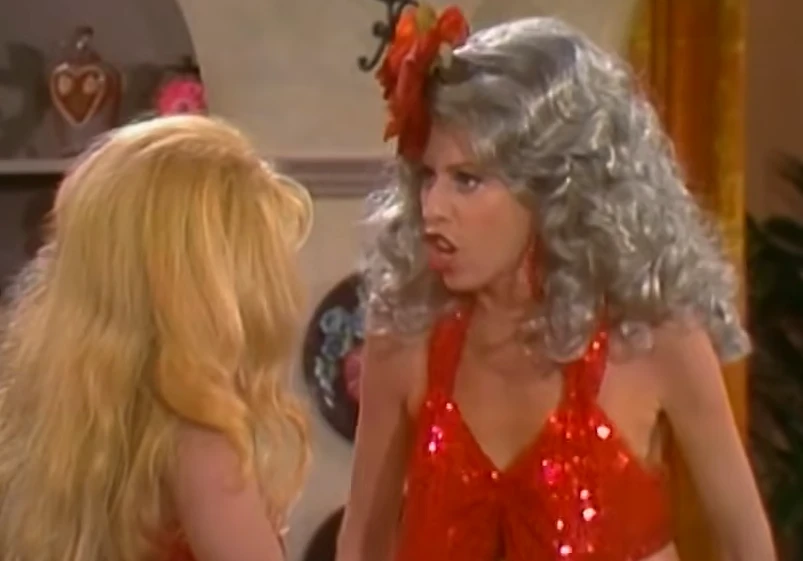
But the core joke still works because protective mothers have always had a special talent for turning a calm room into a courtroom.
Then comes one of the strangest and most memorable scenes in the compilation.
A woman named Mommy must return Simba the lion to his natural environment.
She knows it is not fair to keep him domesticated.
She loves him, but she believes he belongs in the jungle.
What follows is both absurd and strangely heartbreaking.
She speaks to Simba as if he is a confused child leaving home.
She tells him to think back to when he was a little lion cub.
She reminds him that before Mommy and Daddy found him, he lived in the wild.
She insists that he would be happier among his own kind.
But Simba does not behave like a majestic creature of the jungle.
He behaves like a pampered child who does not want to leave home.
Then she tries to prepare him for jungle life with raw meat.
Simba reacts badly.
The moment turns the entire idea of motherhood upside down.
This mother is not sending a child to college.
She is trying to convince a lion to accept raw meat before rejoining nature.
And somehow, the emotional rhythm is exactly the same.
A mother knows she has to let go.
The child refuses to be ready.
The house becomes a battlefield between love and reality.
Finally, the compilation lands on one of the most emotionally explosive kinds of comedy.
A mother and daughter trapped in a lifetime of resentment.
Eunice wants her pain to be understood.
Mrs. Harper wants respect, order, and wrestling reruns instead of chaos.
Their argument is funny because it is loud, dramatic, and full of theatrical insults.
But it also stings.
Eunice feels ignored.
Her mother feels disrespected.
Both women are locked in a family pattern they cannot escape.
When someone tries to explain that their emotional stranglehold is destroying them both, Mrs. Harper fires back with her own fury.
She has taken ingratitude, disrespect, abuse, and back talk for an entire lifetime.
And she refuses to take it from anyone else.
The scene is comedy, but it is not empty comedy.
It exposes the sharp edges of family life.
Motherhood here is not shown as perfect.
It is exhausting, controlling, loving, dramatic, selfish, sacrificial, and completely chaotic.
That is why this Mother’s Day compilation works so well.
It does not pretend moms are always calm angels holding flowers.
It shows them as people pushed to the edge by children, husbands, neighbors, reporters, lions, and lifelong resentment.
The laughs come from exaggeration.
But the reason they last is recognition.
Every sketch says the same thing in a different way.
Mothers do not get breaks.
They get letters.
They get guilt trips.
They get wild children.
They get impossible decisions.
They get blamed for toilet tissue.
They get asked to love, forgive, protect, discipline, release, and survive.
And on The Carol Burnett Show, they somehow do it all while making the entire room laugh.
That may be the real joke hiding under the chaos.
Mother’s Day is not just about thanking moms for being sweet.
It is about admitting they have survived scenes nobody else would believe.
Để lại một bình luận