14 Fun Facts About ‘National Lampoon’s Vacation’
When it comes to legendary American road trip comedies, few films rival the sheer charm and hilarity of National Lampoon’s Vacation. Chevy Chase delivers a career-defining performance as Clark Griswold, an irrepressibly optimistic family man on an unforgettable cross-country trek.
Driven by the desire to give his wife and children the ultimate summer adventure, Clark marches forward despite countless obstacles, mechanical disasters, and absurd mishaps.
The 1983 comedy proved to be an instant sensation, kicking off a beloved franchise with multiple sequels and a 2015 follow-up centering on his grown son, Rusty. Here are fourteen fascinating behind-the-scenes facts about the Griswolds’ original chaotic journey.
1. THE MOVIE PRETTY MUCH KILLED THE STATION WAGON.
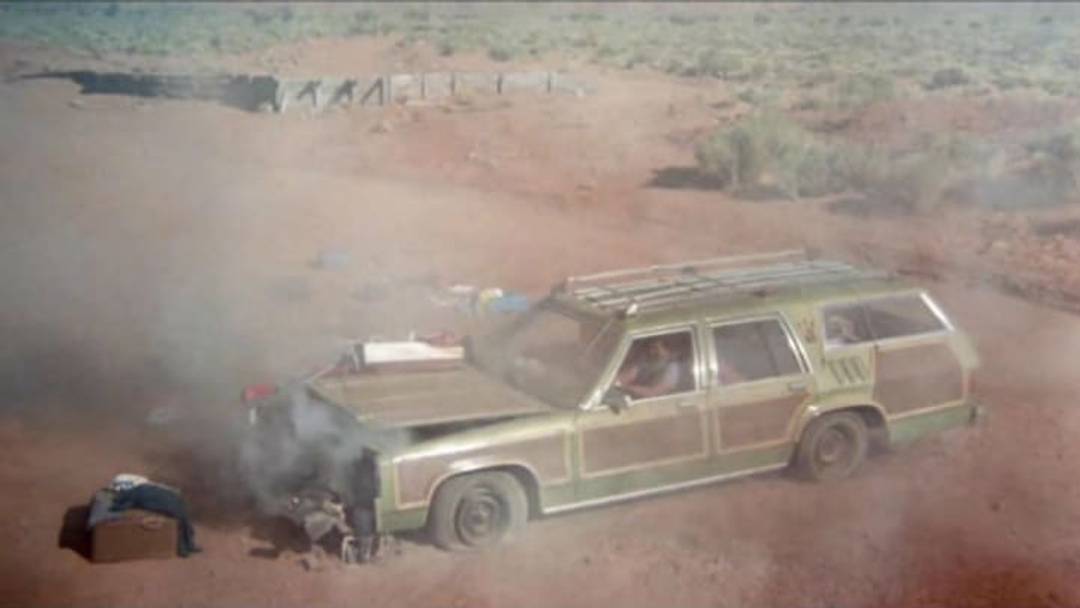
To transport his family across the country from suburban Chicago to California’s fictional Walley World, Clark Griswold needed a dependable family cruiser. Instead, he ended up with the iconic Wagon Queen Family Truckster.
Customized specifically for the production from a Ford LTD Country Squire, the vehicle was intentionally designed to look as hideous as possible, complete with eight headlights and faux-wood paneling.
The satirical vehicle was so overwhelmingly tacky that it actually dealt a blow to real-world station wagon sales across America. The ungainly estate cars were rapidly phased out as American buyers shifted toward modern minivans and family SUVs.
2. IT WAS BASED ON A RAND MCNALLY ROAD ATLAS.
Long before becoming a powerhouse Hollywood filmmaker, John Hughes worked as a copywriter at an advertising agency in Chicago while pitching stories to National Lampoon.
During a severe winter blizzard in 1979, Hughes found himself trapped indoors and penned a comedic short story titled “Vacation ’58,” which chronicled a chaotic family drive to Disneyland.
To map out the Griswolds’ cross-country route and humorous stops, Hughes pulled an old Rand McNally road atlas straight from his car trunk. Warner Bros. quickly purchased the movie rights, transforming the destination into Walley World to avoid trademark issues.
3. CHEVY CHASE REALLY NEEDED A HIT.
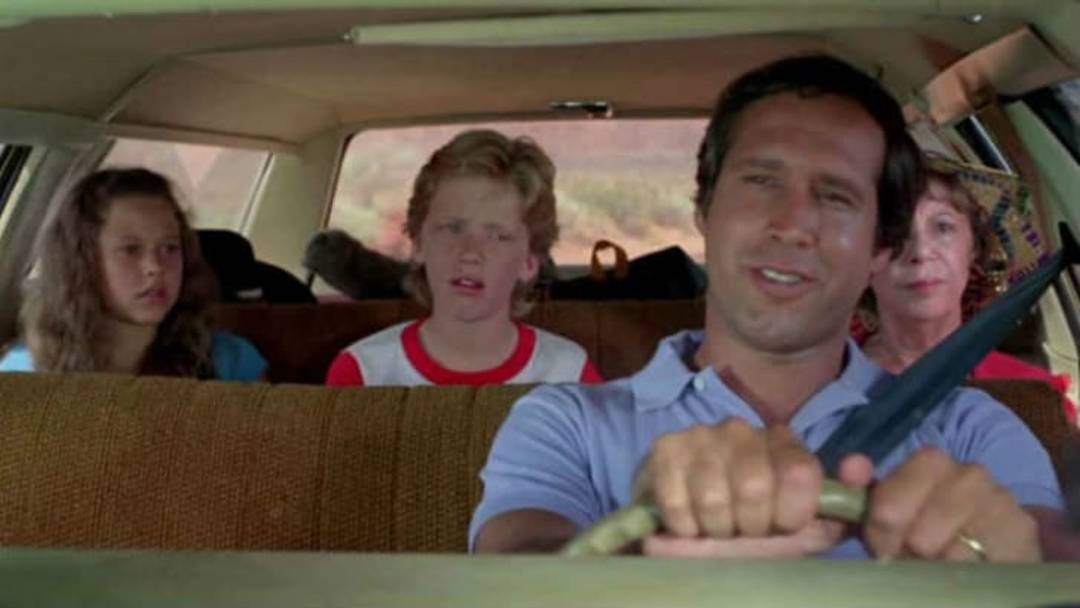
Although Chevy Chase had become a household name thanks to his breakout first season on Saturday Night Live, his transition to Hollywood leading man was not an effortless victory lap.
Between his departure from television in 1976 and the early 1980s, only a pair of his cinematic outings—Foul Play and Caddyshack—had achieved substantial box office success.
Meanwhile, the National Lampoon theatrical brand was also recovering from a string of box office disappointments following the monumental success of Animal House. Both the studio and Chase were under immense pressure to deliver a bona fide summer hit.
4. JOHN HUGHES’S SCRIPT HAD TO BE REWRITTEN.
The original short story “Vacation ’58” was narrated from the young perspective of Rusty Griswold, which helped anchor the narrative’s wilder comedic beats in childlike wonder.
Once Chevy Chase signed on to lead the project, director Harold Ramis adjusted the storytelling focus to make Clark Griswold the central driving force of the comedy.
Ramis and Chase restructured the screenplay during pre-production to tailor the humor specifically to Chase’s physical comedy style. This experience motivated Hughes to eventually step into the director’s chair himself for classic films like Sixteen Candles.
5. THE PRODUCTION SAVED A DOG TIED TO A BUMPER.
One of the film’s most infamous dark comedy moments involves Aunt Edna’s temperamental dog accidentally being left leashed to the rear bumper of the Family Truckster.
During a 1983 interview on Late Night with David Letterman, director Harold Ramis shared a bizarre real-life coincidence that occurred during the shoot in Durango, Colorado.
While staying at their hotel, the crew noticed a guest getting into their car and beginning to pull away with a dog still attached to the bumper. The crew rushed over immediately and alerted the driver, preventing any harm to the pet.
6. ANTHONY MICHAEL HALL TRIED PEEPING ON BEVERLY D’ANGELO.
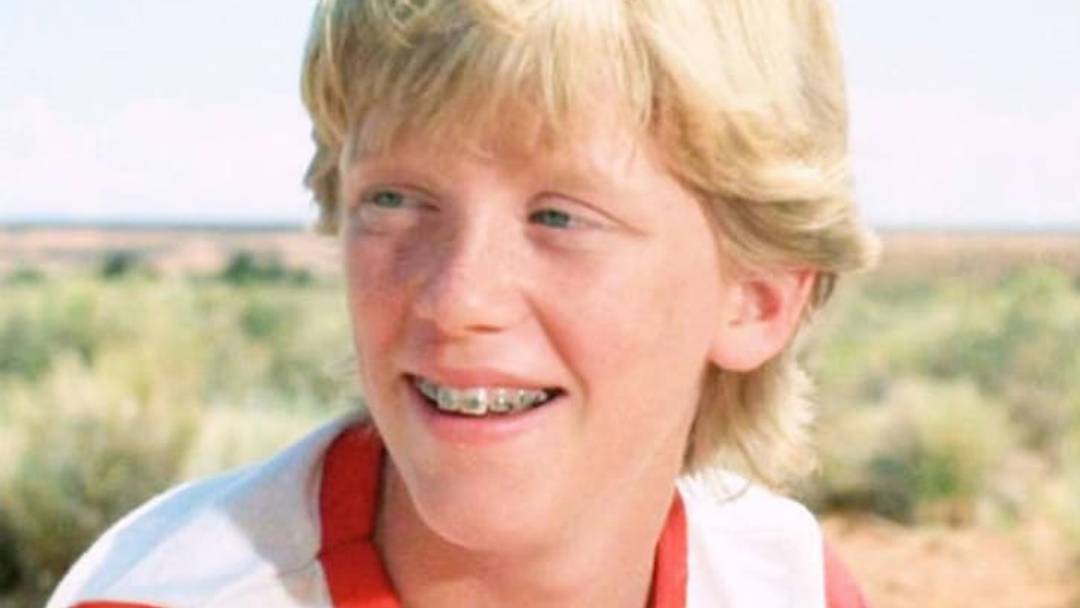
Anthony Michael Hall was just fourteen years old when he landed the role of Clark’s teenage son, Rusty Griswold. He was experiencing a rapid growth spurt during production and shot up several inches before reshoots concluded.
Like many curious teenagers, the young actor tried to stick around the soundstage when his on-screen mother, played by Beverly D’Angelo, filmed her private bathroom scene.
Hall later humorously recalled in a magazine interview that an eagle-eyed producer caught him attempting to peek at the closed set and promptly escorted him away from the area.
7. THE “EAST ST. LOUIS” SCENE WAS ACTUALLY ST. LOUIS.
One memorable sequence involves the Griswolds making a wrong turn into an unfamiliar neighborhood, resulting in their hubcaps being taken while Clark politely asks for directions.
Director Harold Ramis later expressed regret that the scene ended up portraying East St. Louis in a negative light, creating an unfair cinematic stereotype for the community.
Geographically, the scene was originally meant to represent downtown St. Louis as the family crossed the Poplar Street Bridge. An erroneous street sign placement during production was what mistakenly pinned the location to East St. Louis.
8. BORIS VALLEJO PAID HOMAGE TO HIS OWN WORK FOR THE POSTER.
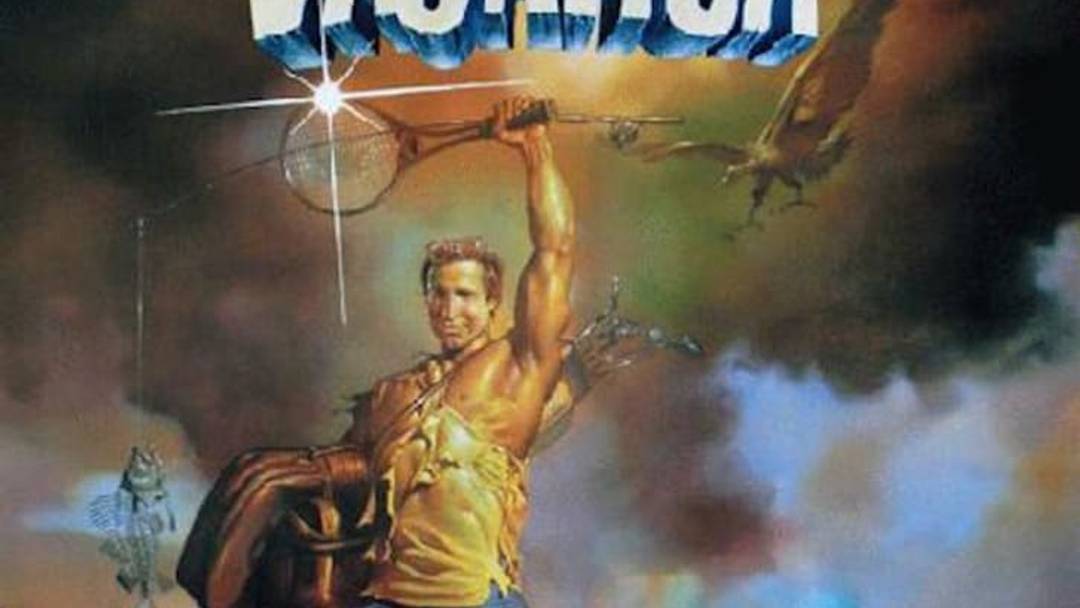
Celebrated fantasy painter Boris Vallejo was commissioned to create the promotional theatrical poster for National Lampoon’s Vacation.
Vallejo drew inspiration from his own iconic sword-and-sorcery fantasy covers, illustrating Clark Griswold standing heroically atop a hill in a dynamic warrior pose while clutching a tennis racket.
The satirical, exaggerated fantasy artwork became one of the most recognizable movie posters of the 1980s. Vallejo later credited the high-profile assignment with dramatically boosting his commercial illustration career.
9. CHRISTIE BRINKLEY WAS SUPPOSED TO BE RUSTY’S (NUDE) DREAM GIRL.
In John Hughes’s early drafts, the alluring woman driving the red Ferrari was originally written as a fantasy figure who would exchange glances with young Rusty.
After the screenplay was retooled around Chevy Chase, the comedic flirtation shifted into a recurring daydream sequence between Clark and supermodel Christie Brinkley.
While the script called for a daring skinny-dipping scene, Brinkley negotiated to wear a specialized flesh-toned swimsuit in the pool. The creative costume design produced the humorous visual illusion while ensuring the model remained comfortably covered.
10. THEY ENDED UP AT SIX FLAGS.
The Griswolds’ long-awaited arrival at Walley World represents the climactic finale of the film. In reality, the production transformed Six Flags Magic Mountain in Valencia, California, into the fictional theme park.
Director Harold Ramis insisted on capturing authentic thrills by mounting camera rigs directly to the roller coasters while Chevy Chase and John Candy rode them repeatedly.
The intense rollercoaster filming took a heavy physical toll on young actress Dana Barron, who played Audrey Griswold. She suffered severe motion sickness and required anti-nausea medication to power through the thrilling shoot.
11. THE ORIGINAL ENDING WAS DESPISED BY AUDIENCES.
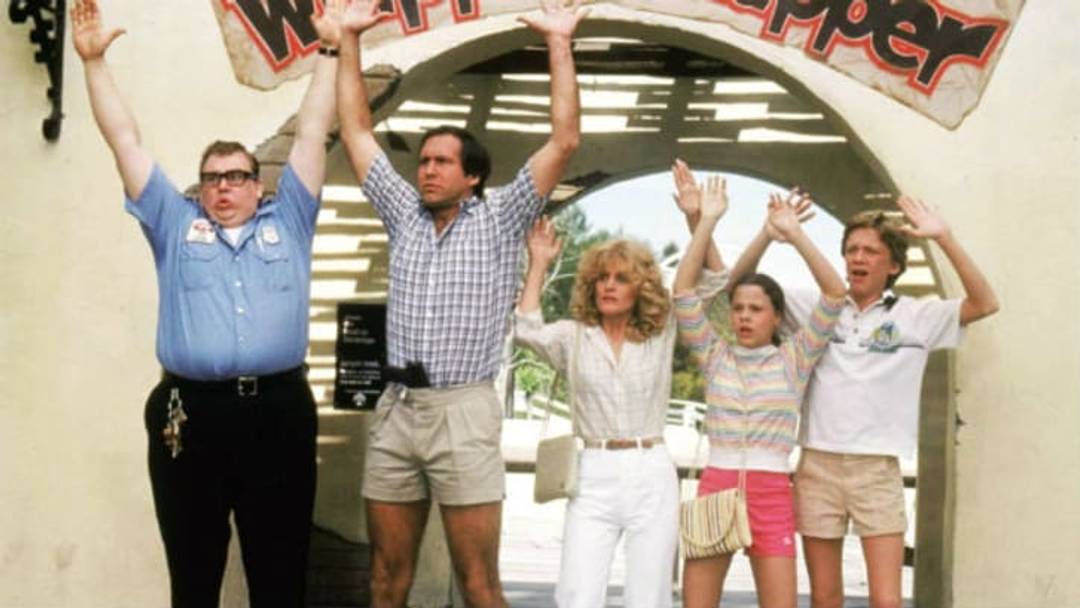
John Hughes originally envisioned a much darker climax where a desperate Clark Griswold tracks down park founder Roy Walley at his private estate and holds him hostage to demand a vacation.
When test audiences screened the home invasion ending on the studio lot, viewers found the scenario far too aggressive and out of character for the lovable family patriarch.
Recognizing the issue, the filmmakers swiftly reassembled to shoot a far more heartwarming and comedic park takeover. Ramis brought in comedy legend John Candy to portray the security guard, instantly elevating the finale into cinematic comedy gold.
12. IT BEAT RETURN OF THE JEDI AND JAWS 3-D AT THE BOX OFFICE.
Hitting theaters in the heart of summer 1983, National Lampoon’s Vacation faced formidable competition from high-budget studio blockbusters.
Despite the stacked theatrical schedule, the comedy opened at number one across North America, outperforming reigning box office titans like Return of the Jedi and Jaws 3-D.
With a domestic gross exceeding $61 million, it finished the year as the third highest-earning comedy of 1983. It was surpassed only by Trading Places and Mr. Mom, which was also penned by the remarkably prolific John Hughes.
13. THE GRISWOLDS REUNITED FOR A SHORT FILM.
While fans are well aware of the theatrical sequels like European Vacation and Christmas Vacation, fewer people remember the Griswolds’ special 2010 reunion.
Chevy Chase and Beverly D’Angelo reprised their iconic roles as Clark and Ellen in a fourteen-minute short film titled Hotel Hell Vacation, created for an online vacation rental campaign.
The short followed the couple attempting a quiet romantic anniversary getaway before dropping in unexpectedly on Rusty. While entertaining for nostalgic fans, it remained a light promotional piece rather than a full-fledged cinematic chapter.
14. THERE IS A REAL WALLY WORLD.
Although the movie altered the spelling to Walley World, real-world entertainment venues have embraced the name in the decades following the film’s success.
In London, Ontario, East Park historically named its water slide attraction Wally World. Similarly, the Water World park in Federal Heights, Colorado, features a dedicated children’s splash zone carrying the moniker.
Perhaps most fitting of all, a business in Liberty, Indiana called Marker’s Wally World famously combines go-kart racing with selling power tools. The quirky blend of amusement and home improvement hardware feels like a business venture Clark Griswold himself would proudly champion.
Để lại một bình luận