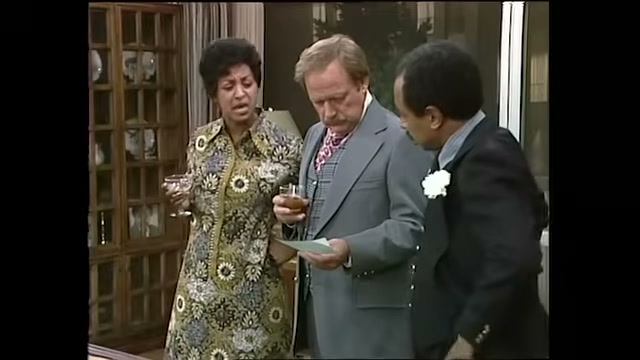
Sony Pictures has dropped a new Women’s History Month compilation, and its argument lands like a verdict. Eleven carefully chosen clips reclaim Marla Gibbs’ Florence Johnston from a decade of sidekick shorthand.
The reel opens with the show’s 1975 pilot, where Florence meets George Jefferson for the very first time. George, played by Sherman Hemsley, is already working an angle, fishing for a back channel into Louise’s old employer.
Florence does not flinch. She listens, sizes him up, and turns his pitch back on him with the calm of a chess player.
The scene is barely ninety seconds on screen, but it tells the audience everything it needs to know. The maid next door has a spine, a moral compass, and a deadpan that can slice through the loudest man in the room.
That pilot moment sets the template for every clip that follows in the tribute compilation. From there, the reel leapfrogs across all eleven seasons of the series, which aired from 1975 through 1985.
It is a chronological sprint, but it is also a quiet thesis: this character was the show’s sharpest weapon from frame one. The cuts read like a prosecutor’s exhibit list, each one tightening the case around a single performer.
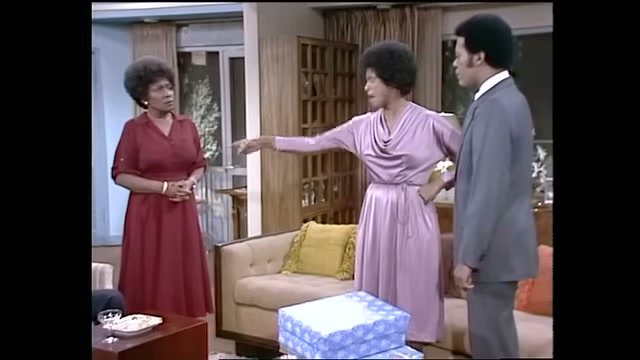
The next major beat puts Florence in a battle of wills with Louise Jefferson, played by Isabel Sanford. The two women square off in a verbal sparring match that crackles with the long history of living in the same building.
Louise, the social climbing queen of the upstairs unit, expects deference from the woman who keeps her home running. Florence, who has been ironing Louise’s sheets for years, expects to be treated like a peer rather than help.
The laugh track roars as the retorts land, but the real heat is in the cutting glances Gibbs and Sanford trade. Sanford’s Louise learns, slowly, that Florence will not be patronized in her own workspace.
It is a partnership of equals, even when the dialogue pretends otherwise, and the chemistry holds the scene together. The chemistry between the two Black actresses is the engine of the moment, and the tribute leans into it hard.
The compilation then pivots to Florence’s romantic life, an arc that lets Gibbs stretch into softer territory. Two episodes, billed Florence Meets Mr.
Right and Some Enchanted Evening, follow Florence toward a real partner. For years, Florence’s love life had been the show’s running punchline, with suitors coming and going without landing.
The reel lets Gibbs slow down, drop the armor, and let Florence’s longing show through the deadpan. The payoff is a soulmate, and the scenes breathe with a warmth the rest of the show rarely allowed Florence.
She is still sharp, still quick, but the steel is wrapped in tenderness for once on screen. It is the closest the compilation gets to vulnerability, and Gibbs plays it with a quiet, sure hand.
The audience sees what Florence’s neighbors too often missed: a woman who wanted to be loved, not just respected. Then the reel turns darker, pulling a family crisis episode that lands like a gut punch in the middle of the comedy.
A close family member of Florence’s faces a frightening medical diagnosis, and the studio laugh track steps back. Florence drops the wisecracks and brings her faith, her fear, and her maternal instincts to the foreground.
The scene is brief, but it reframes the woman who spent eleven seasons as a punchline delivery system. She is also a mother, a daughter, a believer, and the holder of a household’s heaviest unspoken worries.
Gibbs plays the beat with restraint, and the audience sees what Florence’s neighbors too often missed about her. It is a reminder that the working class heroine was carrying far more than linens between punchlines.
The reel then cuts to the Hawaii vacation arc, a multi episode detour that ships the entire building to a luxury resort. Florence is suddenly marooned among leis, mai tais, and a service culture that does not know her worth.
She handles it with the bemused dignity of a woman who has seen every kind of rich and remains unimpressed. The fish out of water comedy is gentle, but the subtext is loud: Florence’s worldview does not bend for a beach view.
Her working class perspective becomes the moral compass of the vacation, and the laughs land because she stays herself. Hemsley’s George, predictably, tries to upgrade his image in the lobby and gets Florence’s raised eyebrow in return.
It is some of the cleanest physical comedy Gibbs ever got to play on the series, and the tribute lingers on it. The camera catches her checking her watch, sighing at a lobby pianist, and rolling her eyes at a cabana boy.
Next, the compilation hits the two part Florence’s New Job storyline, which puts her career and self-worth in question. Florence considers leaving the Weavers for a position that promises better pay and more dignity in the long run.
The offer forces her to ask whether she has been overstaying in a household that never quite saw her as family. Louise, predictably, panics at the idea of training a stranger in Florence’s exacting standards and quiet discipline.

George, less predictably, finds himself suddenly respectful of the woman he spent a decade dismissing as furniture. The arc tests Florence’s sense of identity beyond the uniform, and Gibbs plays the indecision as a quiet crisis.
In the end, Florence chooses, but the compilation wisely does not telegraph which way she lands. The point is the question itself, and Gibbs lets the audience sit with a woman deciding her own worth.
The reel then circles back to the Louise versus Florence tension with a personal conflict that splits the household. The argument is rooted in a private matter, and the reel deliberately does not spoil the trigger of the fight.
What it shows is the cost: a working friendship of more than a decade suddenly pushed to the edge of breaking. Florence has to defend her dignity against her closest ally, and the pain is visible in Gibbs’ eyes throughout.
Sanford plays Louise as genuinely wounded, not merely wrong, and the scene refuses easy resolution or easy blame. It is the compilation’s most dramatic moment, and it earns the gravitas through the actors’ restraint rather than shouting.
The clip ends on an unresolved note, trusting the audience to sit with the discomfort and the silence. Throughout, the reel is anchored by Gibbs’ performance, which the compilation treats as the spine of the entire series.
Her deadpan timing turns throwaway lines into moments of surgical precision, and her cutting glances do the rest. She has a way of pausing a beat too long, just enough to let the audience catch up to her wit.
The laugh track, preserved at full volume, becomes a record of how reliably Gibbs landed in the room. Watching the clips back to back, the case is straightforward: this was never just a supporting role on paper.
It was a star turn hiding inside a sidekick credit, and Women’s History Month is the right moment to say so. The reel’s final minutes lean into the working class heroine framing, with Florence’s dignity and faith foregrounded throughout.
She never bent for the upstairs crowd, and she never softened her stance to keep the peace in the building. The implicit thesis is bold but earned across eleven years: the show worked because Florence refused to play small.
Gibbs made every retort land like a verdict, and every silent stare carry the weight of a Sunday sermon. Sony Pictures, by gathering eleven scenes across eleven seasons, makes a structural argument alongside the emotional one.
For too long, the credit roll treated Florence as a recurring player rather than a co anchor of the entire series. This tribute suggests a different reading, and the clips themselves do all the persuading without a narrator.
The maid next door, the reel insists, was the sharpest weapon in the entire building, week after week. And in a Women’s History Month frame, she finally gets the tribute her eleven years on the air earned.
Để lại một bình luận