
A routine pass of the iron becomes a household emergency in this memorable 1983 sequence from “Mama’s Family.” Within seconds, Thelma Harper turns Fran’s brand-new dress into an unmistakable disaster. The trouble begins at the ironing board, where Thelma is already working with her familiar combination of impatience and irritation.
Then she notices the damage burned directly into the front of the garment. There is no strategic hem adjustment or carefully placed accessory capable of hiding what happened.
The ruined area sits exactly where anyone looking at Fran would immediately see it. Ellen surveys the damage with the cool detachment of someone relieved not to be holding the iron.
Her verdict is swift, dry, and devastating: the dress cannot be saved. Thelma does not respond with a calm acceptance of responsibility.
She explodes into defensive outrage, treating the accident like a conspiracy organized by everyone except the person who caused it. Her first instinct is to blame Ellen for rushing her.
Ellen rejects that accusation and makes it clear that hurried conversation did not force Thelma to scorch the fabric. That exchange establishes the scene’s comic engine.
Thelma grows louder as her options shrink, while Ellen remains just distant enough to sound reasonable and just involved enough to stay trapped. The deeper problem is Fran’s emotional investment in the dress.
She is already nervous about wearing it that evening, making the timing of the accident especially disastrous. Thelma understands that a confession will provoke questions she cannot comfortably answer.
She also knows the evidence is sitting on the ironing board, practically demanding an explanation. Instead of choosing honesty, Thelma and Ellen embrace a much riskier strategy.
They will find another dress, present it as the original, and hope Fran notices nothing. That decision transforms a household mishap into a frantic family cover-up.
What could have ended with embarrassment now becomes a test of memory, acting ability, and wildly misplaced confidence. The women rush to Neiman Marcus in search of a replacement.
Their mission is simple in theory, but matching a specific new dress requires more than desperation and department-store lighting. They locate something similar enough to encourage false hope.
The substitute apparently passes a hurried visual inspection, allowing Thelma to believe the crisis has been contained. Yet clothing does not merely need the right color or general design.
It must also fit the person expected to wear it, and that crucial detail quickly destroys the plan. Fran enters wearing the replacement and immediately senses that something is wrong.
The dress sits awkwardly, bunching where it should lie smoothly and gathering in ways she does not remember. Her uncertainty initially gives Thelma and Ellen a narrow opening.
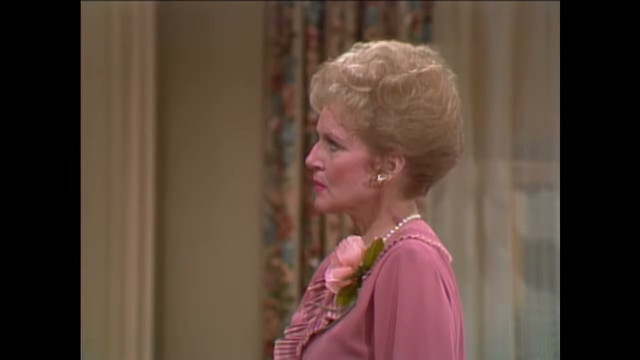
If they can persuade Fran that the strange fit is intentional, perhaps the deception can survive long enough for her departure. They begin praising the very defects that threaten to expose them.
Awkward tucks become fashionable details, while visible bunching is presented as though it reflects sophisticated design. The harder Fran studies herself, the more aggressively the women compliment the dress.
Their enthusiasm becomes so excessive that reassurance starts sounding like an alarm. Then comes their most desperate invention: the “pooch look.” The phrase is offered as if it describes a recognized fashion movement rather than a panicked explanation created inside the living room.
The absurd label briefly shifts the scene from suspicion into disbelief. Fran must now consider whether fashion has changed overnight or whether her family is openly misleading her.
Thelma commits fully to the performance because retreat would mean confession. She treats every wrinkle as intentional, every gather as elegant, and every objection as evidence that Fran lacks confidence.
Ellen attempts a more polished version of the same argument. However, her dry manner cannot disguise the fact that the replacement looks wrong and the story explaining it sounds worse.
Fran’s transformation drives the tension. She moves from nervous uncertainty to focused interrogation, examining not only the dress but also the strangely coordinated behavior surrounding it.
Her questions force Thelma and Ellen to keep adding details. Each improvised answer creates another weakness, and each compliment makes the original deception harder to maintain.
The scene’s comedy depends on that tightening rhythm. Fran asks something reasonable, Thelma reacts too strongly, and Ellen tries to stabilize an explanation already sliding toward collapse.
Nobody can simply change the subject because Fran is preparing for a night out. The evidence is on her body, and every uncomfortable fold demands attention before she leaves.
For a moment, Fran wonders whether she has been handed a “joke dress.” It is an understandable theory because the garment’s fit and her relatives’ behavior both seem deliberately ridiculous. That possibility does not hold for long.
Fran remembers that Thelma is hardly known for practical jokes, especially elaborate ones involving expensive clothing and sudden fashion terminology. The suspicion changes direction.
If the dress is not a joke, then it must be a replacement, and someone in the room knows exactly what happened to the original. Ellen finally makes the crucial mistake by revealing that she knows the dress cost $55.
The figure lands with the force of a confession because she should not possess that information. Her knowledge points directly toward the secret shopping trip.
It also confirms that the women have been discussing the dress far more extensively than their innocent expressions suggest. Thelma can no longer rely on volume to overpower the facts.
Fran now has the mismatched fit, the invented “pooch look,” the excessive praise, and Ellen’s revealing price slip. Ellen recognizes that the cover story is finished.
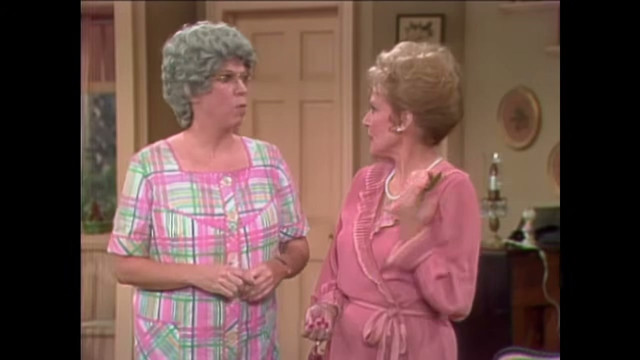
Rather than manufacture another excuse, she urges Thelma to tell Fran the truth and accept the consequences. That suggestion leaves Thelma isolated at the center of her own scheme.
The ally who helped purchase the substitute is now stepping aside before the final confrontation. Fran asks the question that has been waiting beneath every awkward compliment: Where is her original dress?
Her directness strips away the last possibility of misunderstanding. Thelma’s eventual answer is brutally concise.
The original dress, she admits, is in the garbage, where the burned garment has apparently been hidden from view. That blunt revelation becomes the sequence’s final comic payoff.
After so many elaborate claims about style and fit, the truth arrives without decoration, explanation, or fashionable terminology. The confession also retroactively exposes every previous moment.
The ironing panic, the blame shifting, the department-store dash, and the invented trend all lead to one discarded dress. What makes the sequence endure is not merely the accident.
The humor comes from watching ordinary embarrassment expand into a crisis because nobody wants to endure one uncomfortable conversation. Thelma could have admitted the mistake immediately.
Instead, guilt combines with pride, producing a scheme that costs money, recruits an accomplice, and nearly sends Fran outside in an ill-fitting substitute. Ellen’s role adds another layer to the chaos.
She recognizes the absurdity at every stage, yet continues participating until her own precision about the price gives everything away. Fran provides the necessary resistance.
Her questions remain grounded in what she can see and feel, allowing the other women’s frantic inventions to appear even more outrageous. The performances turn a simple wardrobe accident into escalating verbal combat.
Thelma’s indignation collides with Ellen’s dry observations, while Fran steadily closes every available escape route. Even the setting strengthens the comedy.
An ironing board, a living room, and a dress become the props for a deception treated with the urgency of a major operation. The sequence also captures the show’s sharp understanding of family dynamics.
Relatives may know one another too well for convincing lies, yet that familiarity rarely stops them from trying. Thelma’s defensive fury cannot conceal her guilt because Fran understands her habits.
Ellen’s sophisticated tone cannot protect her because one precise detail reveals how deeply she is involved. By the time the truth emerges, Fran has endured confusion, unwanted fashion advice, and a garment that plainly does not belong to her.
Her anticipated night out has become secondary to solving the mystery. The damaged dress may be beyond repair, but the cover-up proves even less durable.
One burned panel creates the problem, while a dozen unnecessary lies guarantee its spectacular collapse. That is the scene’s lasting comic lesson. In the Harper household, a routine chore never remains routine once panic, pride, and family loyalty gather around the ironing board.
Để lại một bình luận