Carol Burnett did not need explosions, scandalous headlines, or modern shock comedy to create chaos.
All she needed was one nervous family, one strange visitor, one terrified airplane cabin, and a few secrets that should have stayed buried forever.
In this “Carol Burnett Across The Years” compilation, the comedy does not arrive quietly.
It walks straight into the room, knocks common sense off balance, and reminds viewers why The Carol Burnett Show still feels dangerous in the funniest possible way.
The first scene begins with a family already on edge.
A young woman named Chris is excited about a date, but the rest of the household is not ready for what is about to walk through the door.
The tension starts with something simple.
A phone call.
A family member is clearly annoyed, patience is disappearing fast, and everyone seems to be bracing for the arrival of a mysterious young man.
Then the date appears.
He is not polished.
He is not traditional.
He is not the clean-cut boyfriend the adults were probably hoping for.
Instead, he arrives with flowers, a strange sense of peace, and the kind of hippie energy that immediately throws the family into panic.
Carol’s character tries to remain polite, but the discomfort is impossible to hide.
The young man speaks in philosophical circles, talks about everyone being brothers and sisters, and refuses to offer a normal name.
That one detail alone sends the scene into a new level of absurdity.
A boyfriend with no name.
A family trying to stay calm.
A sister quietly realizing this date may be far stranger than anyone expected.
The comedy comes from the collision between generations.
The adults do not fully understand him.
He does not seem to understand why they are alarmed.
And Chris, instead of being embarrassed, appears thrilled by the madness.
That is when the family makes a terrible strategic mistake.
They decide to use reverse psychology.
The idea sounds clever at first.
If they openly reject the boy, Chris may like him more.
So instead, they try to act as if they adore him.
They pretend to be relaxed.
They pretend to be modern.
They pretend to be “hip.”
But the harder they try, the more ridiculous they become.
Roger’s attempt to fit into the young man’s world is one of the funniest parts of the sketch.
He tries to speak the language.
He tries to act cool.
He tries to prove that he understands the youth culture around him.
Instead, he becomes the most uncomfortable person in the room.
That is the brilliance of the scene.
Carol Burnett and the cast turn a simple dating-night setup into a full-blown family identity crisis.
The adults are not just worried about Chris.
They are terrified that the world has changed faster than they can handle.
Then the stakes become even funnier when the young man reveals that he and Chris are not going to a movie.
They are going to a love-in.
That single reveal detonates the room.
Suddenly, polite concern turns into panic.
The family’s plan collapses.
The fake acceptance disappears.
The adults scramble to regain control before Chris walks out the door with someone they barely understand and cannot even properly identify.
The scene works because it captures a timeless fear.
Parents and older siblings always worry that the next generation is running toward something dangerous.
But here, the danger is exaggerated into pure comedy.
The “threat” is a harmless but bizarre young man whose presence makes every adult expose their own insecurity.
And just when the sketch seems to have reached its peak, the compilation shifts into an entirely different kind of disaster.
A romantic anniversary trip to Hawaii.
A husband and wife seated on a plane.
A dreamy escape that should be filled with palm trees, ocean air, and happy memories.
Then the captain announces engine trouble.
The mood changes instantly.
Wendy becomes frightened.
Arnold tries to comfort her.
At first, it seems like a tender marital moment.
They hold onto each other.
They speak with the emotional urgency of two people who believe they may not survive.
Then the real comedy begins.
Because when people think the end is near, they confess things.
And Arnold has something to confess.
Years earlier, while Wendy was in the hospital, he had an affair with their neighbor, Gladys Ferguson.
The admission lands like a bomb.
But Wendy, believing death is close, forgives him with surprising tenderness.
She understands loneliness.
She understands fear.
She accepts his confession as one final act of honesty.
Then the engines recover.
Suddenly, survival looks possible.
And forgiveness disappears.
The same confession that seemed noble in the face of death becomes unforgivable once landing safely is back on the table.
Wendy turns furious.
Arnold realizes too late that timing is everything.
The genius of the sketch is that the airplane keeps changing its mind.
Danger returns.
Forgiveness returns.
Safety returns.
Rage returns.
Every announcement from the captain flips the emotional state of the marriage.
When death seems certain, they become saints.
When survival seems likely, they become enemies again.
Then Wendy confesses her own secret.
She had a relationship with Bob Ferguson, Gladys’s husband.
Now the betrayal is perfectly symmetrical.
Arnold betrayed Wendy with Gladys.
Wendy betrayed Arnold with Bob.
For a moment, they decide this makes everything even.
They forgive each other.
They become loving again.
They call each other saints.
But the scene still has one more twist.
Wendy reveals that their son Bobby may not be Arnold’s child.
The confession takes the panic to another level.
A failing airplane is no longer the biggest problem.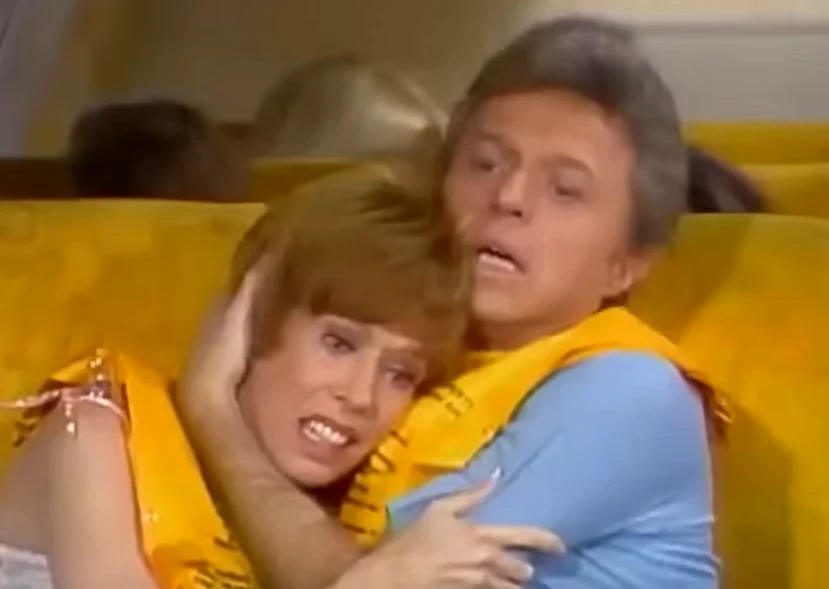
The real crash is happening inside the marriage.
And Carol Burnett plays the emotional whiplash beautifully.
She moves from fear to guilt, from softness to rage, from confession to survival instinct, all with perfect comic timing.
The audience is not just laughing at the secrets.
They are laughing at how quickly people rewrite their morals depending on whether they think they have ten minutes to live.
By the time the plane finally lands, the marriage has been torn open in front of everyone.
Then the Fergusons appear.
Gladys and Bob are not just names from the past.
They are passengers on the same flight.
The nightmare becomes public.
The private confessions become shared humiliation.
The ending lands with the kind of sharp, theatrical punch that made The Carol Burnett Show unforgettable.
What makes this compilation so powerful is the range.
One sketch uses youth culture and family panic.
The other uses marital secrets and disaster comedy.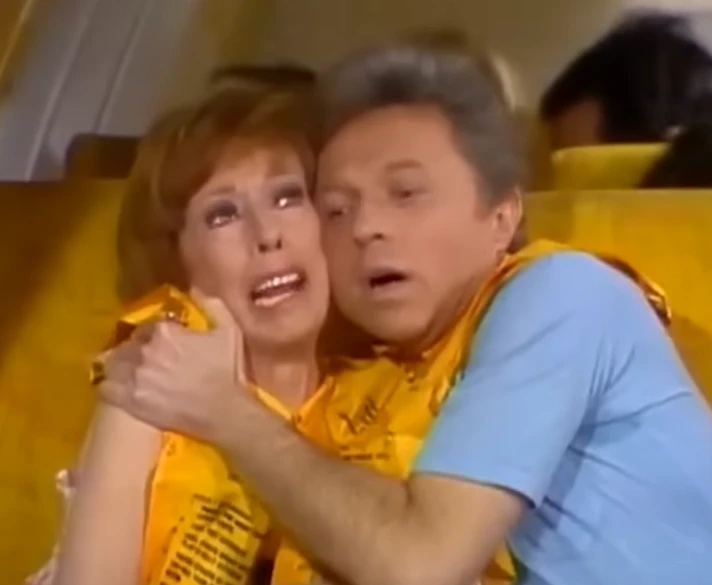
Both prove the same point.
Carol Burnett could take ordinary situations and push them until they became comic earthquakes.
A date night becomes a generational war.
A vacation flight becomes a courtroom for hidden betrayal.
A simple family living room becomes a battlefield of confusion.
A honeymoon-style anniversary trip becomes a hilarious emotional disaster.
Decades later, these sketches still work because the fear underneath them is real.
People fear losing control of their family.
People fear what loved ones may be hiding.
People fear that one ordinary day could suddenly reveal everything.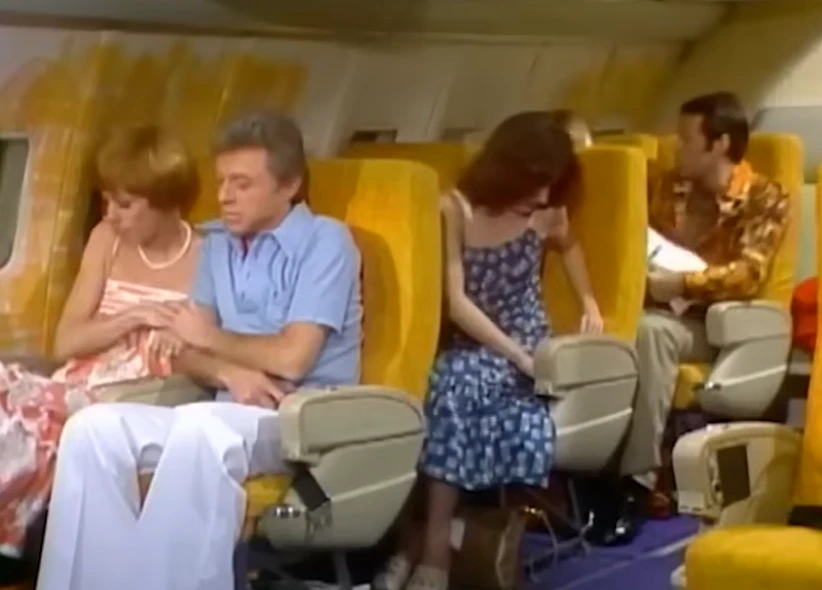
Carol Burnett understood that comedy becomes unforgettable when it exposes the truth just enough to make people uncomfortable.
Then she made them laugh before they could look away.
That is why this compilation still feels alive.
It is not just nostalgia.
It is proof that great comedy does not age when the human panic behind it is still painfully familiar.
Để lại một bình luận