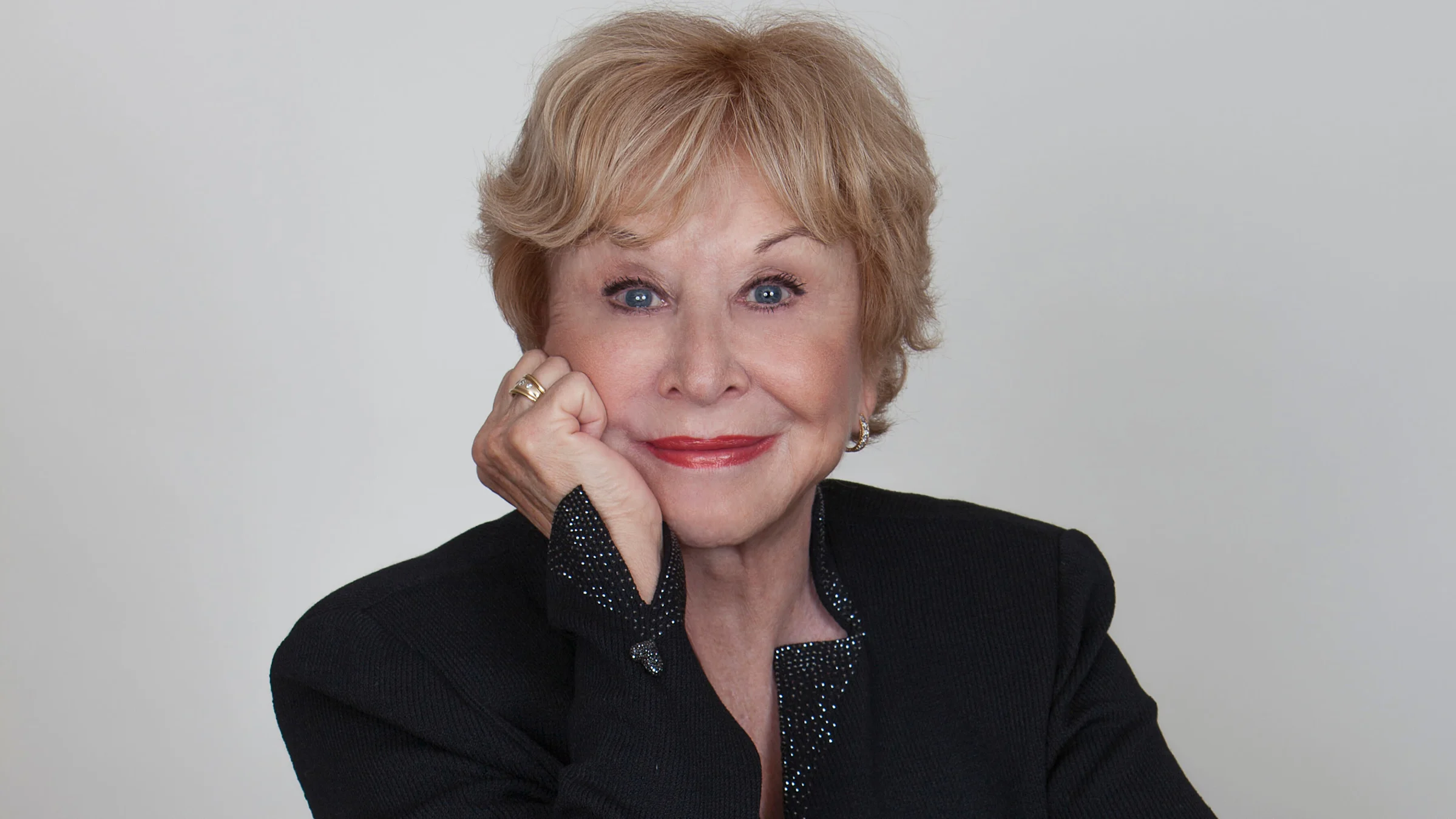
Michael Learned laughed on the other end of the phone. The four-time Emmy winner, best known to generations of Americans as Olivia Walton on The Waltons, was telling me about how her start as an actress wasn’t quite what most people expect. The school she attended as a girl was an arts school with creative classes in the morning and academic classes in the afternoon. She had set her heart on ballet. “I wasn’t very good,” she explained. One day a teacher pulled her aside. “She said, ‘You’re not a very good dancer. You might think about becoming an actress.’ So I said, ‘Well, okay.’”
Learned switched to the drama classes, won the school drama cup, and never looked back. What followed, across more than six decades of theater, television, and film, has been a career of remarkable range. It’s one that continues to surprise and please audiences. She recently appeared in one of Netflix’s most watched series ever, DAHMER – Monster: The Jeffrey Dahmer Story, and has a new film on the way. The past is rich, but so is the present and future.

The long road to Walton Mountain
Before Hollywood, Learned married at 17 and had three children by the time she was 24. She worked in Canadian television. She said, “CBC would tape classics, Shakespeare and Molière, and I would do that.” Then she moved to New York with her husband, actor Peter Donat. They eventually landed in San Francisco, where they became leading players at the American Conservatory Theater.
“We were sort of the leading man and leading lady there,” she recalls. “It was a wonderful rep company.”
It was from San Francisco that Learned made the impulsive drive south that changed everything. “I drove down to Hollywood one day on a kind of a whim, just to maybe learn the freeways a little bit, so I didn’t arrive at auditions with sweat pouring into my shoes.” There was a part being cast that was described as a forty-year-old woman with long, red hair. Learned was thirty-two, with short, blonde hair. She showed up anyway. “Miracle of miracles, I got the part of Olivia Walton, which really kind of started my serious career.”
What she didn’t know at the time was the battle being waged on her behalf behind closed doors. A casting executive at CBS named Ethel Winant, who had seen Learned’s work at ACT in San Francisco, was fighting for her against the network’s resistance. “Fred Silverman, who then ran programming for CBS, didn’t think I was right for the part, and he was correct. I wasn’t what they were looking for. But she went to bat for me, and I’ll be forever grateful to her.” She learned the full story only after Winant had passed away, through a director named Glenn Jordan who told her: “She beat Fred Silverman to the ground over you.”
“God bless her,” Learned said “She was my angel. I was going through a divorce with my husband. I had no money, three kids, dogs and cats, and all the things you have when you have kids. It was a lifesaver for me.”
The call letting Michael Learned know she would be playing Olivia Walton came when she was staying in a twelve-dollar-a-night motel. “I was actually in the shower. I wrapped one of these towels around myself. Well, they weren’t big enough to wrap all the way around you, but you could actually see through the towels. It was that kind of a motel.” Her agent delivered the news. “He said, ‘You are now the mother of America.’ And I just danced all around the room, half naked, with the towel draped around the end.” She laughs at the memory. “I knew I’d been blessed. It was just so exciting for me, and it really turned my life into a different direction.”

A dedication to making Olivia human
Running for nine seasons on CBS from September 14, 1972, to June 4, 1981, The Waltons earned Learned three of her four Emmys and a permanent place in American television history. Viewers still tell her things that move her deeply. “A lot of people say, ‘Your show gave me the childhood I never had.’ A dentist just texted me saying the show had been a role model for him in raising his family.”
But playing goodness, she found, carried its own artistic challenges. “Back then, on television, if you were a good person, you weren’t terribly interesting. I had to struggle sometimes to make Olivia a little more human. She wasn’t always right. A good mother will scold the wrong child sometimes. You’re busy and upset, and you think one of your kids did something that really the other kid did. Little things. Just not to make her the perfect, sweet, all-forgiving mom. The struggle for me was to humanize that character.”
The role of Olivia had originally been played by Patricia Neal in the pilot, and it’s a performance Learned admired deeply. “She was brilliant, and she and I became really good friends. But she played it with great intensity, very sternly in some ways. I think the network thought, on a weekly basis, it would come across as too harsh for TV.”
The authenticity Learned brought to the domestic scenes, such as the bread-baking and the kitchen work, came from genuine experience. “I was a housewife. My primary function when I was young was to be a supportive wife to Peter, who was a wonderful actor. I would take parts they would throw my way to get Peter, really. I came in on his coattails. I’d cue him and then go learn my lines in the bathroom after I did the dinner dishes. I baked bread and made pies. All of that was very helpful in terms of playing Olivia. I knew what I was doing when I was kneading bread, and I think audiences recognize authenticity when they see it.”
Neither she nor Ralph Waite, who played her husband John, had any expectation the show would last. “Ralph and I thought, ‘Well, we’ll just have something to put on our résumés. This is never gonna fly.’ We were wrong, but we were happily wrong.”
Of all the episodes across nine seasons, one stands out. “The one I enjoyed the most, I think it was called ‘The Anniversary.’ It was basically Ralph and me; it told our story. It was kind of a love story, and it was just a sweet script, and I loved that one because I loved Ralph. We had a wonderful relationship and chemistry with each other.”
The children of Walton Mountain
One of the less discussed gifts of The Waltons, Learned suggests, was the experience of getting close to the actors who played her onset family, including the large cast of children. However, she felt guilty because she sometimes spent more time with them than she did her own children because of the long hours on set that filming required.
“I was torn at the time. I had my own kids, and I was spending more time on a set with kids that weren’t really mine. Sometimes you’re scheduled for a certain time and then, because of technical difficulties or whatever, they have to change the schedule. I’d be telling my kids, ‘I’m gonna take you to the dentist this afternoon, because I’m off in the afternoon,’ and then I’d have to call and say, ‘No, no, we have to make other arrangements.’ That was always a little difficult. I don’t think the other kids on the show recognized why I was sometimes unhappy. I was torn.”

And yet the young cast, she said, made it easy to love them. Part of what made it bearable was understanding the particular rhythm of a filming day. There were the long, suspended hours of waiting while scenes are lit, followed by sudden electric bursts of work. “It’s a combination of boring and intense,” she shared. “Bored while they’re lighting, and you’re bored to tears, trying to figure out ways to pass the time while you wait, and then boom — all the adrenaline rushes while you’re doing the scene, and then it’s time to wait again.” That the children navigated this with such grace still moves her. “The kids were so good-natured. They never seemed to be upset or tired, or in any way troubled. It was fun.” She recalls one particular image with obvious affection: “Kami, especially — we were waiting for them to light a scene at the kitchen, the famous kitchen scene, and she just took a salt shaker and started making little designs with the salt on the table. They found ways to just amuse themselves.”
Their professionalism, she is careful to note, never came at the cost of their childhood. The adult cast worked fifteen-hour days; the children had a ten-hour limit, with school in the afternoons. “They were never spoiled brats at all. They were beautiful, hardworking, professional, and great kids.” She paused. “And the mothers were wonderful, too. Most of them, their mothers were on the set as well. They were knitting, talking, and reading, but they were there, looking out for their kids. Ralph and I were very protective of the children as well.”
Those kids, now long grown, remain close to her heart. The fiftieth reunion, she said, was simply a joy. “We always just get along so well, and we love each other. I couldn’t have done it if we didn’t. I’m not one of those people who can just push it aside. If I’m upset about something, I have to at least try to fix it before I go in front of the camera. I’m not a good enough actor to mask my real emotions.”
She recalled a disagreement with Ralph Waite on set that describes as “a spat, not down and out, but we were really kind of heated about it”, and how she resolved it. “I had to knock on his door before going on the set. I was crying. I said, ‘We have to make up, because I can’t do this.’ He was so sweet. He just opened his arms and gave me a hug, and we were fine.”
The theater that inspired her
Long before Olivia Walton, Learned had been forged in the crucible of serious repertory theater. It is perhaps there, she suggested, that her deepest artistic satisfaction was found.
Her years at the American Conservatory Theater in San Francisco she described simply as “the most creative and exciting years, I think, of my career.” The company worked out of two theaters, and performers sometimes ran between them to make curtains. “You would do an afternoon matinee in one theater, and then run down the hill, have a quick bite to eat, and do another show at night. It was challenging, but exciting at the same time. And when you’re young, that keeps you alive.”
Among her most treasured stage memories is a production of Chekhov. “I love doing Chekhov. I really understand his characters. I’m from a kind of bohemian, lost family, and I understand those people.” She has played both Irina and Masha in Three Sisters at different points in her career.
Then there was Private Lives, directed by no less than Francis Ford Coppola who was then quietly disappearing on weekends to edit a film neither she nor her co-star could account for. “We would think, ‘Why is he going down to LA? What’s he doing? We need to rehearse.’ So Paul and I would rehearse and change everything, because we thought Coppola didn’t know what he was doing. We would restage it, and Francis would come back and say, ‘What are you doing? Go back to the way I told you to do it.’ And of course he was absolutely right. Every single time, he wanted us to play the reality. We were doing style, and he was saying, ‘Be real.’ And when we were being real, it was funnier than the way we were trying to do it.”
She still laughed about it. “He was driving a beaten-up old VW bug, kind of rusty. And if nothing was happening in rehearsal, Francis would say, ‘Let’s go eat sushi.’ He understood the process of an actor.” Coppola later invited her to take a small role in Apocalypse Now, but a prior commitment got in the way. She has fond memories of working with him in theater. “Working with him was a dream.”
Dahmer and the unsuspecting grandmother
Decades into a career, Michael Learned is occasionally still asked to audition. When Ryan Murphy’s team came calling about Monster: The Jeffrey Dahmer Story, the Emmy-winning Netflix series that became one of the most watched shows in the platform’s history, Learned still had to prove herself on tape. It’s a fact she receives with wry humor.
“The actor’s ego — what can I say? You think after all these years, with four Emmys, I still am auditioning to prove that I can act?” The audition, filmed at her home by her manager Jerry, took an unexpected turn. “At one point, Jerry said, ‘We have to do a full body shot of you.’ And I said, ‘Well, if I’d known that, I would have worn a bra — lifted my boobs up, you know?’ I thought Jerry was going to cut it out, but apparently he left it in. I really think I got the part because they were probably all cracking up laughing. You never know. Sometimes it’s just sheer luck.”
Playing Dahmer’s devoted grandmother, a woman utterly unaware of the horror unfolding around her, required its own particular discipline. “Mostly I had to be oblivious to the fact that he was dragging a garbage bag full of human parts past me while I was doing my crossword puzzle.” She credited Evan Peters’s generosity as essential to making that dynamic believable. “He managed to play the role with such warmth whenever he was with me. It was very easy to love him as my grandson. It was easy to love him and just be his grandma.”
The experience left her with a different kind of reflection. “I remember coming home from one of the initial days, and my own grandson opened the door and said, ‘Hi, Granny Mikey.’ And I’m thinking, ‘What if I found out he was a serial killer? Can you imagine the family?’”
Still in the room and thriving
Her most recent project, Our Crossroads, a 2026 film in which she plays Barbara Fraley, a real woman looking back on her life, gave Learned something she particularly valued: a role that asked her to be light. She spoke with Fraley directly during preparation.
“She inspired me because she was so full of light. I tend to get morose at times, a little depressed, if you will — but she, with all the physical challenges that she had, you never would have guessed she was facing anything tough. She had a wonderful sense of humor and was very helpful to me. It was a really happy shoot for me.” Working opposite Pat Boone, a figure from her own youth, was pleasingly uncomplicated: “Pat Boone was a huge star when we were young. He was a big singing star. And he was just the same person that he was, you know, when we were both younger. Very nice, very professional.”
A New York state of mind
One year after The Waltons ended, Learned starred in Nurse, the New York-set medical drama for which Learned won her fourth Emmy. She speaks about the show with a mixture of pride and regret. The show was shot on location in a real hospital, which presented its own particular challenges. “On a set, they can move walls, and the lighting is pretty much there, but for them to light a scene where nothing moves, there were really long days. Nineteen-hour days.”
She loved New York itself unreservedly and said, “I’m from back east, and shooting in New York was a dream.” However, the relentless schedule eventually took its toll. “I was in every scene, pretty much. That’s why I feel for Mariska Hargitay, even though she’s not a complainer. I am.”
“I think I complained maybe too much, and that’s when they canceled the show. Because it was doing well in the ratings.” She paused. “That was a really disappointing thing for me when the show was canceled. I was working with New York writers, living in New York, which I love. It was really disappointing.” Whether or not her theory about the cancellation is accurate, the affection for the work and for the city is clear.
What the angels gave her
“I’ve never felt like I was enough. I’m the oldest of six girls, so I guess somewhere deep down, when I was a kid — I’m playing your psychiatrist here — but I think when you’re a child and you’ve got five younger sisters, you kind of feel like, ‘Well, I guess I wasn’t enough.’ I’ve always had that little critic sitting on one of my shoulders saying, ‘You can do better, you can do better. Is it good enough? Is it good enough?’”
Để lại một bình luận