
Carol Burnett begins in familiar territory, standing before a studio audience that expects anything and appears ready to participate. Harvey Korman, Vicki Lawrence, Tim Conway, and guest Dinah Shore share the occasion, but Burnett immediately commands its unpredictable rhythm.
Before the grand costumes and romantic warfare arrive, Burnett lets the audience become part of the show. A woman requests an autograph for a picture book, creating the kind of spontaneous exchange that live television could transform into comedy.
Another audience member attempts to revive a connection from Burnett’s earlier New York television days. The explanation grows increasingly complicated, while Burnett listens with the patient amusement of someone watching a simple memory become an elaborate mystery.
These opening moments create more than warm-up laughter. They establish a room where accidents can become punch lines, strangers can seize attention, and Burnett can redirect confusion without losing control.
That relaxed atmosphere makes the coming spectacle feel even larger. Burnett soon turns from conversational host into master of ceremonies for an absurdly compressed journey through one of Hollywood’s most monumental stories.
She introduces “Went with the Wind” as an answer to the recent television presentation of Gone with the Wind. Anyone who missed that lengthy event, she jokes, can now absorb the essentials in miniature.
The promise is ridiculous by design. Decades of cinematic mythology, sweeping romance, social upheaval, and war will be squeezed into the merciless machinery of a variety-show sketch.
The curtain rises on a Tara-inspired estate, where grandeur already seems threatened by comic instability. This South is not presented as historical reconstruction, but as a theatrical fantasy built for rapid reversals and oversized reactions.
At its center stands Starlet O’Hara, played by Burnett with blazing vanity and total confidence. She receives admiration as though praise were not merely expected, but required for the household to continue functioning.
A procession of admirers surrounds her, each contributing to the exaggerated pageantry. Starlet absorbs their attention with the serene entitlement of someone who believes every entrance should stop the world.
Her charm, however, has a sharpened edge. Compliments please her, rivals provoke her, and any challenge to her romantic expectations can turn sweetness into hostility within seconds.
That challenge arrives with Brashley Wilkes and Melody. Their appearance instantly changes the emotional temperature, although Starlet attempts to preserve her composure beneath a dazzling layer of Southern politeness.
Melody’s gentle manner only intensifies Starlet’s irritation. Every gracious response lands like an insult because kindness leaves Starlet with no respectable target for the anger already gathering behind her smile.
Brashley remains the true object of her fixation. Starlet repeatedly declares her love, treating the confession less like vulnerability and more like a verdict that he must immediately accept.
Instead, he reveals that he plans to marry Melody that very afternoon. The announcement detonates Starlet’s fantasy, replacing romantic certainty with disbelief before her wounded pride catches fire.
Burnett makes the reversal breathtakingly fast. One moment, Starlet is declaring eternal devotion; the next, she is furious enough to dismiss the man she supposedly cannot live without.
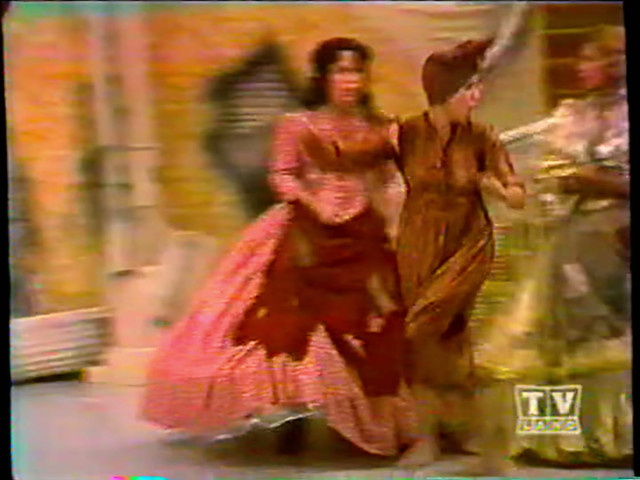
The comedy comes from emotional whiplash, but the performance never loses its dramatic intensity. Burnett plays every feeling as genuine until the next feeling arrives and wipes the previous one away.
Brashley’s news also exposes the fragility beneath Starlet’s theatrical confidence. She can dominate admirers and command a room, yet she cannot force the one answer she desperately wants.
Melody remains gracious through the confrontation, which makes her an even more unbearable presence for Starlet. There is no grand betrayal to expose, only an engagement that Starlet refuses to accept.
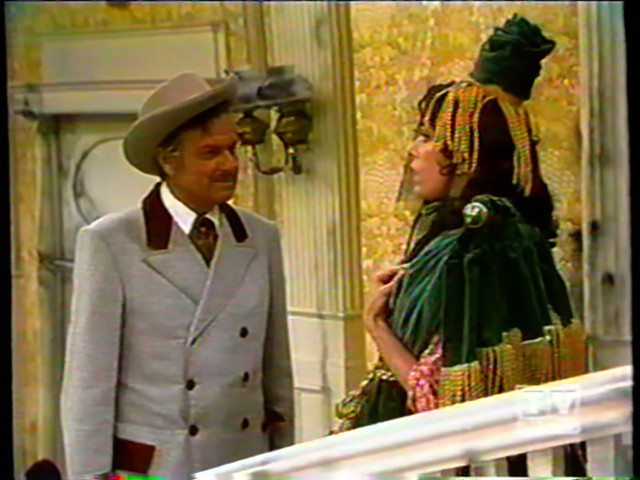
Then Captain Ratt Butler emerges, having overheard the private confrontation. His arrival introduces a new danger because he recognizes Starlet’s rebellion and appears entertained rather than shocked by it.
Ratt is not another worshipful admirer waiting for permission to praise her. He meets Starlet with equal cynicism, confronting her temper with the amused confidence of someone who enjoys entering a storm.
Their chemistry is immediate because neither character seems willing to retreat. Every glance carries challenge, and every exchange suggests that attraction may be inseparable from mutual provocation.
Before that tension can settle into romance or combat, history barges through the drawing room. News arrives that war has begun, abruptly changing the stakes while preserving the sketch’s breathless comic momentum.
The announcement is handled with the same aggressive compression governing everything else. A society gathering becomes a wartime farewell almost instantly, leaving little space for reflection before Brashley must depart.
His goodbye is awkward rather than stirring. The parody refuses to let noble sacrifice become comfortable, puncturing solemnity with emotional confusion and the characters’ continuing inability to behave sensibly.
Starlet watches the man she wanted prepare to leave with obligations that no longer revolve around her. Even amid national crisis, her private jealousy remains powerful enough to compete with the chaos outside.
Melody’s kindness continues to torment her. The bride-to-be offers no satisfying cruelty, forcing Starlet to confront a rival whose decency cannot be defeated through sharper manners or louder declarations.
Then the household receives another shock. Melody announces that she is about to have a baby, pushing the story from romantic farce into an urgent domestic crisis.
The timing is spectacularly inconvenient, which is precisely why it works. War has just scattered the men, emotions are already frayed, and the estate suddenly needs practical competence from people built for melodrama.
A household helper claims experience, briefly suggesting that order might still be restored. That confidence disappears almost immediately, as the supposedly capable figure panics when confronted with the actual emergency.
Starlet is left to respond despite having spent the gathering focused on admiration, betrayal, and revenge. She must now gather linens, boil water, and navigate responsibilities far removed from romantic conquest.
Burnett’s performance thrives on this collision between vanity and necessity. Starlet may imagine herself as the center of an epic, but the household crisis demands action rather than poses.
The sketch accelerates because every solution creates another problem. Brashley is leaving, Melody needs help, the helper is overwhelmed, and Starlet has no time to recover from her shattered romantic campaign.
The estate that initially showcased flattery and social ritual becomes a pressure chamber. Polite conversation gives way to frantic instructions, and romantic rivalry is overtaken by the immediate disorder of survival.
Yet the parody never abandons its glamorous framework. The characters remain trapped inside the language and posture of a sweeping Southern melodrama, even while their circumstances become increasingly ridiculous.
That contrast gives “Went with the Wind” its enduring comic force. The production honors the scale of its cinematic inspiration while gleefully exposing how quickly grandeur can collapse under bad timing.
Burnett does not merely imitate a famous heroine. She rebuilds the archetype around impatience, vanity, wounded pride, and a remarkable ability to turn every setback into a personal theatrical event.
Her Starlet is funniest when she believes she is most commanding. The audience can see the situation escaping her control, while she continues behaving as though a stronger declaration might restore the universe.
Korman’s Brashley supplies the central romantic blow by refusing the destiny Starlet has written for him. His engagement transforms her devotion into rage and clears the stage for Ratt’s more dangerous challenge.
Lawrence’s Melody becomes the quiet trigger for nearly every escalation. Her goodness sharpens Starlet’s jealousy, her marriage plans destroy Starlet’s fantasy, and her urgent announcement plunges the household into panic.
The ensemble understands that speed is essential. Reactions arrive almost before revelations finish, allowing the sketch to race from flirtation to betrayal, war, farewell, and household emergency without losing clarity.
That pacing also mirrors Burnett’s opening audience exchanges. Whether handling an unexpected story from a stranger or steering an overloaded parody, she finds comedy by staying alert inside uncertainty.
The opening banter therefore becomes an important prelude rather than a separate attraction. It reminds viewers that Burnett’s greatest weapon is her ability to welcome disorder and then shape it.
By the final moments of the excerpt, every major pressure has converged. Starlet’s romantic dreams are broken, Ratt has entered her orbit, war has erupted, and Melody urgently requires assistance.
Then someone knocks at the door. The sound lands as a perfectly timed cliffhanger because the estate already appears incapable of surviving one more arrival.
The visitor remains unseen within the excerpt, leaving the household suspended between emergency and fresh complication. Starlet moves toward the interruption while responsibilities multiply behind her.
It is a fitting endpoint for a parody built on ruthless condensation. Gone with the Wind becomes not a majestic march through history, but an escalating series of crises barely contained by theatrical curtains.
Burnett turns that compression into controlled chaos, preserving the recognizable shape of the famous saga while replacing reverence with speed, insult, panic, and glorious emotional excess. What begins with easy audience conversation ends at an estate overwhelmed by war, romantic disappointment, and an urgent birth. Between those worlds, Burnett proves that monumental drama can become explosive comedy without losing its sweep.
Để lại một bình luận