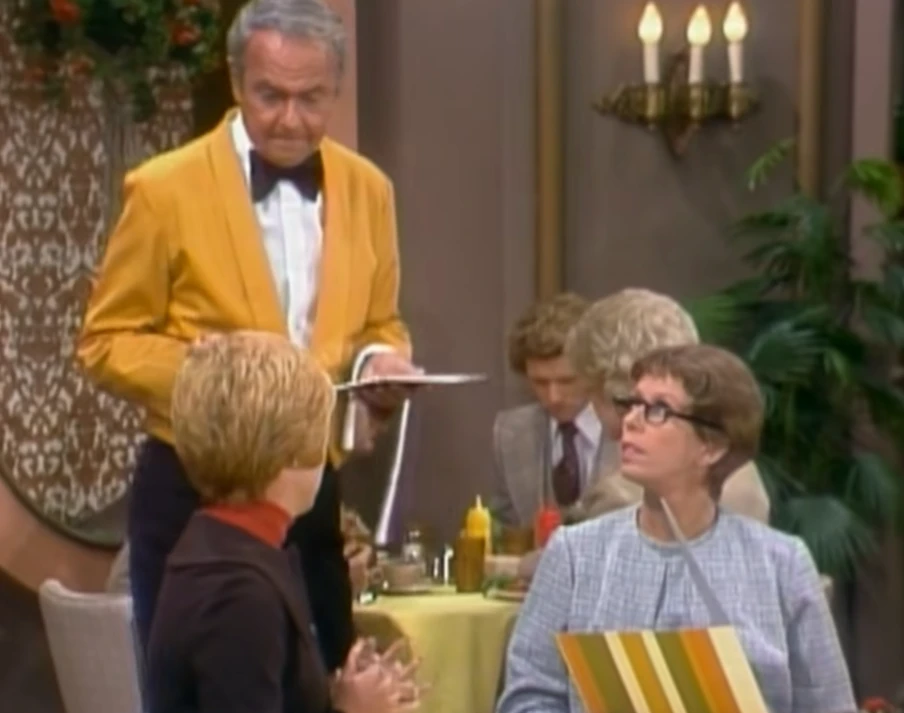
Harriet arrives at a restaurant hoping for lunch with her friend Felicia, but the meal quickly confirms her worst fear. She believes the world barely notices her, and within minutes, everyone around her behaves as though she has vanished completely.
Sitting across from Felicia, Harriet explains that she feels invisible, lonely, and forgotten by everyone she meets. Felicia listens sympathetically, but the restaurant soon turns Harriet’s private insecurity into a public nightmare filled with missing silverware and ignored orders.
The waiter approaches the table and focuses only on Felicia. He takes her order for shrimp cocktail and a well-done steak while Harriet repeatedly tries to get his attention. Her calls grow louder, yet he continues acting as if the opposite chair is empty.
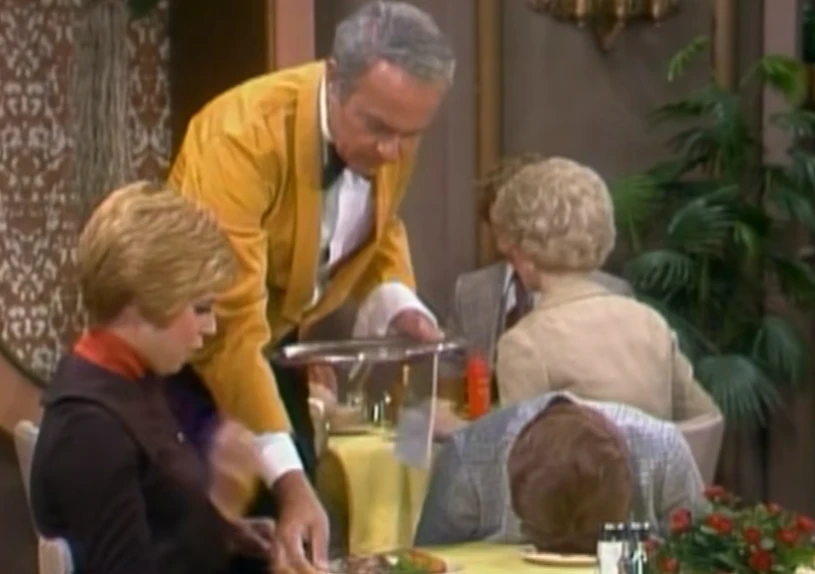
Felicia finally points out that Harriet would also like to order. The waiter looks surprised and apologizes, explaining that he simply did not notice her. For Harriet, the remark sounds like official confirmation that she barely exists in the room.
The table appears prepared for only one diner. There is one place setting and no sign that another guest was expected. When Felicia asks for silverware for Harriet, the waiter seems amazed to learn the two women arrived together.
Food arrives with the same insulting pattern. The waiter brings Felicia’s shrimp cocktail but forgets Harriet’s portion entirely. Harriet watches her friend eat while trying to participate in a meal that the staff apparently believes includes only one customer.
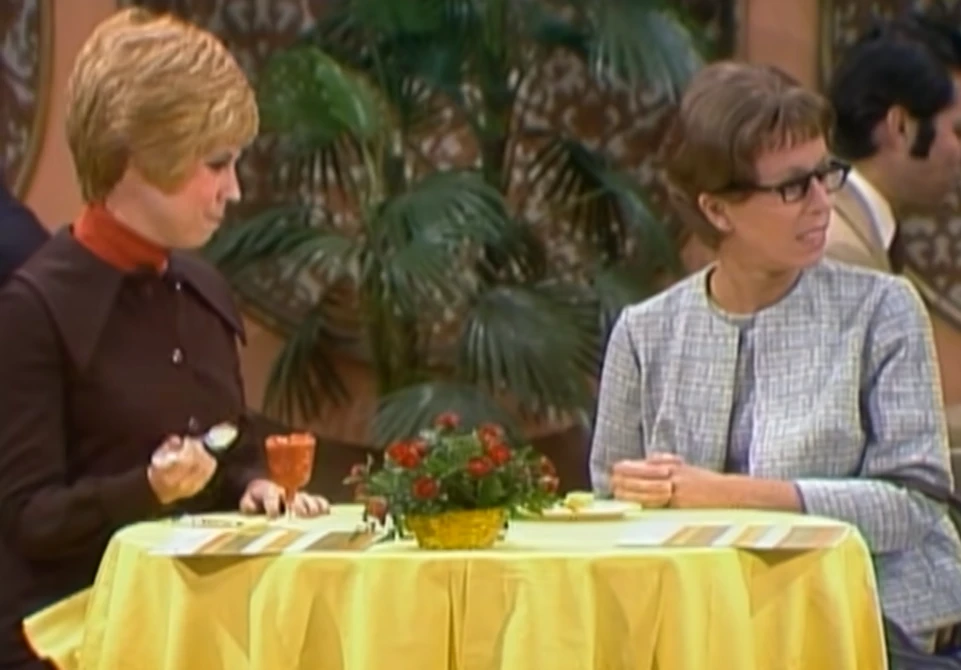
Things become more absurd when another man approaches and asks whether Harriet’s chair is available. Before she can react, he nearly sits directly on top of her. The waiter has apparently told him that the seat is empty.
Harriet’s struggle continues through every detail. She has no fork, receives no proper service, and cannot make herself visible no matter how much she speaks. While clearing dishes, the waiter even drags greasy meat residue across her forehead without realizing it.
Felicia eventually leaves the table to clean herself up in the restroom. Harriet remains behind, alone and increasingly frustrated. Then the waiter appears with a large service cart stacked with trays and plates, creating the sketch’s biggest physical gag.
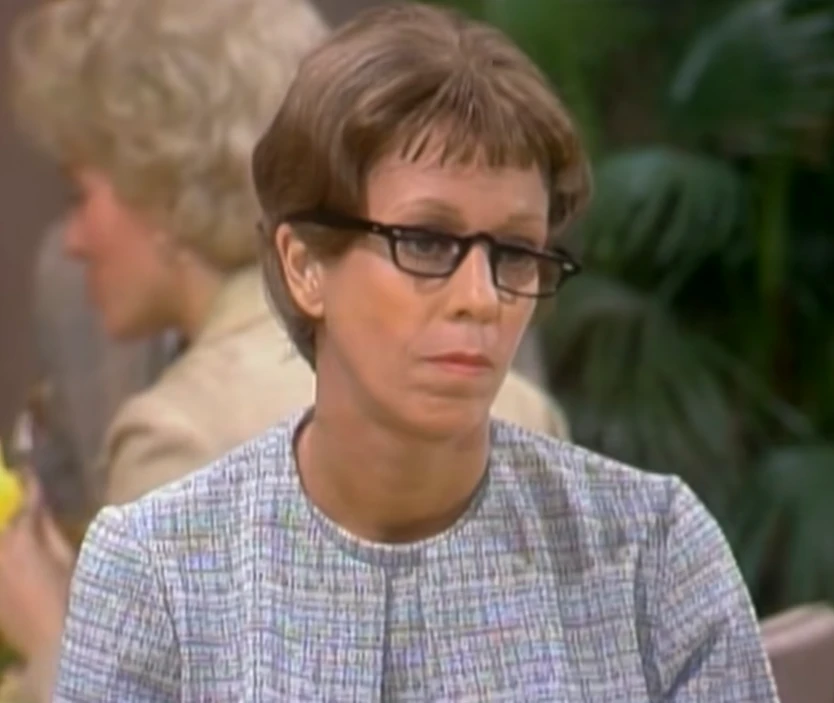
Without looking behind him, he backs the cart into Harriet’s table. The impact pushes the table across the restaurant while Harriet desperately clings to it. She is dragged along as the waiter continues moving, unaware that he is relocating both furniture and customer.
The comedy works because Harriet’s complaint is understandable, while every response around her becomes impossibly exaggerated. Carol Burnett combines wounded dignity with explosive frustration, Harvey Korman provides sympathetic contrast, and Tim Conway plays indifference with perfect calm.
By the end, Harriet has attracted attention, though not in the way she hoped. Her lunch becomes a parade of neglect, collisions, and embarrassment, proving that in classic sketch comedy, being noticed can sometimes be even more dangerous than being invisible.
Để lại một bình luận