Blog

  • Is Laura Winslow Expecting? The Truth About Kellie Shanygne Williams’ Milestone Year


    1

    The Rumor Mill and the Reality

    If you have spent any time on social media recently, you might have seen some buzz regarding Family Matters star Kellie Shanygne Williams. Rumors have been circulating, fueled by curiosity about her recent milestones and public appearances. Let’s clear the air immediately: there is absolutely no truth to claims that Kellie Shanygne Williams is pregnant. In an era where headlines often prioritize clicks over facts, it is easy to see how a simple milestone—like a landmark 50th birthday—can be misinterpreted by the rumor mill.

    Celebrating 50 Years of Excellence

    Kellie Shanygne Williams recently celebrated her 50th birthday, and she did so in style. Rather than focusing on personal life rumors, her fans have been busy celebrating her radiant appearance and her continued influence in the entertainment industry. She marked the occasion by sharing a striking, high-fashion photograph that left followers in awe of her confidence and timeless style.

    A Life Beyond the Limelight

    For those who grew up watching her as Laura Winslow, it’s easy to feel like we still know her as the girl next door. However, Kellie has cultivated a full, successful life far removed from the constant scrutiny of Hollywood fame. She is a devoted wife and a mother to two children, Hannah Belle and John Ervin, who remain the absolute pillars of her life.

    The “Family Matters” Connection Remains Strong

    While she has moved into new chapters, she hasn’t forgotten where she started. Recently, she and her former co-star Telma Hopkins launched a podcast titled Welcome to the Family with Telma and Kellie. This project allows her to revisit the nostalgia of the 90s while connecting with a new generation of fans who are just discovering the magic of the Winslow family.

    Why the Rumors Start

    It is a common phenomenon in celebrity culture: when a star hits a major life milestone or takes a break from the spotlight to focus on family, the rumor mill starts turning. When Kellie posted her stunning 50th-birthday look—a daring black ensemble with a sheer lace suit—the internet went wild with praise for her style. Unfortunately, some observers conflated her “glowing” appearance with pregnancy rumors.

    Embracing the 50s with Confidence

    Turning 50 is a massive deal, and Kellie is wearing it beautifully. Her social media messages reflect a woman who is deeply grateful for her journey, her friends, and her family. She isn’t focused on starting a new family; she is focused on growth, joy, and the next beautiful chapter of her life.

    Assetstask 01k69gqyd9e5zsxs9hw1g

    The Joy of Motherhood

    Kellie has always been open about the importance of her role as a mother. She even took a hiatus from acting for a period to focus entirely on raising her children. Her commitment to her family is a testament to her priorities, making it clear that her current life is already incredibly full.

    Focusing on Her Career and Podcast

    Today, Kellie is a psychology graduate and a busy professional. Between her podcast and her continued advocacy work, she stays quite busy. She isn’t looking back at the 90s with regret, but rather with gratitude, using her platform to engage with the fans who have supported her for decades.

    Is a Return to Acting on the Horizon?

    While she has stepped away from traditional sitcom roles, she hasn’t entirely closed the door on the screen. She occasionally dips back into the industry, but she chooses projects that align with her values and her life as a mother and wife.

    The Power of Positive Nostalgia

    The fact that we are still talking about Kellie Shanygne Williams decades after Family Matters aired says everything we need to know about her impact. She shaped a generation of television history. When we look at her photos today, we aren’t just seeing a celebrity; we are seeing a piece of our own childhoods.

    How to Support Our Favorite Stars

    The best way to support actors like Kellie is to engage with their current work—like her podcast—and respect their privacy regarding their personal lives. Let’s celebrate the milestones they share with us rather than speculating on the ones they don’t.

    Why We Need to Be Better About Rumors

    False rumors can be incredibly invasive. When we spread “news” about a woman’s body or personal life without a shred of evidence, we aren’t just being “fans”—we are contributing to a culture of misinformation. Let’s hold ourselves to a higher standard.

    The Legacy of Laura Winslow

    Laura Winslow taught us about strength, ambition, and kindness. It is clear that Kellie carried those traits into her real life. Whether she is posing for a high-fashion shoot or recording a podcast episode, she carries the grace that made Laura a fan favorite.

    Keeping Up with Kellie in 2026

    If you want to know what’s really going on in her life, the best source is her official social media. She is active, engaged, and always appreciative of her fans. If she has real news to share, she will share it herself.

    Conclusion

    At 50, Kellie Shanygne Williams is not just looking back at a successful past; she is looking forward to an even brighter future. The rumors regarding her pregnancy are baseless, and it is time we put them to rest to focus on what truly matters: her professional growth, her beautiful family, and the joy she continues to bring to her fans. She remains a beloved icon, and we look forward to seeing what she accomplishes next.

    FAQs

    1. Is Kellie Shanygne Williams pregnant?


  • The Sunlit Joylessness of Netflix’s “Little House on the Prairie”


    The new adaptation, though visually exquisite, swaps the story’s much-loved comfort for dutiful tedium.


    Four figures sit in a horse drawn wagon


    Photograph by Eric Zachanowich / Netflix

    Your window is closing.

    Don’t lose these views. Get full access for $2.50 $1 a week for one year, plus a free tote. Cancel or pause anytime.

    See Offers

    Already a subscriber? Sign In

    Subscription Offer

    Unlock this story for just $2.50 $1 a week for 1 year. Subscribe »

    Sarah Larson, a staff writer, has been contributing to The New Yorker since 2007.

    The Goings On Newsletter

    What we’re watching, listening to, and doing this week in N.Y.C, and beyond

    Read More


    Eight Great American Novels

    Our staffers on good books for America’s big birthday.

    Briefly Noted

    “Talking Classics,” “The Cruelty of Nice Folks,” “Glyph,” and “A Real Animal.”

    Eric Bogosian’s Killer Gig

    The actor plays a journalist in AMC’s “Interview with the Vampire.” In the story’s latest installment, his beat has become a lot bloodier.

    The Simple Genius of Jon Klassen

    The author and illustrator of “I Want My Hat Back” understands how children see.

    Christopher Nolan’s “The Odyssey” Leaves the Gods in the Outtakes

    The director’s Homer adaptation presents a modern, relatable Odysseus, rather than trying to understand the ancient world on its own terms.

    American Idols

    Who’s your favorite American? We asked a range of luminaries, and the answers included scientists, playwrights, pop stars, bureaucrats—and one cartoon character.

    There’s Nothing Provincial About This Three-Volume Icelandic Saga

    Jón Kalman Stefánsson’s “Trilogy About the Boy” is set in the remote Westfjords but its ambition is universal.

    A Dying Poet’s Farewell to the World

    In his final days, Franz Wright tapped into a rich vein of material, recording dark, beautiful, and self-deprecating poems on tape and in scribbles all over his apartment.

    The Kinky Comedy of “I Want Your Sex”

    In Gregg Araki’s film, a B.D.S.M. workplace relationship opens up a cross-generational debate about carnal mores.

    “Lost Chapters” Weaves Literary Mysteries Into Family Bonds

    The Venezuelan director Lorena Alvarado’s first feature, starring her own relatives in a fictional drama, connects a young woman’s homecoming and her artistic ambitions.

    Christopher Nolan Has Always Been Making “The Odyssey”

    In a starry, stirring adaptation of Homer’s epic, the director’s signature realism grounds, without dispelling, the drama’s emotional and mythological power.

    Jane Wickline Is Down to Clown in “Dukes”

    The “S.N.L.” cast member partners with Liva Pierce in a musical revue about best friends with bad jobs and no girlfriends.

  • The Tragic, Untold Story of Sawyer Sweeten’s Final Days


    02

    For nine seasons, millions of households welcomed the Sweeten twins into their living rooms. As Geoffrey and Michael Barone on the mega-hit CBS sitcom Everybody Loves Raymond, Sawyer Sweeten and his real-life twin brother, Sullivan, alongside their older sister Madylin, were the epitome of Hollywood innocence. With his bright eyes and infectious smile, Sawyer grew up in front of the camera, delivering effortless charm to a show anchored by domestic chaos.

    But behind the bright studio lights of Hollywood, a darker reality was quietly unfolding. In April 2015, the devastating news broke: 19-year-old Sawyer Sweeten had taken his own life while visiting family in Texas. Years later, the tragedy remains a harrowing reminder of the invisible battles fought by child stars. This is the closer look into the quiet struggles, the sudden heartbreak, and the lingering legacy of a bright smile gone too soon.

    From Sitcom Royalty to Quiet Struggles

    Sawyer Sweeten was just 16 months old when he began his run on Everybody Loves Raymond in 1996. Alongside Sullivan, he literally grew up on television. By the time the show wrapped in 2005, the twins had appeared in 142 episodes.

    However, transitioning from one of the most successful sitcoms in television history to “normal” life is a notoriously difficult tightrope walk. According to family members and close sources, Sawyer was a deeply sensitive, kind-hearted young man, but the pressure of identity post-fame began to weigh on him. While his character was defined by carefree childhood antics, Sawyer’s late teens were marked by an internal struggle to find his footing in a world outside the Hollywood bubble.

    Those close to him recalled that in the weeks leading up to his passing, there were no massive, obvious red flags. He was just a young man trying to navigate adulthood, which made the finality of his choice all the more shocking to those who loved him.

    2

    he Legal and Emotional Fallout

    The immediate aftermath of Sawyer’s death left his family, the cast, and the industry reeling. Legally and operationally, the tragedy put a fierce spotlight on the mental health support systems—or lack thereof—available to child actors once the cameras stop rolling.

    Unlike adult actors who have established careers, child stars often face a profound existential crisis when their shows end. While Coogan Law protections ensure financial compensation is safeguarded, the industry has historically lacked long-term emotional and psychological infrastructure for underage performers transitioning out of the spotlight.

    Emotionally, the Everybody Loves Raymond family was shattered. Ray Romano expressed his heartbreak, calling Sawyer a “wonderful and sweet kid to be around.” Patricia Heaton, his onscreen mother, took to social media to express her profound grief, writing:

    “The entire cast of Everybody Loves Raymond is in shock. A brilliant, sweet, and talented young man is gone far too soon.”

    The Sweeten family, led by Madylin, bravely chose to speak openly about Sawyer’s death to break the stigma surrounding mental health, urging families to check on their loved ones, no matter how happy they might seem on the outside.

    Fans Speak Out

    The news reverberated globally, triggering a massive wave of grief from fans who felt a personal connection to the boy they watched grow up. On internet forums, social media, and fan pages, the outpouring of love was immense.

    • “I watched this show every single night with my family. Seeing Geoffrey Barone grow up felt like watching a cousin. To know he was hurting so badly breaks my heart,” wrote one fan on Reddit.

    • “It’s a reminder that a smile can hide a lot of pain. Rest in peace, Sawyer,” another shared on X (formerly Twitter).

    For many, Sawyer’s passing was a wake-up call about the realities of mental health, proving that fame, fortune, and a beloved public image cannot insulate someone from internal suffering.

    Final Thoughts & Conclusion

    Sawyer Sweeten’s life shouldn’t be defined solely by its tragic end, but rather by the joy he brought to millions of people worldwide. He was a son, a brother, a friend, and a remarkably talented young man who gave the world a reason to smile during a golden era of television.

    His passing serves as a stark, vital reminder that mental health struggles do not discriminate. The brightest smiles often mask the heaviest burdens. As Hollywood continues to reckon with the care of its youngest stars, Sawyer’s legacy lives on—not just in the reruns that continue to make us laugh, but in the ongoing, crucial conversations about empathy, mental health awareness, and looking out for one another.

    5 Unique FAQs

    1. Was Sawyer Sweeten still acting at the time of his death?

    No. After Everybody Loves Raymond ended in 2005, Sawyer largely stepped away from the Hollywood spotlight. He and his brother Sullivan chose to pursue a quieter, more private life away from the intense scrutiny of the entertainment industry.

    2. How did his twin brother, Sullivan Sweeten, react to the tragedy?

    Sullivan was understandably devastated by the loss of his twin. The brothers shared an incredibly close bond, having experienced the unique pressures of child stardom together. In the years since, Sullivan has kept a very low profile, focusing on his private life and healing alongside his family.

    3. Did the cast of Everybody Loves Raymond stay in touch with the Sweeten children?

    Yes. The cast maintained a tight-knit, family-like bond long after the series ended. Following Sawyer’s passing, the cast provided immense emotional support to the Sweeten family, attending memorials and publicly championing mental health awareness in Sawyer’s honor.

    4. What resources are now available for former child actors facing mental health struggles?

    Organizations like A Minor Consideration (founded by former child star Paul Petersen) work actively to give guidance, financial support, and mental health resources to child performers. Additionally, SAG-AFTRA has continuously updated its wellness programs to offer better psychological support for members navigating career transitions.

    5. Where can fans go if they or someone they know is struggling with mental health?

    If you or someone you know is going through a difficult time, resources are available. In the U.S., you can call or text 988 to reach the Suicide & Crisis Lifeline, available 24 hours a day, 7 days a week. Services are free and confidential.


  • The Tragic, Untold Story of Sawyer Sweeten’s Final Days


    02

    For nine seasons, millions of households welcomed the Sweeten twins into their living rooms. As Geoffrey and Michael Barone on the mega-hit CBS sitcom Everybody Loves Raymond, Sawyer Sweeten and his real-life twin brother, Sullivan, alongside their older sister Madylin, were the epitome of Hollywood innocence. With his bright eyes and infectious smile, Sawyer grew up in front of the camera, delivering effortless charm to a show anchored by domestic chaos.

    But behind the bright studio lights of Hollywood, a darker reality was quietly unfolding. In April 2015, the devastating news broke: 19-year-old Sawyer Sweeten had taken his own life while visiting family in Texas. Years later, the tragedy remains a harrowing reminder of the invisible battles fought by child stars. This is the closer look into the quiet struggles, the sudden heartbreak, and the lingering legacy of a bright smile gone too soon.

    From Sitcom Royalty to Quiet Struggles

    Sawyer Sweeten was just 16 months old when he began his run on Everybody Loves Raymond in 1996. Alongside Sullivan, he literally grew up on television. By the time the show wrapped in 2005, the twins had appeared in 142 episodes.

    However, transitioning from one of the most successful sitcoms in television history to “normal” life is a notoriously difficult tightrope walk. According to family members and close sources, Sawyer was a deeply sensitive, kind-hearted young man, but the pressure of identity post-fame began to weigh on him. While his character was defined by carefree childhood antics, Sawyer’s late teens were marked by an internal struggle to find his footing in a world outside the Hollywood bubble.

    Those close to him recalled that in the weeks leading up to his passing, there were no massive, obvious red flags. He was just a young man trying to navigate adulthood, which made the finality of his choice all the more shocking to those who loved him.

    2

    he Legal and Emotional Fallout

    The immediate aftermath of Sawyer’s death left his family, the cast, and the industry reeling. Legally and operationally, the tragedy put a fierce spotlight on the mental health support systems—or lack thereof—available to child actors once the cameras stop rolling.

    Unlike adult actors who have established careers, child stars often face a profound existential crisis when their shows end. While Coogan Law protections ensure financial compensation is safeguarded, the industry has historically lacked long-term emotional and psychological infrastructure for underage performers transitioning out of the spotlight.

    Emotionally, the Everybody Loves Raymond family was shattered. Ray Romano expressed his heartbreak, calling Sawyer a “wonderful and sweet kid to be around.” Patricia Heaton, his onscreen mother, took to social media to express her profound grief, writing:

    “The entire cast of Everybody Loves Raymond is in shock. A brilliant, sweet, and talented young man is gone far too soon.”

    The Sweeten family, led by Madylin, bravely chose to speak openly about Sawyer’s death to break the stigma surrounding mental health, urging families to check on their loved ones, no matter how happy they might seem on the outside.

    Fans Speak Out

    The news reverberated globally, triggering a massive wave of grief from fans who felt a personal connection to the boy they watched grow up. On internet forums, social media, and fan pages, the outpouring of love was immense.

    • “I watched this show every single night with my family. Seeing Geoffrey Barone grow up felt like watching a cousin. To know he was hurting so badly breaks my heart,” wrote one fan on Reddit.

    • “It’s a reminder that a smile can hide a lot of pain. Rest in peace, Sawyer,” another shared on X (formerly Twitter).

    For many, Sawyer’s passing was a wake-up call about the realities of mental health, proving that fame, fortune, and a beloved public image cannot insulate someone from internal suffering.

    Final Thoughts & Conclusion

    Sawyer Sweeten’s life shouldn’t be defined solely by its tragic end, but rather by the joy he brought to millions of people worldwide. He was a son, a brother, a friend, and a remarkably talented young man who gave the world a reason to smile during a golden era of television.

    His passing serves as a stark, vital reminder that mental health struggles do not discriminate. The brightest smiles often mask the heaviest burdens. As Hollywood continues to reckon with the care of its youngest stars, Sawyer’s legacy lives on—not just in the reruns that continue to make us laugh, but in the ongoing, crucial conversations about empathy, mental health awareness, and looking out for one another.

    5 Unique FAQs

    1. Was Sawyer Sweeten still acting at the time of his death?

    No. After Everybody Loves Raymond ended in 2005, Sawyer largely stepped away from the Hollywood spotlight. He and his brother Sullivan chose to pursue a quieter, more private life away from the intense scrutiny of the entertainment industry.

    2. How did his twin brother, Sullivan Sweeten, react to the tragedy?

    Sullivan was understandably devastated by the loss of his twin. The brothers shared an incredibly close bond, having experienced the unique pressures of child stardom together. In the years since, Sullivan has kept a very low profile, focusing on his private life and healing alongside his family.

    3. Did the cast of Everybody Loves Raymond stay in touch with the Sweeten children?

    Yes. The cast maintained a tight-knit, family-like bond long after the series ended. Following Sawyer’s passing, the cast provided immense emotional support to the Sweeten family, attending memorials and publicly championing mental health awareness in Sawyer’s honor.

    4. What resources are now available for former child actors facing mental health struggles?

    Organizations like A Minor Consideration (founded by former child star Paul Petersen) work actively to give guidance, financial support, and mental health resources to child performers. Additionally, SAG-AFTRA has continuously updated its wellness programs to offer better psychological support for members navigating career transitions.

    5. Where can fans go if they or someone they know is struggling with mental health?

    If you or someone you know is going through a difficult time, resources are available. In the U.S., you can call or text 988 to reach the Suicide & Crisis Lifeline, available 24 hours a day, 7 days a week. Services are free and confidential.


  • How The Golden Girls Quietly Changed Television Long Before Most People Noticed 


    Images (5)

    Some TV Shows Become Popular. Others Quietly Change the Industry.

    When people talk about influential television, they usually mention the biggest dramas or the most groundbreaking comedies.

    Series that introduced revolutionary filming techniques.

    Shows that broke ratings records.

    Programs that transformed the way television looked.

    The Golden Girls rarely enters those conversations.

    Instead, it’s often remembered simply as a beloved sitcom about four women sharing a house.

    That description isn’t wrong.

    It’s just incomplete.

    Behind its warmth and humor, The Golden Girls quietly reshaped television in ways that are still visible today. Many of the storytelling choices that feel normal in modern sitcoms were far less common when the series first premiered.

    Its influence wasn’t loud.

    It was lasting.

    It Proved Older Women Could Carry an Entire Television Series

    Before The Golden Girls, older women were frequently written as supporting characters.

    They played mothers.

    Grandmothers.

    Neighbors.

    Wise mentors who appeared briefly before the story returned to younger protagonists.

    The Golden Girls completely reversed that formula.

    Dorothy, Blanche, Rose, and Sophia weren’t supporting anyone else’s journey.

    They were the story.

    Their friendships, relationships, careers, fears, and ambitions mattered every bit as much as those of younger television characters.

    The show’s enormous success challenged a long-held industry assumption that audiences only wanted stories centered on youth.

    That lesson continues to influence television today.

    It Redefined What an Ensemble Comedy Could Be

    Many sitcoms feature multiple main characters, but they’re often built around one obvious lead.

    One person receives the biggest storylines.

    One actor becomes the face of the series.

    Everyone else gradually shifts into supporting roles.

    The Golden Girls resisted that trend.

    Each of its four leads carried major episodes.

    Each experienced emotional growth.

    Each had moments of vulnerability, humor, and triumph.

    The show demonstrated that an ensemble could remain balanced for years without relying on a single breakout star.

    That approach has since become one of the defining strengths of many successful television comedies.

    It Normalized Honest Conversations About Adult Life

    Television in the 1980s often avoided discussing certain topics directly.

    When difficult issues appeared, they were frequently simplified or treated as one-time events.

    The Golden Girls approached adulthood with remarkable honesty.

    It explored loneliness.

    Dating later in life.

    Family conflict.

    Financial stress.

    Health concerns.

    Grief.

    Personal independence.

    These weren’t treated as unusual “special episodes.”

    They were presented as ordinary parts of everyday life.

    That natural approach helped make serious conversations feel accessible rather than uncomfortable.

    It Trusted Comedy to Handle Difficult Subjects

    Some television writers believe comedy and emotional depth compete with one another.

    The Golden Girls proved they could strengthen each other.

    A heartbreaking conversation could be followed by genuine laughter without diminishing either emotion.

    Likewise, a hilarious episode could suddenly reveal unexpected vulnerability.

    The balance felt effortless because the writers never treated humor as an escape from reality.

    Instead, humor became one way the characters coped with reality.

    That storytelling philosophy has influenced countless comedy-drama hybrids ever since.

    It Showed That Representation Could Be Organic

    Today, audiences often discuss representation in television.

    The Golden Girls approached representation in a way that felt remarkably natural for its time.

    It didn’t ask viewers to admire its characters simply because of who they were.

    Instead, it invited audiences to know them as complete human beings.

    Their age informed their experiences, but it never became their entire identity.

    They were funny.

    Stubborn.

    Romantic.

    Compassionate.

    Independent.

    Complicated.

    By focusing on personality first, the show created characters who continue connecting with viewers across generations.

    Its Influence Can Be Seen Across Modern Television

    Many contemporary ensemble comedies emphasize friendship over spectacle.

    They rely on conversation instead of constant action.

    They allow every member of the cast meaningful emotional moments.

    These ideas feel familiar today because audiences have spent decades watching series shaped, directly or indirectly, by shows like The Golden Girls.

    Its influence isn’t always obvious.

    But it’s woven into the DNA of modern television.

    Like many classics, its greatest innovations became so successful that people eventually stopped noticing they had once been new.

    The Show Changed Expectations Without Trying To

    Perhaps the most remarkable part of The Golden Girls’ legacy is that it never seemed interested in making television history.

    It wasn’t trying to prove a point.

    It wasn’t announcing itself as revolutionary.

    It simply focused on telling honest, character-driven stories with intelligence and warmth.

    Ironically, that quiet confidence made its impact even greater.

    Rather than forcing change, it inspired it.

    The Golden Girls deserves recognition not only as one of television’s funniest sitcoms but also as one of its most quietly influential. By proving that older women could lead a hit series, strengthening the ensemble format, blending comedy with emotional honesty, and embracing authentic storytelling, it helped reshape audience expectations in ways that still benefit modern television. Its legacy isn’t measured only by awards or ratings—it’s reflected in the countless shows that unknowingly followed the path it helped create.

    1. Why is The Golden Girls considered influential?

    Because it challenged industry assumptions about age, ensemble storytelling, and the balance between comedy and emotional depth.

    2. Did the show change how older women were portrayed on television?

    Yes. It placed older women at the center of the story as complex, independent, and fully developed characters.

    3. How did it influence modern sitcoms?

    It demonstrated the power of balanced ensembles, character-driven storytelling, and meaningful conversations alongside comedy.

    4. Was the series trying to be revolutionary?

    Not explicitly. Its influence came from consistently telling authentic stories rather than attempting to redefine television.

    5. Why does its legacy remain strong today?

    Because many of its storytelling techniques have become timeless standards that continue to shape successful television series.

    Post Views: 88

  • The Golden Girls Cast Then and Now: The Heartbreaking Stories Behind TV’s Favorite Friends du01 – US TV Shows Hub


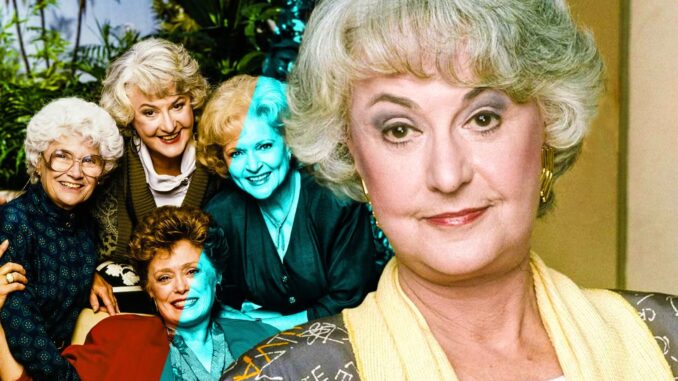
    Why Bea Arthur left the Golden Girls

    A Sitcom That Never Stopped Making People Smile

    Few television shows have stood the test of time quite like The Golden Girls. Premiering in 1985, the NBC comedy proved that stories about older women could be hilarious, emotional, and incredibly relatable. Dorothy, Rose, Blanche, and Sophia weren’t superheroes—they were simply four women navigating friendship, family, romance, and aging with wit and courage.

    More than three decades after the final episode aired, the series continues to gain new fans through streaming services and reruns. Quotes from the show still circulate across social media, and countless sitcoms continue to borrow from its unique blend of humor and heartfelt storytelling.

    But while their characters live on forever, the talented actors behind them experienced remarkable journeys after the cameras stopped rolling. Some continued to dominate television, others returned to the stage, and all left behind unforgettable legacies.


    Why The Golden Girls Became a Television Phenomenon

    When the sitcom debuted, many critics believed a comedy centered on four older women wouldn’t survive beyond one season. Instead, it became one of the biggest television successes of the 1980s.

    The chemistry among the four lead actresses felt completely natural. Every episode balanced laugh-out-loud comedy with meaningful conversations about aging, friendship, grief, family, and love.

    The series collected multiple Emmy Awards and Golden Globe nominations while consistently ranking among America’s most-watched television programs.

    Even today, its influence is impossible to ignore.


    From Military Service to Television Royalty

    Long before becoming Dorothy Zbornak, Bea Arthur had already lived an extraordinary life.

    During World War II, she served in the United States Marine Corps Women’s Reserve before pursuing acting in New York City. Her commanding voice, sharp wit, and commanding stage presence quickly helped her stand out from the crowd.

    Her breakthrough arrived on Broadway, where she won a Tony Award for Mame. Television audiences later embraced her as Maude Findlay before she landed what would become another iconic role—Dorothy Zbornak.

    Life After The Golden Girls

    After leaving the sitcom, Arthur carefully selected projects that suited her personality rather than chasing leading roles.

    She appeared in several beloved television comedies, including Malcolm in the MiddleEllen, and Curb Your Enthusiasm. Although her appearances became less frequent, every performance reminded audiences why she remained one of television’s finest comedic actresses.

    Arthur also dedicated time to charitable causes and frequently supported organizations helping homeless LGBTQ+ youth, demonstrating that her compassion extended far beyond the screen.

    A Lasting Legacy

    Bea Arthur passed away in 2009 at the age of 86 after battling lung cancer. Yet Dorothy’s unforgettable sarcasm, intelligence, and loyalty continue to entertain millions of viewers around the world.


    The Queen of Television Reinvented Herself Again

    If one actress proved that age is only a number, it was Betty White.

    Although audiences adored Rose Nylund’s innocent personality, White herself was an incredibly savvy entertainer who helped shape early television. She worked as an actress, producer, host, and pioneer during an era when women rarely held creative control.

    By the time The Golden Girls premiered, she was already a household name.

    The sitcom simply elevated her legendary status.

    A Career Renaissance

    Many actors slow down after their biggest television role.

    Betty White did the exact opposite.

    She appeared in blockbuster films, voiced animated characters, starred in hit sitcoms, and became one of the internet’s favorite celebrities decades after turning eighty.

    Her role in The Proposal introduced her to an entirely new generation of moviegoers, while Hot in Cleveland proved she still possessed impeccable comedic timing.

    In 2010, fans successfully campaigned to have her host Saturday Night Live. The performance became one of the show’s highest-rated episodes and earned her another Emmy Award.

    An Inspiration Until the End

    Betty White remained active almost until her passing in 2021, just weeks before her 100th birthday.

    Her warmth, humor, kindness toward animals, and infectious optimism made her one of Hollywood’s most beloved personalities.

    For millions of fans, she wasn’t simply Rose Nylund.

    She was television itself.


    More Than Blanche Devereaux

    Rue McClanahan transformed Blanche Devereaux into one of television’s most unforgettable characters.

    Blanche was glamorous, fearless, flirtatious, and unapologetically herself. At a time when older female characters were often written as quiet grandmothers, Blanche challenged every stereotype.

    Behind the scenes, however, McClanahan possessed remarkable range.

    Before joining The Golden Girls, she appeared alongside Bea Arthur in Maude and built an impressive résumé across theater, television, and film.

    Continuing Her Passion

    Following the sitcom’s conclusion, McClanahan never abandoned acting.

    She returned to Broadway, joined the cast of Wicked as Madame Morrible, and continued making guest appearances on television.

    In 2007, she published her humorous memoir, sharing stories about Hollywood, marriage, and life with the same wit that made Blanche so memorable.

    Rather than trying to escape her signature role, McClanahan embraced it wholeheartedly. She understood that Blanche had become more than a television character—she had become a cultural icon who inspired women to embrace confidence at every stage of life.

    A Legacy That Lives On

    Rue McClanahan passed away in 2010 at the age of 76 after suffering a stroke.

    Even today, Blanche remains one of television’s boldest and funniest female characters, reminding audiences that growing older never means giving up passion, confidence, or joy.


    Coming Up in Part 2

    In the second half of this article, we’ll explore:

    • Estelle Getty’s remarkable journey as Sophia Petrillo
    • Herb Edelman’s unforgettable role as Stan Zbornak
    • Harold Gould’s impressive career before and after The Golden Girls
    • Why the show’s legacy remains stronger than ever
    • Conclusion
    • 2 Unique FAQs
    • Custom Message
  • The Five Best MAMA’S FAMILY Episodes of Season One


    Welcome to a new Sitcom Tuesday! Today we’re beginning our coverage on the best episodes from Mama’s Family (1983-1984, NBC; 1986-1990, First Run Synd.), the hilarious half-hour extension of the popular “Family” sketch from The Carol Burnett Show (1967-1978, CBS), which we discussed here several years ago.

    MamasFamily_S1_SVTL2013_e

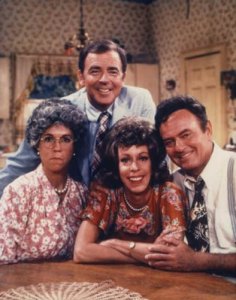
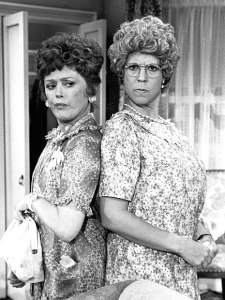
    Widow Thelma Harper (a.k.a. Mama) has a crazy family living under her roof: a spinster sister, a dimwitted son, a horny daughter-in-law, and two teenage grandkids. Mama’s Family stars VICKI LAWRENCE as Thelma Harper, KEN BERRY as Vinton Harper, DOROTHY LYMAN as Naomi Harper, ERIC BROWN as Buzz Harper, KARIN ARGOUD as Sonja Harper, and RUE McCLANAHAN as Fran Crowley. Recurring guests include BETTY WHITE as Ellen Harper Jackson, HARVEY KORMAN as Alistair Quince (and Ed Higgins), and CAROL BURNETT as Eunice Harper Higgins.

    a2591dfff6f4c65aac6e965b124d7ccb

    Any discussion of Mama’s Family must first begin with the “Family,” as the idea to center a series around the Mama character had been around for a while. In fact, Vicki Lawrence was first approached about doing her own Mama series during the ninth season of The Carol Burnett Show. The popular “Family” series of sketches had been introduced near the end of the variety show’s seventh season (1973-74). Written by Dick Clair and Jenna McMahon, the characters were reportedly based on Clair’s own family and the initial intention was to have Carol Burnett play Mama (the star of the sketch) while Vicki Lawrence would play her daughter Eunice. (Harvey Korman was to be Eunice’s loser husband Ed.) But when Burnett got the script, she found Eunice to be the more emotionally rich character and the one she better understood, opting instead to switch parts with Lawrence — a swap that chagrined the writers. (The scribes also weren’t too happy about Burnett’s decision to do the scene with southern accents.) However, after this debut sketch, it was clear that the “Family,” with Burnett as Eunice and Lawrence as Mama, was a comedic goldmine, and the characters became a recurring feature during the last four years of the series, even after Korman departed. So when Lawrence was approached about a Mama spin-off in late 1975, during the run of The Carol Burnett Show, she was apprehensive about leaving the hit show, especially because she viewed the success of the sketches as dependent on the interplay among the regulars — not just Mama.

    486992_10200210858371127_269935299_n

    When the variety series ended, Eunice and Mama didn’t disappear, popping up in a single sketch on Burnett’s short-lived Carol Burnett & Company and on a special 1980 week of Password episodes, in which Lawrence and Burnett played the game as their characters. Shortly after these appearances, Burnett received the script for a CBS-TV special called Eunice, a four act play that centered around Eunice and her relationship with Mama, culminating in the former’s grief following the latter’s death. With Harvey Korman and Betty White (as sister Ellen) set to reprise their roles from the sketches alongside Burnett and Lawrence, Ken Berry took the role of the successful brother, Phillip, originally played in three sketches by Roddy McDowell. (I’ll be discussing the Eunice special and my thoughts more in depth during tomorrow’s Wildcard Wednesday post, so stay tuned…) Eunice was taped in 1981 but held until March of ’82 due to network dissatisfaction with the final product. When the special finally premiered, it got tremendous attention (read: ratings) and Burnett (along with her then husband, producer Joe Hamilton) once again implored Lawrence to do a series as Mama. She finally agreed.
    mamas-family-1

    Hamilton reportedly sold the series directly to Grant Tinker at NBC, who made a 13-episode commitment for the 1982-83 season. Burnett and Korman agreed to drop in a few times as Eunice and Ed, Betty White signed to appear in approximately half the episodes, and Ken Berry was retained not as Phillip, but now a new son (not introduced on the sketches). Meanwhile, Rue McClanahan was cast as Mama’s spinster sister and Dorothy Lyman (currently starring on All My Children) was to be Mama’s next door neighbor and occasional confidant. Also, the executives at NBC (not knowing how to handle a rural sitcom) wanted to brand the show as family friendly fare, so they added a pair of teenage kids to the regular cast. With hindsight, we know that this was their first mistake, but Mama’s Family was always treated unfairly by the network, which simply wasn’t producing shows of this ilk and didn’t appreciate the sketch-like origins of the comedy. However, to Lawrence’s pleasure, Clair and McMahon were engaged as show runners — but they had to make major alterations to the Mama character, both to make her NBC friendly and to legitimize her position as a likable series anchor. In other words, Mama couldn’t be as nasty as she was in the sketches; audiences needed to want to “spend time” with her every week. It was a struggle for both Lawrence and the writers, who attempted to navigate the necessary shift, crafting a Mama who was a little more wise and folksy — still mouthy and obstinate to be sure — but not so emotionally cold and embittered.
    rue-mcclanahan-6

    Lawrence panicked after the first two episodes were shot in the summer of ’82: this wasn’t the Mama she was used to playing. She felt the writing had weakened her character — making her uncomical. Production was halted as changes were made. Harvey Korman was brought on, at Lawrence’s insistence, to co-direct the series and serve in a weekly capacity as Alistair Quince, a take-off on Alistair Cooke, who would introduce each episode like it was a piece of Masterpiece Theatre. Korman also assuaged Lawrence’s doubts about Mama’s evolution by insisting that she was Mama and could therefore do anything she wanted with her, giving the actress license to morph the character at a pace that felt natural to her. Granting agency of the Mama character to Lawrence was key to the series’ ability to move forward, and with some narrative re-formatting that established an actual conflict — over the course of four episodes Naomi the neighbor would have a quick courtship with Vinton and become his live-in bride, not to mention a thorn in Mama’s side — production was now ready to continue. But the creative delays, along with NBC’s internal struggle with the show’s very existence, had Mama’s Family pushed from the Fall schedule (where it would have premiered on Thursdays behind Cheers) to Saturdays in January ’83. The two episodes shot before the aforementioned retooling would air later in the season, following an introduction by Alistair Quince that explained them off as “flashbacks.” Even up against ABC’s The Love Boat in the spring, the series was able to place at #22 for the season, earning it a definite full season renewal. But could Mama’s Family survive NBC’s continued attempts to kill it? That’s for next week.

    Mamas-Familydfdfg

    In the meantime, these first 13 episodes see the series still attempting to figure out its identity. In addition to the two pre-Korman episodes (which, to the credit of Lawrence’s discerning eye, don’t really work), there are several episodes that suffer from the simple fact that the show isn’t yet well-developed. That is, there are fundamental problems with the premise, specifically the combination of characters. The kids are unfunny and only work when their prime function is to annoy Mama (because they’re generally good at annoying anyway). Furthermore, the character of Fran is sorely lacking in definition, changing personalities with each episode. Sometimes she’s a good friend to Mama, other times she’s a rotten nuisance. Even worse, most times she isn’t allowed to be comedic. And that’s a big problem for a character who should be driving more of the material. But on the other hand, there are a lot of things that are automatically firing on all cylinders — namely the conflict that develops between Mama and the newlyweds, whose courtship and marriage over the first four episodes make for some of the funniest and most memorable moments of the NBC years. These three characters, obviously, work well and work well immediately. Meanwhile, Eunice, Ed, and Ellen (the latter of whom appears in six of the 13 scripts) are peppered throughout the year to a generally strong effect. The only problem with this trio, particularly Eunice and Ed, is that they distract from the new ensemble, and when they overtake the script (as Burnett naturally does in each appearance), the show ends up losing its balance, making us miss the more emotionally potent sketches from the variety series.

    1be4b296904dffbc81bc01530256a2c2

    This is an interesting dichotomy. For although the sketches reached a level of brilliance unmatched by this new series — the kind of excellence predicated on the bittersweet blend of humor and pain — Mama’s Family really can’t be that. And we wouldn’t want it to be. As a result, the best moments here generally exist when the show defines itself as a separate entity. (Although, you’ll notice that my MVE is an important exception to this rule. Find out why below…) And while I do agree with Lawrence that the Mama of the sketches was more comedically sharp, the changes that are made here (and will continue to be made) do seem necessary, and surprisingly, the first two seasons do a great job of reconciling the Mama of the sketches with the Mama of the series. (Most of the praise belongs with Lawrence’s mastery in gradually morphing Mama into a character with viable longevity — and in a way that wouldn’t have been noticeable to viewers watching on a weekly basis.) Yet, if there’s any reason for preferring the NBC years over the syndicated ones, it would be for the portrayal of Mama — who is still crotchety and sarcastic, but with a newfound sense of humor, which makes her much more likable WITHOUT stripping her of the darker, nastier edge that made her so humorous. As a result of Lawrence’s performance, this is always a very funny series. And this season, for all of NBC’s mistakes, is often great — really funny. In general, Mama’s Family is not a show that I enjoy for the quality of its scripting (like Cheers), but rather for its simple laugh-out-loud hilarity. And, for a sitcom, that’s pretty much all I want. So I have picked five episodes that I think exemplify this season’s strongest installments. For new fans, this list will give you a place to start. For seasoned fans, there might be a few surprises.

    Mama's Family

    Here are my picks for the five best episodes of Season One. (They are in AIRING ORDER.) Note that every episode this season is directed by both Harvey Korman and Roger Beatty, unless otherwise noted.

    01) Episode 1: “Vint And The Kids Move In” (Aired: 01/22/83)

    Vint and his two kids move into Mama’s house — without Fran’s knowledge.

    Written by Jenna McMahon & Dick Clair

    Screen Shot 2015-12-22 at 11.09.00 AM

    The fourth episode shot for the series, this was designed to serve as the official premiere (following the creative redevelopment discussed above). The story’s inciting incident finds the recently divorced Vinton moving into Mama’s house with his two kids. The conflict, aside from the general inconvenience to all involved, is that Fran will have to give up her workspace — something which she is not prepared to lose. Aside from all the perfunctory exposition, McMahon and Clair’s script makes time for a lot of big laughs, including slapstick moments for Berry and some of the best scenes of the series between Lawrence and the generally underserved McClanahan. One of the highlights of the offering, however, is the re-meeting of Vinton and Naomi, who share an immediate chemistry — to Mama’s evident displeasure.

    02) Episode 2: “For Better Or Worse” (Aired: 01/29/83)

    Vint and Naomi spend a night together and then make plans to marry.

    Written by Liz Sage & Rick Hawkins

    Screen Shot 2015-12-22 at 11.09.37 AM

    Following the reunion between Vinton and Naomi in the series premiere, this episode takes things to the logical next step, as the former classmates wind up in the basement bed together. Berry and Lyman get some of their longest uninterrupted scenes of the series in this offering, and because both the performers and characters are already so strong, this amount of exposure helps to ingratiate them with the audience, establishing them as the show’s best characters — second only to Mama. Lawrence, not surprisingly, gets the episode’s best moment with her reaction to seeing Naomi sneak out from the basement to the backdoor. (She’s clearly learned a lot at the Burnett-Korman school of comedy.) Also, credit must be given to the writers for the final scene’s manipulative, but not distractingly obvious, set-up for next week’s wedding.

    03) Episode 4: “The Wedding (II)” (Aired: 02/12/83)

    On the day of Vint and Naomi’s wedding, Eunice has a meltdown.

    Written by Dorothy Van & Jim Evering

    Screen Shot 2015-12-22 at 11.11.26 AM

    As usual with two-part installments, one half is comedically sharper than the other. (However, choosing only one half of an episode that’s designed to be paired with another basically gives me the opportunity to highlight two episodes for the “price” of one, because naturally, if you watch Part II, you’ll want to watch Part I first.) This is a fan favorite, but it’s also a BIG EVENT episode. That is, the show has a function that overrides the comedy: getting Vint and Naomi married. Also, this is the second appearance of Burnett as Eunice, and she runs roughshod over the entire 24 minutes. For fans of the sketches, this is a benefit. But in terms of the series’ own new identity, well . . . let’s just say the episode is saved by its ability to comedically deliver and by the interactions among the entire ensemble (with Burnett and Korman in support of them).

    04) Episode 6: “Cellmates” (Aired: 02/26/83)

    Mama and Eunice are arrested after getting into a barroom brawl.

    Written by Jenna McMahon & Dick Clair

    Screen Shot 2015-12-22 at 11.04.49 AM

    My choice for the best episode of the year, this installment is the exception to the “new identity” rule mentioned above. This offering makes absolutely no attempt to use the storytelling of the sitcom and its new cast, opting instead to play with the characters and relationships that were introduced way back in the variety series. (In fact, the long running gag of Duke Reeves is brought up again as a major part of the story.) It would seem that this wouldn’t be a good fit for a show that desperately needs to lock in a separate mode of operation. However, this is clearly the best script of the season, helmed by the duo that first introduced Mama in 1974, meaning that there’s a welcome sense of authenticity in her presentation. Meanwhile, this script also sees a brilliant resolution to the antagonistic relationship shared by Mama and Eunice, as the pair has a genuine heart-to-heart on the porch swing (following a bar fight that lands them in prison alongside a hooker, played by Yvonne Wilder, whom we’ve seen here before on Archie Bunker’s Place), that not only mines big humor and works for the story, but also serves as an ideal end for the Eunice character. (Perhaps unfortunately, Burnett appears twice more — unnecessarily.) So because of its value to the characters that we first met almost a decade before and its importance to Mama’s evolution in particular (she needs this episode to be able to move forward), the episode’s atypicality is justified, making this absolutely the season’s most valuable. A must watch for Burnett fans, “Family” fans, and comedy fans in general. (If anyone has the original unedited network broadcast, please let me know; it’s edited on the DVD!)

    05) Episode 7: “Mama Gets A Job” (Aired: 03/05/83)

    Mama takes a job at the Raytown Travel Agency.

    Written by Don Emerson King

    Screen Shot 2015-12-22 at 11.05.32 AM

    This episode makes today’s list for the expert clowning of Vicki Lawrence as Mama, whose comedic turn manning the reception desk of Raytown’s Travel Agency is Lucy-esque in its loony allowance for a seldom employed (by this character) physicality, especially in the NBC era. In fact, unlike some of the other offerings highlighted in today’s post, which are included for the way the other characters are introduced and positioned in relation to Mama, this one is all about her, and that’s a first for the character, who’s always been defined by the way she interacts with others. As a result, this installment gives us pleasures that the other offerings from the year don’t: a straight look at Lawrence’s performance and the ability to recognize, fully, her growing genius as this character. She is ultimately why this show exists — and why it’s worthwhile.

    Other notable episodes that narrowly missed the list above include: “The Wedding (I),” in which Mama, Ellen, Naomi, and Fran get drunk while preparing for Vint and Naomi’s wedding (naturally worthwhile to those seeking out the second part of this installment), and “Family Feud,” a fan favorite offering in which the clan goes on Family Feud and screws things up in a predictable but perhaps illogical manner (although a funny, albeit gimmicky episode, the above installments simply employ better motivated comedy). Nevertheless, they were both serious contenders for the above list. Meanwhile, “Positive Thinking,” while not close to making the list due to the inappropriate focus thrown to Eunice instead of Mama and the other characters, is still worth mentioning for fans of the sketches and/or her character.

    Screen Shot 2015-12-22 at 11.10.26 AM

    *** The MVE Award for the Best Episode from Season One of Mama’s Family goes to…..

    “Cellmates”

    Screen Shot 2015-12-22 at 11.04.07 AM

    Come back next Tuesday for the best from the second season! And tune in tomorrow for a new Wildcard Wednesday post!

  • NBA star rips socialist NYC Mayor Zohran Mamdani as ‘mayor playing president’ after Netanyahu video


    New York City Mayor Zohran Mamdani’s remarks about Israeli Prime Minister Benjamin Netanyahu drew criticism over the weekend from an unlikely source: Milwaukee Bucks forward Kyle Kuzma, who mocked the democratic socialist as a “mayor playing president.”

    Responding to the mayor’s video on X, the nine-year NBA veteran suggested Mamdani was more concerned with appearances than governing, labeling the mayor’s talking points as performative.

    Kyle Kuzma of the Milwaukee Bucks looks to drive against the Atlanta Hawks.

    Kyle Kuzma No. 18 of the Milwaukee Bucks looks to drive against the Atlanta Hawks during the first quarter at State Farm Arena in Atlanta, Ga., on Jan. 19, 2026. (Getty Images)

    Kyle Kuzma of the Milwaukee Bucks walks backcourt during a game against the Dallas Mavericks.

    Kyle Kuzma No. 18 of the Milwaukee Bucks walks backcourt during a game against the Dallas Mavericks at Fiserv Forum on March 5, 2025, in Milwaukee, Wis. (Getty Images)

    “This is 2026. People cosplaying as things they don’t have the authority, the talent, or the track record to actually be. Just for content,” Kuzma wrote, quote-tweeting Mamdani’s address.

    The response came after Mamdani released a video calling for the arrest of Netanyahu under an International Criminal Court warrant ahead of the United Nations General Assembly.

    “A mayor playing president. A founder playing operator. A content creator playing one-on-one, thinking he’s a pro. A 25-year-old with a ring light playing economist. Everyone auditioning. Nobody building. We’re raising a generation that is learning the reward isn’t in doing the thing; it’s in looking like you did the thing.

    MAMDANI SAYS NYC IS EXPLORING WHETHER IT CAN ARREST NETANYAHU IF ISRAELI LEADER VISITS FOR UN GENERAL ASSEMBLY

    Zohran Mamdani speaks about Benjamin Netanyahu.

    New York City Mayor Zohran Mamdani speaks about Israeli Prime Minister Benjamin Netanyahu in a still image taken from handout video released on July 21, 2026. (Reuters)

    “The clip is the career. The pose is the product. The soundbite is the substitute for a life’s work. Don’t fall for distractions.”

    The comments were in line with Kuzma’s growing reputation as one of the NBA’s few active players willing to publicly challenge progressive political ideas, a lane many of the league’s most prominent stars have largely avoided.

    The same video also generated support from elsewhere in the NBA.

    Days earlier, Dallas Mavericks guard Kyrie Irving and San Antonio Spurs star Victor Wembanyama were seen liking Mamdani’s Instagram post, in which he called Netanyahu “the architect of a horrific genocide against the Palestinian people” and urged authorities to arrest him if he enters New York City.

    KNICKS STAR KARL ANTHONY-TOWNS REPORTEDLY ATTENDS JEWISH FUNDRAISER AS OTHER NBA PLAYERS TAKE OPPOSITE STAND

    OutKick contacted representatives for both players for comment but did not receive a response.

    Mamdani has faced sustained criticism from Jewish organizations and political opponents over his rhetoric on Israel, accusing them of genocide.

    KYRIE IRVING, VICTOR WEMBANYAMA LIKE MAMDANI’S VIDEO CALLING NETANYAHU A ‘WAR CRIMINAL’

    Israel rejects the ICC’s jurisdiction, while Netanyahu has repeatedly denied the court’s allegations.

    Although Mamdani previously directed the city’s legal department to examine whether New York police could enforce the warrant, he later acknowledged that the city has no legal authority to arrest visiting foreign leaders.

    Kyle Kuzma reacts after a foul call during a game against the Washington Wizards.

    Kyle Kuzma of the Milwaukee Bucks reacts after being called for a foul against the Washington Wizards during the second half at Capital One Arena on Jan. 29, 2026, in Washington, D.C. (Getty Images)

    Critics have argued Mamdani should instead focus on issues inside New York City, including crime, sanitation and housing affordability, rather than weighing in on international conflicts beyond the mayor’s authority.

    CLICK HERE TO DOWNLOAD THE FOX NEWS APP

    Kuzma’s “mayor playing president” dig offered a strong contrast to the support Mamdani’s message received from Irving and Wembanyama, illustrating how the mayor’s rhetoric has divided prominent voices around the NBA.

    Send us your thoughts: alejandro.avila@outkick.com / Follow along on X: @alejandroaveela

    Alejandro Avila is a longtime writer at OutKick, living in Southern California.

  • Năm 1995, tại bang Texas (Mỹ), một gia đình người Việt gồm bảy thành viên bất ngờ bi;;ến m;ất khỏi ngôi nhà của họ, để lại duy nhất một mảnh 


    Năm 1995, một gia đình người Việt gồm bảy thành viên sống ở ngoại ô Houston, Texas, bỗng biến mất chỉ sau một đêm. Họ để lại duy nhất một mảnh giấy viết vội:

    “Đi thăm người thân vài ngày.” Nhưng rồi không một ai quay về, cũng không ai nghe thấy tin tức gì. Căn nhà nhỏ, chiếc xe hơi cũ trong gara, và những bữa cơm dở dang trên bàn — tất cả đứng im như thể thời gian bị chặn lại. Suốt 10 năm, cộng đồng Việt kiều quanh đó không ngừng bàn tán. Cho đến một ngày, một sự tình cờ đã làm bật ra b í m;ật r;;ợn người bị che gi;;ấu.

    Gia đình ông Bảy và bà Lan định cư ở Mỹ từ cuối thập niên 80. Họ có bốn người con: hai trai, hai gái, cùng bà cụ thân sinh của ông Bảy từ Việt Nam sang đoàn tụ. Ngôi nhà nhỏ ở khu ngoại ô vốn lúc nào cũng rộn ràng tiếng nói cười, mùi cơm cá kho, canh chua. Hàng xóm người Mỹ thường bảo:

    “Ngôi nhà ấy lúc nào cũng tỏa ra mùi thơm dễ chịu.”

    Ông Bảy làm công nhân hãng sửa xe, bà Lan phụ bếp cho một tiệm phở. Cuộc sống không dư dả, nhưng ổn định và đầy yêu thương. Các con đi học về thường ngồi quanh bàn ăn kể chuyện trường lớp, xen lẫn tiếng cằn nhằn của bà cụ khi thấy bọn nhỏ mải chơi hơn học.

    Mùa hè năm 1995, cả gia đình còn tham gia lễ hội Tết Trung Thu do cộng đồng người Việt tổ chức. Ai cũng thấy họ bình thường: nụ cười của bà Lan, dáng ông Bảy lúi húi phụ dựng lồng đèn, lũ trẻ chạy nhảy tung tăng. Không dấu hiệu nào báo trước biến cố.

    Rồi đến một buổi sáng, người hàng xóm tên Sarah bước sang, định nhờ ông Bảy giúp sửa cái bếp gas. Bà gõ cửa mãi không ai trả lời. Cửa không khóa, bà bước vào thì thấy căn nhà im lìm. Bàn ăn còn nguyên chén đũa, nồi cá kho chưa kịp dọn. Trên bàn gỗ nhỏ cạnh cửa có một mảnh giấy viết bằng tiếng Việt:

    “Đi thăm người thân vài ngày.” Xe hơi vẫn nằm trong gara, vali quần áo vẫn ở tủ. Cảnh sát được gọi tới, nhưng họ cho rằng đây chỉ là một chuyến đi ngắn.

    Ngày nối ngày, rồi vài tháng trôi qua. Gia đình ấy không trở lại. Bưu điện bắt đầu chất đầy thư, hóa đơn. Những lời đồn đại lan khắp cộng đồng: nào là họ trốnnợ, nào là bị bắtcóc, thậm chí có người thì thào rằng ông Bảy từng dính dáng chuyện làm ăn mờ á m. Nhưng không bằng chứng, không dấu vết. Căn nhà dần trở thành “ngôi nhà ma” trong mắt người dân quanh vùng.

    Thời gian trôi qua, căn nhà xuống cấp. Cỏ mọc cao ngập cả sân. Đôi khi có người thấy ánh đèn chập chờn bên trong, dù cửa luôn khóa. Trẻ con trong khu phố thách nhau vào sân sau, rồi hét ầm vì nghe như có tiếng bước chân trên gác.

    Năm 2005, một nhóm thanh niên gốc Việt trong cộng đồng quyết định tìm hiểu. Họ muốn chứng minh câu chuyện “maquái” chỉ là lời đồn. Một tối mùa hè, cả nhóm mang theo đèn pin, máy quay, lẻn vào căn nhà bỏ ho;ang.

    Bên trong, mọi thứ phủ bụi dày, nhưng kỳ lạ là không hề có dấu hiệu bị phá phách. Trên bàn vẫn còn khung ảnh gia đình, áo khoác treo gọn gàng trong tủ. Dường như cả bảy người chỉ vừa bước ra ngoài và không bao giờ quay lại. Một trong nhóm để ý đến tờ lịch treo tường dừng lại ở tháng 6/1995 — đúng thời điểm họ bi;ến m;ất.

    Khi soi kỹ dưới gầm giường, họ phát hiện một hộp gỗ nhỏ. Trong hộp có vài lá thư viết tay bằng tiếng Việt, nét chữ run rẩy. Nội dung rời rạc, nhắc đến nỗi lo sợ bị “theodõi”, và một đoạn mơ hồ:

    “Nếu có chuyện gì xảy ra, hãy tìm dưới gốc cây sau nhà.”

    Ngày hôm sau, cả nhóm quay lại đào thử phía sau vườn. Đúng như lời nhắn, dưới lớp đất ẩm, họ tìm thấy một chiếc hộp thiếc cũ. Bên trong không phải vàng bạc, mà là một cuốn sổ tay đã úa vàng. Trang đầu tiên viết: “Chúng ta không còn a;n to;àn. Có người biết bí m;ật của gia đình.”

    Tin tức lan ra nhanh chóng, khiến cộng đồng xôn xao. Người ta bắt đầu đặt câu hỏi: Gia đình ấy thực sự đã đi thăm người thân, hay đã bỏ trốn khỏi một thứ gì khủ;ng khi;ếp hơn?

    Cảnhsát được mời vào cuộc lần nữa, nhưng hồ sơ cũ đã quá lâu, manh mối mờ nhạt. Cuốn sổ tay chứa nhiều đoạn viết ngắt quãng, đôi khi như mật mã, đôi khi chỉ là những dòng cầu nguyện. Có trang nhắc đến “kho;ản n;ợ má;u ở quê cũ”, có trang lại ghi “kẻ bám theo bóng tối”.

    Những cụ cao niên trong cộng đồng thì thầm rằng ông Bảy từng liên quan đến chuyện vượt biên năm 1979, và có thể đã dính vào một mối thù nào đó. Người khác lại bảo, có khả năng gia đình bị lừa sang một tiểu bang khác, rồi bị gi;ữ làm lao động chui.

    Không câu trả lời nào chắc chắn. Nhưng điều rợ;n người nhất xảy ra vài tháng sau khi cuốn sổ được tìm thấy. Một người trong nhóm thanh niên kia kể rằng anh liên tục nhận được cuộc gọi lạ, đầu dây chỉ có tiếng thở dài. Ban đêm, có lúc anh thấy bóng dáng một phụ nữ mặc áo bà ba trắng đứng bên cửa sổ nhà mình, rồi biếnmất.

    Căn nhà nơi gia đình ấy từng sống cuối cùng bị chính quyền niêm phong, sau đó phá bỏ để xây khu thương mại. Nhưng những ai từng đi ngang vẫn nói đôi khi nghe thấy tiếng trẻ con cười vang trong gió, hoặc mùi cá kho phảng phất.

    Câu chuyện khép lại mà không có hồi kết rõ ràng. Bảy con người bi;;ến m;ất không dấu vết, để lại một mảnh giấy ngắn ngủi và cuốn sổ tay u ám. Mười năm sau, bí mậthé lộ chỉ càng khiến mọi thứ thêm bí ẩ;n. Đời thường tưởng chừng yên ả, hóa ra vẫn có những góc tối mà chẳng ai dám chạm tới tận cùng.

  • Brigit Forsyth obituary


    The actor Brigit Forsyth, who has died aged 83, made her name as Thelma in the BBC television series Whatever Happened to the Likely Lads? One critic described Thelma as so prim that she could turn the lifting of a lace curtain into an art form.

    Dick Clement and Ian La Frenais’s creation, which ran from 1973 to 1974, was the sequel to the popular 1960s sitcom The Likely Lads, which starred Rodney Bewes and James Bolam as Bob Ferris and Terry Collier, two single north-east England factory workers who share a flat and the same interests – women, drink and football.

    Thelma Chambers was brought in as a girlfriend for the upwardly mobile Bob, now in the white-collar class with a house, car and annual holiday on the Costa Brava, scoffed at by Terry, who clings on to his working-class roots. Thelma and Bob were married halfway through the two series of the show.

    “Up until then, I had done a lot of drama on telly,” said Forsyth. “If I wasn’t being murdered, I was murdering somebody or I was a disturbed art teacher. I was playing quite a lot of deranged people, so comedy was a nice change.”

    She created laughs again with the sitcom Sharon and Elsie (1984-85), in which she co-starred as the middle-class Elsie Beecroft alongside Janette Beverley as the more down-to-earth Sharon Wilkes, two employees in a greetings card manufacturing company.

    Brigit Forsyth in The Adventure of the Clapham Cook, a 1989 episode of the ITV Poirot series.
    Brigit Forsyth in The Adventure of the Clapham Cook, a 1989 episode of the ITV Poirot series. Photograph: ITV/Shutterstock

    But Forsyth’s own favourite television part was Francine Pratt in Playing the Field (1998-2002), the on- and off-pitch women’s football drama created by Kay Mellor. Her character, who hates the game, is married to the Castlefield Blues’ sponsor, played by Ricky Tomlinson, and keeps him happy in return for designer clothes and other luxuries.

    “I have never played awful glamour before,” she said. “I had a blond wig, six-inch heels, makeup and my bosom hitched up high.”

    Forsyth was born in Malton, North Yorkshire, to Scottish parents, Anne (nee Forsyth), an artist, and Frank Connell, an architect and town planner, and brought up in Edinburgh. She was mesmerised by Stanley Baxter’s performances as a pantomime dame at the city’s King’s theatre and, aged 18, landed her own first lead role, as Sarat Carn, on her way to the gallows, in Charlotte Hastings’s play Bonaventure with the Makars amateur drama group.

    But when she left St George’s school, Edinburgh, her parents insisted she learn a skill, so she trained as a secretary. After a couple of jobs, she headed for London and Rada (1958-60), where she won the Emile Littler prize.

    She began her professional career back in Edinburgh with the Gateway theatre company (1960-61) before moving on to the Theatre Royal, Lincoln (1961-62) and the Arthur Brough Players in Folkestone (1962). With other actors already named Brigit McConnell and Bridget O’Connell, she changed her professional name to Forsyth on her return to Lincoln in 1962.

    At the Edinburgh festival three years later, she played one of the witches in a headline-making production of Macbeth. “That show caused an absolute uproar because they wanted the witches to have the bodies of young girls and the faces of old women, and they wanted us to have our top half naked,” Forsyth recalled. “But the Earl of Harewood, who was running the EIF at the time, said ‘No’. So they put nipple caps on us, which looked absolutely disgusting – and they used to drop off each night. It was absolutely hysterical.”

    Later, in the West End, Forsyth played Annie in The Norman Conquests (Globe, now Gielgud, and Apollo theatres, 1974-76) and Dusa in the feminist play Dusa, Fish, Stas and Vi (Mayfair theatre, 1976-77). She put her TV breakthrough down to cutting her hair short. “It proved a tremendously lucky omen,” she said.

    That break came with Adam Smith (1972), in which she played the younger daughter of the title character, a Scottish minister (Andrew Keir). The director, Brian Mills, then worked with Forsyth on the psychological thriller Holly (1972), when she took the part of a young art teacher kidnapped by a mentally unstable student. Forsyth and Mills married in 1976.

    Television roles kept on coming. She was Veronica, one of the product-promotion team, in The Glamour Girls (1980-82), Harriet in the inter-generational sitcom Tom, Dick and Harriet (1982-83), and Helen Yeldham, a hotelier, in the 1989 series of Boon.

    There were also appearances in soap opera: as GP Judith Vincent in The Practice (1985-86); Babs Fanshawe, Ken Barlow’s escort agency date who dies of a heart attack, in a 1998 Coronation Street episode; Delphine LaClair, a sales rep for a French company interested in buying Rodney Blackstock’s vineyards, for two short runs in Emmerdale (2005 and 2006); Cressida, mother of the millionaire Nate Tenbury-Newent, in Hollyoaks in 2013; and three roles in Doctors between 2000 and 2012.

    Forsyth also played the miserable Madge, who frustrates her sister Mavis’s attempts at a relationship with Granville, in the sitcom sequel Still Open All Hours (2013-19).

    A cellist from the age of nine, Forsyth starred as the real-life virtuoso Beatrice Harrison in a 2004 tour of The Cello and the Nightingale. Also on tour, she was a remarkably believable Queen Elizabeth II in A Question of Attribution (2000) and played Marie in Calendar Girls (2008). “I’m Mrs Frosty-Knickers, the one who doesn’t approve of it all.”

    In 2017, she played a terminally ill musician in the stage comedy Killing Time, written by her daughter, Zoe Mills, who acted alongside her. At the time, Forsyth revealed that her maternal grandfather, a GP in Yorkshire, had helped dying patients to end their lives. Declaring herself a supporter of euthanasia, she said: “He bumped off probably loads of people with doses of morphine.”

    In 1999, Forsyth separated from her husband, but they remained friends until his death in 2006. She is survived by their children, Ben and Zoe.