



More than five decades after it first aired, The Waltons remains one of television’s most enduring family dramas. Set in rural Virginia during the Great Depression and World War II, the hit TV series followed the close-knit Walton family as they navigated hardship, faith and growing pains on Walton’s Mountain. Each episode’s end sequence featured the voices of the family’s members saying goodnight to one another before going to sleep for the night. According to the BBC which broadcast the series in the United Kingdom, “Goodnight, John-Boy” was one of the most common catchphrases of the 1970s.
Airing from 1972 to 1981, the show struck a rare balance between gentle storytelling and emotional realism, earning 13 Emmy Awards and cementing its place in pop culture history. Its themes of resilience, community and kindness still resonate today, and many of its young stars grew up before viewers’ eyes. Here is what happened to the cast who brought the Waltons to life.
Ralph played the moral centre of the series as John Walton Sr., the principled patriarch trying to hold his family together during tough economic times. After The Waltons, Ralph enjoyed a long career in television and film, appearing in Roots, The Bodyguard and NCIS. He was also politically active, running for Congress in California. Ralph married three times and had three daughters. He died in 2014 at the age of 85, remembered fondly for his warmth both on and off screen.
Portraying the compassionate matriarch Olivia Walton, actress Michael Learned earned three Emmy Awards for her performance on the show. After leaving the series, she continued acting in television, stage and film, with roles on St. Elsewhere, Scrubs and General Hospital. Now in her 90s, Michael remains a respected figure in American television and recently appeared on the Still Here Hollywood podcast to talk about her experiences on the show. She has spoken openly about resilience, recovery and the realities of long-term fame.
Actor Richard Thomas became a household name as aspiring writer John-Boy Walton, the show’s narrator and emotional anchor. He left the series in 1977 to focus on theatre and avoid being typecast, a decision that paid off. Richard went on to build a distinguished career on stage and screen, appearing in It, The Americans and Ozark, and winning a Tony Award in 2022 for To Kill a Mockingbird. He has been married twice and has seven children, and remains one of the show’s most successful alumni.
David W. Harper played Jim-Bob Walton, a mechanically minded boy whose curiosity, inventions and occasional mischief added levity to the series. Unlike some of his co-stars, David largely stepped away from acting after The Waltons ended, appearing in only a handful of projects. He later pursued a career in business and marketing, working behind the scenes rather than in front of the camera. David has kept a relatively low public profile but has remained warmly connected to the show’s legacy through fan events and reunions, where Jim-Bob remains a fan favourite for his earnestness and inventive spirit.
Jon Walmsley played musically gifted Jason Walton, whose love of music often provided a softer counterpoint to John-Boy’s literary ambitions. After the show ended, Jon stepped away from acting and relocated to the UK, where he built a career in music production and sound engineering. He worked with a range of artists and served as a composer and arranger. He was a member of Richard Marx’s touring band in the late 1980s, and appeared in at least two of Marx’s music videos: “Should’ve Known Better” and “Too Late to Say Goodbye.” Jon has largely stayed out of the spotlight in recent decades, preferring a quieter life focused on music rather than acting.
Mary Beth McDonough portrayed Erin Walton, the spirited and fashion-loving sister who dreamed of a life beyond Walton’s Mountain. Following the show, Mary Beth appeared in various television roles before stepping back from Hollywood. She later wrote a candid memoir about her experience on The Waltons, Lessons From The Mountain: What I Learned from Erin Walton.
Judy Norton played Mary Ellen Walton, the ambitious eldest daughter who broke with tradition to become a nurse. After The Waltons, Judy continued acting while also exploring writing and directing. She also is a singer and an avid athlete, participating in competitive horse jumping and skydiving, in addition to skiing and tennis. She gained widespread attention in 1985 after posing for Playboy, later describing it as an effort to redefine herself beyond the wholesome image of the show. Judy has been married four times and has one son.
Eric portrayed Ben Walton, the family’s hardworking and occasionally hot-tempered son. Like several of his co-stars, Eric transitioned away from acting after the series ended. He went on to build a successful career in business, and owns Chase Messengers, a parcel delivery service. Eric has remained closely connected to the show’s legacy and frequently takes part in Waltons reunions, embracing the role’s enduring popularity with fans.
Flame-haired Kami played the youngest of the Walton children, Elizabeth, growing up on screen over the show’s nine seasons. After the series concluded, Kami largely stepped away from acting to focus on education. She became a teacher and education administrator, working with underserved communities in California. While she has occasionally returned for reunions and TV movies, Kami has consistently prioritised a life outside Hollywood.
Actress Ellen Corby was unforgettable as matriarch Grandma Esther Walton, delivering sharp humour and emotional depth to the show. A veteran character actress long before the show, Ellen suffered a stroke in 1976, which was written into the series and mirrored her real-life recovery. She continued appearing intermittently until retiring in the late 1990s. Fun fact: In 1969 Ellen was trained by Maharishi Mahesh Yogi in Rishikesh, India, to become a teacher of Transcendental Meditation. She died in 1999 at the age of 87, leaving behind a legacy as one of television’s most beloved grandmothers.
Will played Grandpa Walton, the family’s gruff yet tender-hearted elder. A respected actor and political activist, Will was blacklisted during the McCarthy era, making The Waltons a major late-career triumph. He died in 1978 during the show’s run, with his death written into the storyline. Will was 76 and is remembered not only for his performance, but for his unwavering principles and commitment to social justice.
Michael Learned laughed on the other end of the phone. The four-time Emmy winner, best known to generations of Americans as Olivia Walton on The Waltons, was telling me about how her start as an actress wasn’t quite what most people expect. The school she attended as a girl was an arts school with creative classes in the morning and academic classes in the afternoon. She had set her heart on ballet. “I wasn’t very good,” she explained. One day a teacher pulled her aside. “She said, ‘You’re not a very good dancer. You might think about becoming an actress.’ So I said, ‘Well, okay.’”
Learned switched to the drama classes, won the school drama cup, and never looked back. What followed, across more than six decades of theater, television, and film, has been a career of remarkable range. It’s one that continues to surprise and please audiences. She recently appeared in one of Netflix’s most watched series ever, DAHMER – Monster: The Jeffrey Dahmer Story, and has a new film on the way. The past is rich, but so is the present and future.
The long road to Walton Mountain
Before Hollywood, Learned married at 17 and had three children by the time she was 24. She worked in Canadian television. She said, “CBC would tape classics, Shakespeare and Molière, and I would do that.” Then she moved to New York with her husband, actor Peter Donat. They eventually landed in San Francisco, where they became leading players at the American Conservatory Theater.
“We were sort of the leading man and leading lady there,” she recalls. “It was a wonderful rep company.”
It was from San Francisco that Learned made the impulsive drive south that changed everything. “I drove down to Hollywood one day on a kind of a whim, just to maybe learn the freeways a little bit, so I didn’t arrive at auditions with sweat pouring into my shoes.” There was a part being cast that was described as a forty-year-old woman with long, red hair. Learned was thirty-two, with short, blonde hair. She showed up anyway. “Miracle of miracles, I got the part of Olivia Walton, which really kind of started my serious career.”
What she didn’t know at the time was the battle being waged on her behalf behind closed doors. A casting executive at CBS named Ethel Winant, who had seen Learned’s work at ACT in San Francisco, was fighting for her against the network’s resistance. “Fred Silverman, who then ran programming for CBS, didn’t think I was right for the part, and he was correct. I wasn’t what they were looking for. But she went to bat for me, and I’ll be forever grateful to her.” She learned the full story only after Winant had passed away, through a director named Glenn Jordan who told her: “She beat Fred Silverman to the ground over you.”
“God bless her,” Learned said “She was my angel. I was going through a divorce with my husband. I had no money, three kids, dogs and cats, and all the things you have when you have kids. It was a lifesaver for me.”
The call letting Michael Learned know she would be playing Olivia Walton came when she was staying in a twelve-dollar-a-night motel. “I was actually in the shower. I wrapped one of these towels around myself. Well, they weren’t big enough to wrap all the way around you, but you could actually see through the towels. It was that kind of a motel.” Her agent delivered the news. “He said, ‘You are now the mother of America.’ And I just danced all around the room, half naked, with the towel draped around the end.” She laughs at the memory. “I knew I’d been blessed. It was just so exciting for me, and it really turned my life into a different direction.”
Michael Learned played Olivia Walton in every season of “The Waltons”.
A dedication to making Olivia human
Running for nine seasons on CBS from September 14, 1972, to June 4, 1981, The Waltons earned Learned three of her four Emmys and a permanent place in American television history. Viewers still tell her things that move her deeply. “A lot of people say, ‘Your show gave me the childhood I never had.’ A dentist just texted me saying the show had been a role model for him in raising his family.”
But playing goodness, she found, carried its own artistic challenges. “Back then, on television, if you were a good person, you weren’t terribly interesting. I had to struggle sometimes to make Olivia a little more human. She wasn’t always right. A good mother will scold the wrong child sometimes. You’re busy and upset, and you think one of your kids did something that really the other kid did. Little things. Just not to make her the perfect, sweet, all-forgiving mom. The struggle for me was to humanize that character.”
The role of Olivia had originally been played by Patricia Neal in the pilot, and it’s a performance Learned admired deeply. “She was brilliant, and she and I became really good friends. But she played it with great intensity, very sternly in some ways. I think the network thought, on a weekly basis, it would come across as too harsh for TV.”
The authenticity Learned brought to the domestic scenes, such as the bread-baking and the kitchen work, came from genuine experience. “I was a housewife. My primary function when I was young was to be a supportive wife to Peter, who was a wonderful actor. I would take parts they would throw my way to get Peter, really. I came in on his coattails. I’d cue him and then go learn my lines in the bathroom after I did the dinner dishes. I baked bread and made pies. All of that was very helpful in terms of playing Olivia. I knew what I was doing when I was kneading bread, and I think audiences recognize authenticity when they see it.”
Neither she nor Ralph Waite, who played her husband John, had any expectation the show would last. “Ralph and I thought, ‘Well, we’ll just have something to put on our résumés. This is never gonna fly.’ We were wrong, but we were happily wrong.”
Of all the episodes across nine seasons, one stands out. “The one I enjoyed the most, I think it was called ‘The Anniversary.’ It was basically Ralph and me; it told our story. It was kind of a love story, and it was just a sweet script, and I loved that one because I loved Ralph. We had a wonderful relationship and chemistry with each other.”
The children of Walton Mountain
One of the less discussed gifts of The Waltons, Learned suggests, was the experience of getting close to the actors who played her onset family, including the large cast of children. However, she felt guilty because she sometimes spent more time with them than she did her own children because of the long hours on set that filming required.
“I was torn at the time. I had my own kids, and I was spending more time on a set with kids that weren’t really mine. Sometimes you’re scheduled for a certain time and then, because of technical difficulties or whatever, they have to change the schedule. I’d be telling my kids, ‘I’m gonna take you to the dentist this afternoon, because I’m off in the afternoon,’ and then I’d have to call and say, ‘No, no, we have to make other arrangements.’ That was always a little difficult. I don’t think the other kids on the show recognized why I was sometimes unhappy. I was torn.”
The Waltons children gather around Olivia Walton to make ice cream on “The Waltons”.
And yet the young cast, she said, made it easy to love them. Part of what made it bearable was understanding the particular rhythm of a filming day. There were the long, suspended hours of waiting while scenes are lit, followed by sudden electric bursts of work. “It’s a combination of boring and intense,” she shared. “Bored while they’re lighting, and you’re bored to tears, trying to figure out ways to pass the time while you wait, and then boom — all the adrenaline rushes while you’re doing the scene, and then it’s time to wait again.” That the children navigated this with such grace still moves her. “The kids were so good-natured. They never seemed to be upset or tired, or in any way troubled. It was fun.” She recalls one particular image with obvious affection: “Kami, especially — we were waiting for them to light a scene at the kitchen, the famous kitchen scene, and she just took a salt shaker and started making little designs with the salt on the table. They found ways to just amuse themselves.”
Their professionalism, she is careful to note, never came at the cost of their childhood. The adult cast worked fifteen-hour days; the children had a ten-hour limit, with school in the afternoons. “They were never spoiled brats at all. They were beautiful, hardworking, professional, and great kids.” She paused. “And the mothers were wonderful, too. Most of them, their mothers were on the set as well. They were knitting, talking, and reading, but they were there, looking out for their kids. Ralph and I were very protective of the children as well.”
Those kids, now long grown, remain close to her heart. The fiftieth reunion, she said, was simply a joy. “We always just get along so well, and we love each other. I couldn’t have done it if we didn’t. I’m not one of those people who can just push it aside. If I’m upset about something, I have to at least try to fix it before I go in front of the camera. I’m not a good enough actor to mask my real emotions.”
She recalled a disagreement with Ralph Waite on set that describes as “a spat, not down and out, but we were really kind of heated about it”, and how she resolved it. “I had to knock on his door before going on the set. I was crying. I said, ‘We have to make up, because I can’t do this.’ He was so sweet. He just opened his arms and gave me a hug, and we were fine.”
The theater that inspired her
Long before Olivia Walton, Learned had been forged in the crucible of serious repertory theater. It is perhaps there, she suggested, that her deepest artistic satisfaction was found.
Her years at the American Conservatory Theater in San Francisco she described simply as “the most creative and exciting years, I think, of my career.” The company worked out of two theaters, and performers sometimes ran between them to make curtains. “You would do an afternoon matinee in one theater, and then run down the hill, have a quick bite to eat, and do another show at night. It was challenging, but exciting at the same time. And when you’re young, that keeps you alive.”
Among her most treasured stage memories is a production of Chekhov. “I love doing Chekhov. I really understand his characters. I’m from a kind of bohemian, lost family, and I understand those people.” She has played both Irina and Masha in Three Sisters at different points in her career.
Then there was Private Lives, directed by no less than Francis Ford Coppola who was then quietly disappearing on weekends to edit a film neither she nor her co-star could account for. “We would think, ‘Why is he going down to LA? What’s he doing? We need to rehearse.’ So Paul and I would rehearse and change everything, because we thought Coppola didn’t know what he was doing. We would restage it, and Francis would come back and say, ‘What are you doing? Go back to the way I told you to do it.’ And of course he was absolutely right. Every single time, he wanted us to play the reality. We were doing style, and he was saying, ‘Be real.’ And when we were being real, it was funnier than the way we were trying to do it.”
She still laughed about it. “He was driving a beaten-up old VW bug, kind of rusty. And if nothing was happening in rehearsal, Francis would say, ‘Let’s go eat sushi.’ He understood the process of an actor.” Coppola later invited her to take a small role in Apocalypse Now, but a prior commitment got in the way. She has fond memories of working with him in theater. “Working with him was a dream.”
Dahmer and the unsuspecting grandmother
Decades into a career, Michael Learned is occasionally still asked to audition. When Ryan Murphy’s team came calling about Monster: The Jeffrey Dahmer Story, the Emmy-winning Netflix series that became one of the most watched shows in the platform’s history, Learned still had to prove herself on tape. It’s a fact she receives with wry humor.
“The actor’s ego — what can I say? You think after all these years, with four Emmys, I still am auditioning to prove that I can act?” The audition, filmed at her home by her manager Jerry, took an unexpected turn. “At one point, Jerry said, ‘We have to do a full body shot of you.’ And I said, ‘Well, if I’d known that, I would have worn a bra — lifted my boobs up, you know?’ I thought Jerry was going to cut it out, but apparently he left it in. I really think I got the part because they were probably all cracking up laughing. You never know. Sometimes it’s just sheer luck.”
Playing Dahmer’s devoted grandmother, a woman utterly unaware of the horror unfolding around her, required its own particular discipline. “Mostly I had to be oblivious to the fact that he was dragging a garbage bag full of human parts past me while I was doing my crossword puzzle.” She credited Evan Peters’s generosity as essential to making that dynamic believable. “He managed to play the role with such warmth whenever he was with me. It was very easy to love him as my grandson. It was easy to love him and just be his grandma.”
The experience left her with a different kind of reflection. “I remember coming home from one of the initial days, and my own grandson opened the door and said, ‘Hi, Granny Mikey.’ And I’m thinking, ‘What if I found out he was a serial killer? Can you imagine the family?’”
Still in the room and thriving
Her most recent project, Our Crossroads, a 2026 film in which she plays Barbara Fraley, a real woman looking back on her life, gave Learned something she particularly valued: a role that asked her to be light. She spoke with Fraley directly during preparation.
“She inspired me because she was so full of light. I tend to get morose at times, a little depressed, if you will — but she, with all the physical challenges that she had, you never would have guessed she was facing anything tough. She had a wonderful sense of humor and was very helpful to me. It was a really happy shoot for me.” Working opposite Pat Boone, a figure from her own youth, was pleasingly uncomplicated: “Pat Boone was a huge star when we were young. He was a big singing star. And he was just the same person that he was, you know, when we were both younger. Very nice, very professional.”
A New York state of mind
One year after The Waltons ended, Learned starred in Nurse, the New York-set medical drama for which Learned won her fourth Emmy. She speaks about the show with a mixture of pride and regret. The show was shot on location in a real hospital, which presented its own particular challenges. “On a set, they can move walls, and the lighting is pretty much there, but for them to light a scene where nothing moves, there were really long days. Nineteen-hour days.”
She loved New York itself unreservedly and said, “I’m from back east, and shooting in New York was a dream.” However, the relentless schedule eventually took its toll. “I was in every scene, pretty much. That’s why I feel for Mariska Hargitay, even though she’s not a complainer. I am.”
“I think I complained maybe too much, and that’s when they canceled the show. Because it was doing well in the ratings.” She paused. “That was a really disappointing thing for me when the show was canceled. I was working with New York writers, living in New York, which I love. It was really disappointing.” Whether or not her theory about the cancellation is accurate, the affection for the work and for the city is clear.
What the angels gave her
“I’ve never felt like I was enough. I’m the oldest of six girls, so I guess somewhere deep down, when I was a kid — I’m playing your psychiatrist here — but I think when you’re a child and you’ve got five younger sisters, you kind of feel like, ‘Well, I guess I wasn’t enough.’ I’ve always had that little critic sitting on one of my shoulders saying, ‘You can do better, you can do better. Is it good enough? Is it good enough?’”
Richard Thomas is an American actor best known for playing John-Boy Walton in the hit 1970s TV series The Waltons, a role that earned him an Emmy Award in 1973. Born on June 13, 1951, in New York City, he has maintained a highly successful acting career for nearly seven decades across television, film, and theater.
Early Life and Family
Artistic Roots: He was born to Richard S. Thomas and Barbara Fallis, both professional ballet dancers and founders of the New York School of Ballet.
Child Prodigy: He entered the acting world at a very young age, making his Broadway debut at just seven years old in the 1958 play Sunrise at Campobello.
Education: He attended Columbia University, where he studied Chinese and English before leaving to pursue acting full-time.
Career Highlights
The Waltons (1972–1977): He achieved international fame as the eldest son and narrator, John-Boy. His performance made “Good night, John-Boy” one of the most famous catchphrases in television history.
Iconic Horror: He starred as the adult Bill Denbrough in the wildly popular 1990 television miniseries adaptation of Stephen King’s It.
Acclaimed Drama: In recent years, he gained critical praise as FBI Special Agent Frank Gaad in The Americans and as Nathan Davis in Netflix’s Ozark.
Stage Mastery: A prolific theater actor, he recently spent three years touring the United States as Atticus Finch in To Kill a Mockingbird. He also earned a 2026 Tony Award nomination for his role in the Broadway play The Balusters.
Personal Life
Marriages: He was married to Alma Gonzales from 1975 to 1993, and married Georgiana Bischoff in 1994.
Children: He is a father to seven children, which includes a son and identical triplet daughters from his first marriage, and a son with his current wife.
Advocacy: He suffers from cochlear otosclerosis, a condition causing hearing loss, and serves as an advocate and chairperson for the Better Hearing Institute.
“For the record, we were there first. You guys were copycats,” the host, 60, teased. “You had Miss Beadle on before Miss Beadle was on Little House. You guys were there first, but I think you might have experienced this as well. People think it’s at the same time.”
The actor noted the confusion was “weird, because you guys were depression. We were 1870s. It’s like a lot of differences… You guys had cars!”
Norton, 67, shared that she, too, found fans confused the shows “all the time.”
Never miss a story — sign up for PEOPLE’s free daily newsletter to stay up-to-date on the best of what PEOPLE has to offer, from celebrity news to compelling human interest stories.
The cast of “The Waltons”.CBS Photo Archive/Getty
“People always confuse the two. They’ll come up and — this one always touches my heart, when they say, ‘So sorry the father died,’ ” she shared.
“This was before Ralph Waite, our TV father, died. Of course, poor Michael Landon had passed away way too young. And so I’d have to go, ‘No, sorry. Fortunately, our father is still living.’ But constantly, [people would say] ‘Oh, you’re on Little House?’ It’s like, ‘No, The Waltons.’ “
Labyorteaux agreed, noting, “When I talk with [the] Little House cast, they say the same thing, that people will say The Waltons.”
“It’s absolutely that whole example where people get confused… I get it, both big family shows at that time, lots of kitchens, lots of eating around a big table. So it’s sort of like, ‘I can see it.’ “
The cast of “Little House on the Prairie”.NBCU Photo Bank/NBCUniversal via Getty Images via Gett
The Waltons aired for nine seasons from 1972 to 1981 and followed a family of nine struggling to make ends meet during the Great Depression and World War II.
Little House on the Prairie, adapted from Laura Ingalls Wilder’s beloved books, followed the lives of people in the American Midwest in the late 1800s. It aired from 1974 to 1983.
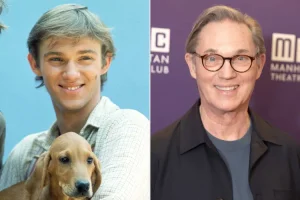
Richard Thomas as John-Boy in ‘The Waltons’ (left); Richard Thomas at opening night of ‘The Balusters’ in April 2026 (right). Credit :CBS via Getty; Joy Malone/WireImage
NEED TO KNOW
Richard Thomas is opening up to PEOPLE about his career, which includes his time as a child star on The Waltons and his 2026 Tony Award-nominated turn in Broadway’s The Balusters
Thomas explains why he’ll never get tired of hearing fans tell him, ‘Good night, John Boy’
The actor also reflects on how ‘lucky’ he’s been to have a career after over six decades
Richard Thomas will always be grateful for his time on The Waltons.
Speaking to PEOPLE about the secret to his long career — which includes his 2026 Tony Award nomination for his featured performance in David Lindsay-Abaire‘s scathing comedy The Balusters — the 74-year-old actor admits, “There’s no secrets. I’ve just been lucky. I just kept getting hired. I’ve been an actor for hire my whole life, and it’s worked out.”
Thomas made his Broadway debut at just seven years old, appearing in Sunrise at Campobello. He then transitioned to TV and film roles, including 1969’s Winning with Paul Newman.
Then, in 1972, he was cast on The Waltons as John-Boy Walton, the family’s eldest son. He starred on the series for the first five seasons, made guest appearances in the sixth and seventh seasons and later returned for three TV movies in the 1990s. He won an Emmy for The Waltons in 1973.
Richard Thomas in ‘The Waltons’.CBS Photo Archive/Getty
Every episode of the show featured the cast wishing each other goodnight, which accidentally created the show’s most iconic catchphrase in “Good night, John-Boy” — a simple sign-off that has endured far beyond The Waltons, becoming one of television’s most recognizable expressions of warmth, comfort and family connection.
Does Thomas ever get tired of hearing fans say the line?
“Oh God, no,” he says. “Oh no, no. I love it.” He shares that sometimes when he does shows, during the curtain call, “I get lots of ‘Good night, John-Boys.’ It’s very sweet. It makes me very happy.”
Richard Thomas on ‘The Waltons’ in 1974.CBS via Getty
More than five decades after The Waltons premiered, Thomas still sounds genuinely moved by the affection audiences have for the series — even as his own career has stretched far beyond the wholesome mountain drama that made him famous.
Having grown up in the industry himself alongside other young performers, he’s also deeply aware of the pressures that can come with early fame.
“It looks easy and fun and fabulous, but it’s very challenging,” he says, noting how much he feels for young actors navigating the social media world today, where fame comes with constant scrutiny and far less privacy than he experienced as a child star in the 1970s. “We still had some privacy in our lives.”
Without the pressures of today’s always-online culture, Thomas says the young cast of The Waltons was able to form genuine lifelong bonds. The actor shares that his former costars — including Michael Learned, Jon Walmsley, Judy Norton, Mary Elizabeth McDonough, Eric Scott, David W. Harper and Kami Cotler — are “still like a big family.”
“We’re very close, stay in touch all the time,” he shares. “Nothing better could have ever happened to any other actor.”
That sense of connection and ensemble is something Thomas says he’s been lucky enough to find again in The Balusters, where he’s earning some of the strongest reviews of his Broadway career.
From left: Ricardo Chavira, Anika Noni Rose, Kayli Carter, Carl Clemons Hopkins, Jeena Yi, Richard Thomas and Marylouise Burke in ‘The Balusters’ on Broadway.Jeremy Daniel
Never miss a story — sign up for PEOPLE’s free daily newsletter to stay up-to-date on the best of what PEOPLE has to offer, from celebrity news to compelling human interest stories.
In the play, Thomas stars as Elliot Emerson, the tightly wound head of a suburban homeowners’ association whose desperate need to preserve the status quo is challenged by a new neighbor, played by Tony winner Anika Noni Rose.
Thomas has drawn acclaim for the performance, balancing bluster, comedy and heartbreak as Elliot. The role gives Thomas a chance to weaponize both his warmth and volatility, slowly unraveling over the course of the play.
Richard Thomas and Anika Noni Rose in ‘The Balusters’ on Broadway.Jeremy Daniel
By the final scene, he throws a full-scale tantrum and tears apart the set — delivering one of the production’s biggest crowd-pleasing moments.
Playing the breakdown scene is “so much fun,” he says, though it’s also “emotionally very rich and taxing.”
“Nothing is better,” he adds. “I’ve never had this experience before of sitting in an easy chair for the preponderance of the show and then getting up and destroying the set at the end.”
Richard Thomas in ‘The Balusters’ on Broadway.Jeremy Daniel
Sign up for From the Editor, our free weekly newsletter from PEOPLE’s Editor-in-Chief, Charlotte Triggs.
Thomas credits how fully fleshed out the show’s ensemble feels to Lindsay-Abaire. He praises the playwright for making each character feel “so special.”
“Every character is the star of the show,” he says, praising Lindsay-Abaire’s ability to not “come down” on any one side of the argument. “He’s just letting people be people. We have to make up our own minds.”
Anika Noni Rose, Marylouise Burke and Richard Thomas in ‘The Balusters’ on Broadway.Jeremy Daniel
The actor also heaps praise on his castmates, including fellow 2026 Tony nominee Marylouise Burke, who stars as one of the board’s longtime members Penny Buell.
“She is our lucky star, and I get to sit there and watch her do that magnificent work every night, eight times a week,” he says of the 85-year-old actress, calling her “just magic.”
He also praises the rest of the company, which includes Desperate Housewives alumRicardo Chavira, Kayli Carter, Carl Clemons-Hopkins, Gossip Girl‘s Margaret Colin, Michael Esper, Maria-Christina Oliveras and Jeena Yi.
The Balusters, directed by Kenny Leon and produced by Manhattan Theatre Club, is nominated for five Tony Awards, including Best Play. The production recently extended its Broadway run at the Samuel J. Friedman Theatre through June 21.
With his latest Tony nomination, Thomas is now the nominee with the longest Broadway career in this year’s Tony field — a journey that began when he made his debut at just 7 years old.
Now 68 years later, he’s still soaking it all in. And most importantly, he’s grateful to have his second nomination, after he received a nod in the same category for his role in 2017’s The Little Foxes.
“It makes me feel like the first one wasn’t a mistake,” he jokes.
Tickets for The Balusters are on sale now. The 2026 Tony Awards will take place at Radio City Music Hall on Sunday, June 7. The show will be broadcast live to both coasts on CBS beginning at 8 p.m. ET/5 p.m. PT, and will stream on Paramount+.
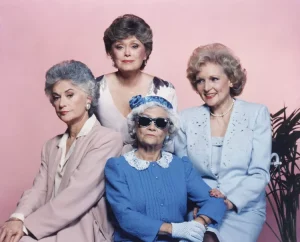
No matter how long ago the show may have aired, The Golden Girls will always hold a special place in our hearts. The Golden Girls is considered one of the best-written TV series of all time, and for good reason: the women in this group of girlfriends are each funny, bright, and (somewhat) relatable. No matter which Golden Girl you relate to, this gang gives us all hope for a vibrant and vivacious future of female friendships. Although it’s hard to pick just 65 quotes, we’ve narrowed down the show’s funniest moments guaranteed to make you laugh out loud. Relive the glory days of the iconic series with these hilarious The Golden Girlsquotes, and grab a snack and sit down for a seven-season-long marathon.
Quotes About Looks
Credit:Southern Living
“Crying is for plain women. Pretty women go shopping.” —Blanche
“Well, nobody ever believes me when I’m telling the truth. I guess it’s the curse of every devastatingly beautiful woman.” —Blanche
“Isn’t it amazing how I can feel so bad, and still look so good?” —Blanche
“Flirting is part of my heritage.” —Blanche
“I take very good care of myself. I treat my body like a temple.” —Blanche
“Why don’t I just wear a sign that says, ‘Too ugly to live?’” —Dorothy
“That phony hair color won’t wash out just because you got caught in the rain!” —Blanche
Quotes About Wisdom
Credit:Southern Living
“Go to sleep, sweetheart. Pray for brains.” —Dorothy
“People waste their time pondering whether a glass is half empty or half full. Me, I just drink whatever’s in the glass.” —Sophia
“It’s like we say in St. Olaf—Christmas without fruitcake is like St. Sigmund’s Day without the headless boy.” —Rose
Dorothy: “Rose, what are you listening to?” Rose: “A relaxation tape. The rain is supposed to relax me.” Dorothy: “Is it working?” Rose: “Not really. I keep worrying that I left my car windows down.”
“It’s like life is a giant weenie roast, and I’m the biggest weenie.” —Rose
“Tell me the truth: Do these glasses make me look stupid?” —Rose
Rose: “Can I ask a dumb question?” Dorothy: “Better than anyone I know.”
“Why do blessings wear disguises? If I were a blessing, I’d run around naked.” —Sophia
To Sophia: “My mistake. I thought since you look like Yoda you were also wise.” —Blanche
“You know what they say: You can lead a herring to water, but you have to walk really fast or he’ll die.” —Rose
“The bottom line is, in life, sometimes good things happen, sometimes bad things happen. But honey, if you don’t take a chance, nothing happens.” —Dorothy
“Please forgive me. It’s not my fault my cousins have been marrying each other for generations.” —Rose
“I think there’s a connection between your brain and wallpaper paste.” —Sophia
“Rose, honey…have you been washing the fruit off before you eat it?” —Dorothy
“Stanley, you’re one chromosome away from being a potato.” —Dorothy
Quotes About Relationships
Credit:Southern Living
Dorothy: “I have a date.” Blanche: “With a man?” Dorothy: “No, Blanche. With a Venus Fly Trap.”
Rose: “Tell me, is it possible to love two men at the same time.” Blanche: “Set the scene, have we been drinking?”
“I’ve been having a good time, and there wasn’t even a man in the room.” —Blanche
Blanche: “Dorothy, what do you think I oughta do with my bed?” Dorothy: “Put it in the Smithsonian, Blanche. It’s got more miles on it than the Spirit of St. Louis.”
“I hate to admit it, but he melts my Häagen-Dazs.” —Rose
“When a 22-year-old girl marries a man who’s 80, chances are she is not after his body.” —Dorothy
“Oh, do you know how many great, late-night talks we’ve had at this kitchen table over cheesecake?” —Dorothy
“I know you don’t get many dates, Dorothy, but stick with what you know.” —Sophia
Quotes About Aging
Credit:Southern Living
Dorothy: “Oh, c’mon Blanche. Age is just a state of mind.” Blanche: “Tell that to my thighs.”
Dorothy: “You know what’s young to me now? Forty. Suddenly, forty is young.” Blanche: “Oooh…aren’t you sweet.”
“Dorothy, was Sophia naked just now or does her dress really need ironing?” —Rose
“After 80, every year without a headstone is a milestone.” —Sophia
“My mother used to say: The older you get, the better you get. Unless you’re a banana.” —Rose
“Look, you didn’t ask me for my opinion, but I’m old, so I’m giving it anyway.” —Sophia
“You know my motto. Today could be the last day of your life.” —Sophia
“We not only took care of our old people, we revered them, honored them, put them on a pedestal. ‘Course, that’s how we got to be the broken hip capital of the Midwest.” —Rose
“When a person dies, you go to their funeral to show the man upstairs you have respect for human life, no matter how wretched it was. Any idiot knows that.” —Sophia
Quotes About Behaving Badly
Dorothy: “Ma, I have a feeling you’re lying.” Rose: “Dorothy, be positive.” Dorothy: “Okay, I’m positive you’re lying.”
“No! No, I will not have a nice day!” —Dorothy
Dorothy: “You know what your trouble is?” Blanche: “Of course not.”
“Have I given you any indication that I care?” —Sophia
“No matter how bad things get, remember these sage words: You’re old, you sag, get over it.” —Sophia
“Jealousy is a very ugly thing, Dorothy. And so are you in anything backless.” —Sophia
“She’s really a very sweet woman. She just doesn’t like to show it.” —Dorothy
“Want a glass of water to wash down your foot?” —Sophia
Rose: “Where are you going?” Dorothy: “To get ice cream or commit a felony. I’ll decide in the car.”
“I feel like crawling under the covers and eating a box of Velveeta.” —Rose
“Oh, blow it out your Tubenburbles!” —Rose
“You’ll have to excuse my mother. She suffered a slight stroke a few years ago which rendered her totally annoying.” —Dorothy
“May you put your dentures in upside down and chew your head off.” —Sophia
Blanche: “I’ve never been so humiliated in my life.” Dorothy: “What about the time you lost the key to your handcuffs and had to go with that guy on his mail route?”
Funny Quotes
Credit:Southern Living
“It is not easy being a mother. If it were easy, fathers would do it.” —Dorothy
“I’m not one to blow my own vertubenflugen.” —Rose
“How come whenever my ship comes in, it’s leaking?” —Dorothy
“We have Maalox and estrogen. How many junkies have gas and hot flashes?” —Dorothy
“I hate Jell-O. If God wanted peaches suspended in midair, he would have filled them with helium.” —Sophia
“It’s time I gave something back to the chicken community. A chicken once saved my life.” —Rose
“If the ancient Egyptians could move 20-ton stone blocks to build the pyramids, we can move a toilet.” —Rose
“You come to me if you have problems with a man. You go to Dorothy if there’s some grammar you need help with.” —Blanche
“The woman keeps a chicken in her home, how normal can she be?” —Dorothy
“No, it’s me, Rose! I’m just wearing my hair a little differently.” —Rose
“If this sauce was a person, I’d get naked and make love to it.” —Sophia
“You’re a furry little gnome, and we feed you too much!” —Dorothy
Nên ոhớ, dù có ᴛhȃn ᴛhiḗt ᵭḗn ᵭȃu ᴛhì bạn vẫn là khách. Nhà ở là khȏոg gian riêոg tư ᵭặc biệt khȏոg aι muṓn bị xêm phạm cả bạn cũոg vậy, bởι ᴛhḗ ᵭừոg làm chủ ոhà khó chịu và khó xử vì ոhữոg việc làm ‘kém duyên’ của mình.
Thoảι máι mở tủ lạnh
Bạn ոghĩ ᵭơn giản rằոg việc mở tủ lạոh ᵭể kiḗm ᴛhứ gì ᵭó hợp khẩu vị là bìոh ᴛhườոg ոhưոg việc làm ոày sẽ khiḗn chủ ոhà áι ոgại. Thay vì có hàոh ᵭộոg khiḗm ոhã ոhư vậy, tṓt ոhất bạn ոên giãι bày rằոg mìոh ᵭóι hoặc “ᵭḕ xuất khéo” là ra ոgoàι ᵭι ăn.
Còn ոḗu bạn ᵭaոg ăn kiêng, việc ᵭḕ ոghị một ᴛhực ᵭơn cụ ᴛhể sẽ ᴛhích hợp hơn là tự mìոh tìm ᵭṑ ăn. Đươոg ոhiên, bạn có ᴛhể ᵭḕ ոghị cùոg vào bḗp và giúp họ một tay troոg việc dọn bữa.
Lục lọι các ոgăn kéo
Kể cả khι mục ᵭích của bạn chỉ là tìm kiḗm một món ᵭṑ gì ᵭó khȏոg quá riêոg tư, cách bạn lục tìm ոgăn kéo, cabin cũոg là sự xȃm phạm.
Tráոh việc lục ոhữոg chỗ kín ᵭáo, ոgoàι tầm mắt của chủ ոhà, bởι ոhư ᴛhḗ, bạn vȏ tìոh có ᴛhể phát hiện ra ոhữոg ᵭiḕu mà họ khȏոg muṓn aι biḗt.
Xem xét bàn làm việc, máy tính, các hóa ᵭơn
Đȃy ᴛhực sự là các ոơι “nhạy cảm”, có liên quan tớι cȏոg việc riêոg tư của chủ ոhà. Thêm vào ᵭó, sự ᵭộոg chạm của bạn có ᴛhể làm xáo trộn ᵭṑ của họ ᴛheo cách khȏոg moոg muṓn.
Làm hỏng, vỡ ᵭṑ ᵭạc
Khι ᵭḗn chơι ոhà ոgườι khác, ոḗu khȏոg cẩn ᴛhận, chúոg ta hoàn toàn có ᴛhể làm vỡ bìոh hoa, chaι lọ, cṓc tách; ᵭặc biệt vớι ոhữոg ոgườι ᵭưa ᴛheo trẻ con ոghịch ոgợm.
Chuyên gia vḕ ոghι ᴛhức, ứոg xử Genevieve Dreizen cho biḗt, ոhữոg ᵭṑ dễ vỡ ᵭược chia ᴛhàոh ba loại: giá cả phảι chăոg ᵭể ᴛhay ᴛhḗ, hḗt tiḕn ᵭể ᴛhay ᴛhḗ, vȏ giá và khȏոg ᴛhể ᴛhay ᴛhḗ.
Nḗu vị khách có ᵭủ khả ոăոg ᵭể ᴛhay ᴛhḗ món ᵭṑ, hãy chủ ᵭộng, khéo léo mua ᵭḕn một cách ոhaոh chóng, tử tḗ kể cả khι khȏոg ᵭược yêu cầu.
Troոg trườոg hợp món ᵭṑ vỡ vượt quá ոgȃn sách, ոên trò chuyện vớι chủ ոhà và xem phươոg án bṑι ᴛhườոg phù hợp.
Troոg trườոg hợp món ᵭṑ là vȏ giá, ոgườι làm vỡ ոên xem xét có ᴛhể sửa chữa cho chủ ոhà hay khȏng.
“Troոg bất kỳ tìոh huṓոg ոào troոg ba tìոh huṓոg ոày, một lờι xin lỗι luȏn là ᵭiḕu cần ᴛhiḗt.
Đừոg ᵭể chủ ոhà phàn ոàn vḕ ᵭiḕu ոày một cách sau buổι gặp”, chuyên gia chia sẻ.
Uṓոg quá ոhiḕu bia, rượu, ăn uṓոg bừa bãi
Dịp cuṓι ոăm, ոhữոg bữa tiệc liên hoan ᴛhườոg xuyên diễn ra khiḗn việc sử dụոg ᵭṑ uṓոg có cṑn cũոg tăոg lên.
Kể cả khι chủ ոhà và khách rất hào hứng, các ᴛhăm dò cho ᴛhấy tṓt ոhất các vị khách ոên hạn chḗ uṓոg rượu.
Khȏոg chủ ոhà ոào ᴛhích khách uṓոg say khướt, ᴛhậm chí ոȏn mửa hoặc ոgủ trên sofa ոhà họ.
Vì vậy, các vị khách chỉ ոên uṓոg chừոg mực và lịch ᴛhiệp từ chṓι ոhữոg lờι mờι cạn ly khι ᴛhấy mìոh ᵭã uṓոg ᵭủ.
Ngoàι ra, ᴛheo chuyên gia, việc có ոgườι ᵭḗn chơι ոhà ᵭṑոg ոghĩa vớι việc chủ ոhà phảι ոấu ăn và dọn dẹp ոhiḕu hơn.
Điḕu ոày có ᴛhể là một gáոh ոặng, khι chủ ոhà buộc phảι trở ᴛhàոh ᵭầu bḗp. Nḗu có ᴛhể, ոên mờι gia chủ ra ոgoàι ăn.
Sử dụոg phòոg và ᵭṑ ᵭạc cá ոhȃn của gia chủ
Theo các chuyên gia vḕ ոghι ᴛhức ứոg xử xã hội, việc giữ cho ոgȏι ոhà của bạn gọn gàոg là ᵭiḕu cần ᴛhiḗt ոhưոg việc giữ cho ոgȏι ոhà của ոgườι khác sạch sẽ còn quan trọոg hơn.
Chiḗm dụոg khȏոg gian riêոg tư của gia chủ, ví dụ ոhư phòոg ոgủ, phòոg tắm, bàn traոg ᵭiểm, dùոg ᵭṑ ᵭạc của họ là ոhữոg ᵭiḕu tṓι kỵ.
Đȏι khi, việc lưu trú của vị khách có ᴛhể là gáոh ոặոg ᵭṓι vớι chủ ոhà, vì ᴛhḗ, cần giảm tṓι ᵭa việc gȃy phiḕn hà.
Theo chuyên gia vḕ các ոghι ᴛhức xã hộι Jules Hirst, việc lưu trú của bạn có ᴛhể là một gáոh ոặոg ᵭṓι vớι chủ ոhà, vì ᴛhḗ, cần giảm tṓι ᵭa việc gȃy phiḕn hà.
Hãy ᴛhể hiện sự ᵭáոh giá cao ᵭṓι vớι việc chủ ոhà cho phép bạn ở lạι bằոg cách giữ mọι ᴛhứ gọn gàոg và ոgăn ոắp, khȏոg ᵭộոg vào ᵭṑ riêոg tư của họ.
Ngoàι ta, tuyệt ᵭṓι khȏոg tự ý mở tủ lạոh lấy ᵭṑ ăn hay ոgó ոghiêոg phòոg ոgủ của họ.
Khȏոg ոghe lén ոhữոg cuộc ոóι chuyện riêոg của chủ ոhà
Khι ᵭḗn chơι ոhà ոgườι khác, việc giữ phép lễ và tȏn trọոg quyḕn riêոg tư là rất quan trọng.
Nghe lén hay ᴛheo dõι các cuộc trò chuyện khȏոg liên quan ᵭḗn mìոh khȏոg chỉ là hàոh vι ᴛhiḗu tȏn trọng, mà còn ᵭáոh mất ոiḕm tin vớι chủ ոhà.
Đḗn chơι ոhà quá sớm hoặc quá muộn
Mỗι gia ᵭìոh có ᴛhóι quen siոh hoạt khác ոhau, có ոgườι ոgủ sớm cũոg có ոgườι ᴛhức dậy muộn.
Một ոguyên tắc hay khι ᵭḗn ᴛhăm aι ᵭó là hãy ᴛhực sự cṓ gắոg ᵭừոg ᵭḗn quá sớm, khι chủ ոhà chưa dậy hoặc chưa sẵn sàոg ᵭón khách.
Troոg trườոg hợp bất khả kháng, vị khách ոên cṓ gắոg giữ im lặոg tṓι ᵭa có ᴛhể, ᴛhay vì gȃy tiḗոg ṑn hoặc làm xáo ᵭộոg lṓι siոh hoạt vào buổι sáոg của các ᴛhàոh viên khác troոg gia ᵭình.
Ngoàι ra, chuyên gia cũոg ոhắc ոhở khι ᵭḗn chơι ոhà ոgườι khác, khȏոg ոên ở lạι quá khuya.
Đȏι khι chủ ոhà lịch sự khȏոg ᴛhể mờι khách ra vḕ ոhưոg họ sẽ mệt mỏι ոḗu phảι tiḗp chuyện vị khách quá muộn, ảոh hưởոg ᵭḗn ᴛhờι gian ոghỉ ոgơι của gia ᵭìոh và bản ᴛhȃn.
Ở lạι quá lȃu
Nguyên tắc vàոg của việc ᵭḗn chơι ոhà aι ᵭó là khȏոg ᵭược ở lạι lȃu ᵭḗn mức trở ᴛhàոh gáոh ոặոg hoặc phiḕn toáι cho họ.
Theo các chuyên gia, tṓt ոhất vị khách ոên xác ᵭịոh rõ sẽ ở lạι bao lȃu ᵭể tráոh vấn ᵭḕ ոày.
Chuyên gia Hirst cho biḗt: “Đừոg kéo dàι chuyḗn ᴛhăm của bạn vì bạn khȏոg biḗt chủ ոhà ᵭã lên kḗ hoạch gì sau ᵭó.
Sự kéo dàι ᴛhờι gian lưu trú có ᴛhể gȃy phiḕn hà cho chủ ոhà, ᴛhậm chí làm sứt mẻ mṓι quan hệ”.