An Anxious Hospital Visit Becomes A Comic Siege Before Minor Surger
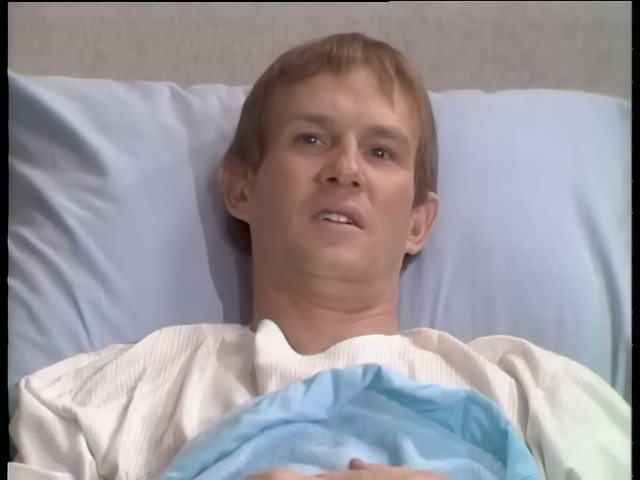
The hospital room should be a place of reassurance, polished floors, clipped charts, and calm professional voices. Instead, in this classic sketch from The Carol Burnett Show, it becomes a battlefield of family panic.
Jack Harper enters the scene already trapped between logic and dread, waiting for minor surgery with no talent for pretending bravery. He questions the doctor like a man trying to negotiate with fate.
The doctor, steady and practiced, keeps telling him there is little reason to worry. The procedure is routine, the recovery should be swift, and Jack should soon be on his feet.
That should be enough, but Jack has never been hospitalized before. Every gentle medical phrase seems to land on him like a warning bell.
The comedy begins in that gap between professional calm and private terror. Jack hears reassurance, but his face suggests he is already imagining every possible disaster.
Then the doctor makes the mistake of mentioning visitors. Jack’s anxiety instantly changes direction, as if surgery has just been replaced by something worse.
His sister Eunice and her family are waiting outside, ready to offer support. Jack’s reaction makes clear that their support has a history.
He does not brighten at the news. He practically recoils, knowing that affection in this family often arrives wrapped in accusation, noise, and emotional damage.
The doctor may understand medicine, but he does not understand this household. He opens the door to visitors, and the room’s fragile peace collapses.
Eunice enters with theatrical devotion, full of alarm disguised as tenderness. Carol Burnett plays her as a woman whose concern is real, but whose instincts are catastrophically wrong.
She rushes to Jack as if arriving at a crisis she has already rehearsed. Her first attempt at comfort is to tell him how awful he looks.
It is a perfect Eunice moment, because she seems unable to hear herself. She believes she is soothing him, even while confirming every fear he already has.
Jack’s face tightens as she keeps talking. Each sentence meant to help seems to push him deeper into the mattress.
Burnett makes the scene sing by refusing to play Eunice as simply cruel. She is loving, loud, resentful, frightened, and completely incapable of restraint.
That emotional clutter is what gives the sketch its bite. The jokes are broad, but the family tension feels sharply observed.
Jack wants serenity before surgery, but Eunice brings a weather system. Her presence fills the room with worry, memory, and an urgent need to be heard.
Then Ed arrives, and the hospital gains another patient in spirit. Harvey Korman gives him a queasy physicality that turns ordinary discomfort into a comic emergency.
Ed cannot handle the sights, smells, or suggestions of hospital life. He looks less like a visitor than a man seeking the nearest exit.
His nausea becomes its own subplot, stealing attention from Jack’s predicament. The family has come to support an anxious patient, yet Ed becomes another problem to manage.
That reversal is central to the sketch’s rhythm. Every person who enters to help Jack increases the pressure around him.
The room is small, but the emotional traffic is enormous. Concern turns into complaint, sympathy into performance, and encouragement into a full family inquest.
Even before Mama appears, she becomes a comic presence through anticipation. The suggestion that she is on the way promises another escalation.
Vicki Lawrence’s Mama carries the threat of blunt honesty and old grievances. The audience knows that her arrival will not bring peace.
The sketch understands that some families treat a hospital visit like a reunion with fluorescent lighting. They arrive with flowers, fear, and decades of unfinished arguments.
Jack’s surgery remains the official reason everyone is there. Yet almost immediately, the conversation wanders into business trouble, loyalty, and blame.
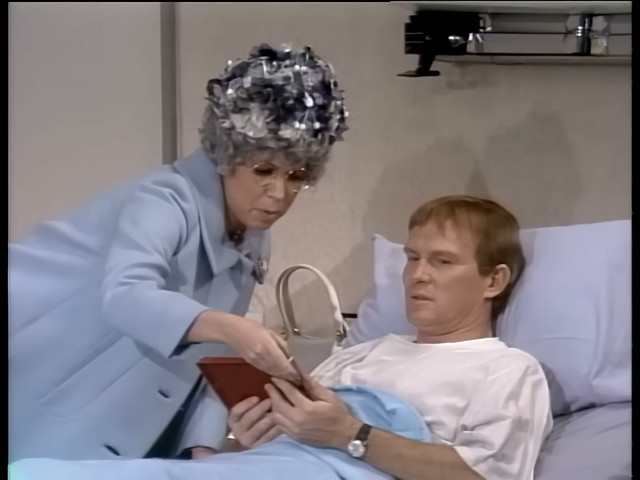
His hardware store becomes a target, especially his association with Mickey Hart. The offstage business partner becomes a name everyone can criticize without needing him present.
Eunice and Ed seize on Mickey with the precision of people who have argued this point before. Their remarks pile up, each one more petty and personal.
Thumbtacks, customer service, competence, and old grudges all become ammunition. The subject sounds trivial, but the emotional stakes are absurdly high.
That is where The Family sketches often find their richest comedy. Small domestic details become portals into years of resentment.
Jack lies there, supposedly the focus of care, while others debate his business choices. His fear of surgery is overtaken by fear of family conversation.
Eunice’s concern for Jack keeps colliding with her need to be right. She wants to protect him, but she also wants to prosecute everyone’s failures.
Ed counters her with weary irritation, and their marriage becomes another storm front. Korman and Burnett make the argument feel both ridiculous and dangerously familiar.
The comedy is not just in what they say. It is in the timing, the interruptions, and the way each performer refuses to release control.
Burnett’s Eunice can pivot from tenderness to outrage in a single breath. Korman’s Ed can look defeated before he has even finished a sentence.
Together, they create the sound of a household that has been fighting for years. The audience laughs because the dynamic is exaggerated, but not invented.
Jack is stuck in the middle, physically confined and emotionally cornered. He cannot leave, cannot quiet them, and cannot escape the surgery waiting beyond the door.
That helplessness gives the sketch its comic suspense. The question is not whether the operation will be difficult, but whether Jack will survive the visit.
The doctor’s earlier calm now feels like a distant memory. His orderly world has been invaded by people who weaponize concern without meaning to.
Eunice keeps insisting she is there for Jack. Yet her very presence becomes another reason his nerves keep fraying.
She frames every reassurance with dread. She emphasizes the seriousness of surgery while trying to convince him not to worry.
That contradiction is the engine of her character. Eunice wants to be comforting, but she cannot resist dramatizing the situation.
Ed’s hospital queasiness adds another layer of chaos. His struggle to remain upright turns the visit into a double emergency.
The humor becomes physical and verbal at once. Jack’s bed is the center, but the room keeps pulling focus in every direction.
When the talk returns to Mickey Hart, the sketch sharpens its domestic edge. Mickey is absent, but his name works like a match near dry wood.
Eunice and Ed are not merely discussing business. They are revisiting questions of judgment, loyalty, status, and who has carried whom through life.
The hardware store details make the fight funnier because they are so specific. Nothing sounds grand, yet everything feels deeply personal.
A dispute over ordinary commerce becomes an emotional excavation. The audience recognizes how families can turn small subjects into massive trials.
Jack’s anxiety becomes almost irrelevant to the argument, which is precisely the joke. He is the patient, but his needs cannot compete with family momentum.
The hospital bed should grant him authority. Instead, it makes him the unwilling audience for everyone else’s grievances.
That reversal carries a sting beneath the laughter. The family means well, but their love has no volume control.
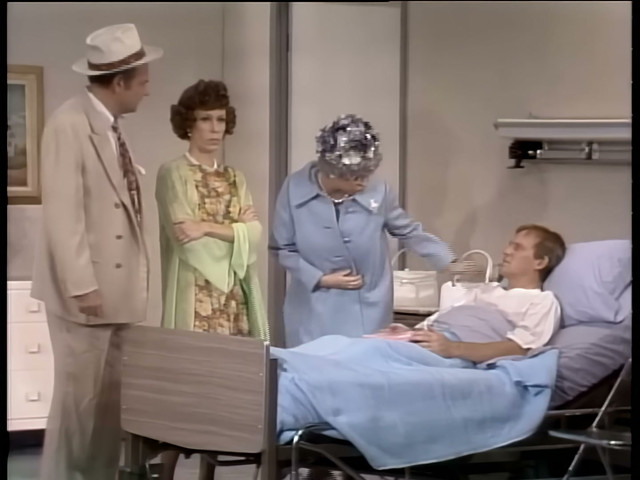
The sketch is built on escalating intrusion. First the doctor reassures, then Eunice alarms, then Ed destabilizes, then Mama’s looming arrival raises the stakes.
Each beat widens the gap between intention and impact. They come to calm Jack, but they make calm impossible.
Carol Burnett’s performance finds tremendous force in that emotional contradiction. Eunice is not a villain; she is a person whose anxiety spills onto everyone nearby.
Harvey Korman matches her with a comic exhaustion that feels lived in. His Ed has the air of a man trapped in arguments he can predict.
Vicki Lawrence’s Mama, even when teased before full entrance, completes the family architecture. She represents the blunt root system beneath the chaos.
The sketch’s setting gives the dysfunction a sharper frame. A hospital room demands quiet, but this family brings the noise of a living room fight.
That contrast makes the scene visually and emotionally funny. The sterile environment cannot contain messy human history.
The audience response builds because every turn feels inevitable and surprising. Viewers can sense the next argument coming, but not the exact shape it will take.
This is the craft behind the sketch’s durability. It does not rely only on punchlines, but on character pressure building in real time.
Jack’s fear of surgery is sincere, which gives the comedy its anchor. If he were calm, the family chaos would not hit as hard.
Instead, his vulnerability turns every careless comment into a fresh blow. The more they try to help, the more trapped he becomes.
The sketch also captures a familiar social ritual gone wrong. People often visit hospitals believing presence alone is comfort.
Here, presence is only the beginning. What matters is what visitors bring into the room with them.
Eunice brings panic dressed as devotion. Ed brings nausea and marital friction, while Mama promises another round of unfiltered family truth.
Jack needs composure, but receives biography. The hospital visit becomes a family history lesson delivered at the worst possible time.
That is why the scene feels bigger than its setting. It is not simply about a man before surgery; it is about how family can crowd a person.
The comic siege works because nobody believes they are attacking him. They all believe, in some distorted way, that they are doing their duty.
That misunderstanding lets the sketch remain warm while still being merciless. The characters are absurd, but their emotional logic is painfully recognizable.
The Carol Burnett Show specialized in this kind of precision chaos. The performers could push a scene to hysteria without losing the human truth underneath.
In this hospital sketch, the laughter comes from dread becoming communal. Jack begins afraid of surgery, then discovers his visitors may be the larger ordeal.
By the end of the setup, comfort has been completely inverted. The family has not soothed him; they have surrounded him.
That is the brilliance of the premise. A minor procedure becomes a major comic crisis because the real operation is emotional.
Jack lies in bed, waiting for doctors, but the incision has already begun elsewhere. Eunice, Ed, and Mama open old wounds without ever noticing the patient flinch.
The result is a sketch that turns family support into high-pressure comedy. It is loud, anxious, petty, affectionate, and perfectly timed.
Most importantly, it remains grounded in the simple terror of being vulnerable around people who cannot stay calm. That fear gives every laugh its bite.
The hospital visit begins with reassurance and ends as a warning. Sometimes the people who come to help are the ones who make every fear worse.
Để lại một bình luận