HT2. Teen boy drowns while saving four young children from powerful currents – lighttopix
Bryce was enjoying the trip with friends when he noticed several younger children struggling in the water. They were caught in powerful currents and needed help.
Bryce did not know the children.
He was not a trained professional arriving with special equipment.
He was simply a teenager who saw other young people in difficulty and decided to help.
According to his father, Shivy Brooks, Bryce and two friends entered the water to assist the children. During the rescue effort, Bryce himself became caught in the current.
What followed changed his family forever.
Today, Bryce is remembered by his parents, friends, community, and the organization established in his name not only for the extraordinary choice he made that day, but also for the message his family hopes others will carry forward: understanding water safety can save lives.
Who Was Bryce Brooks?

Bryce Brooks was a 16-year-old from Atlanta, Georgia, whose family described him as a caring young man who looked out for others.
He was on vacation in Pensacola, Florida, in April 2023 when he noticed four younger children struggling in the water.
According to his father, Bryce immediately recognized that the children needed assistance.
Rather than remaining on shore, he and two friends entered the water to try to help.
The situation developed rapidly.
Bryce became caught in the current himself, and a family friend, Charles Johnson II, known to the family as “Uncle Chuck,” also entered the water in an effort to assist him.
The events that followed had a profound effect on everyone who knew them.
Bryce later passed away following the incident.
His family was left facing an unimaginable loss, but they also wanted people to understand the character their son had demonstrated that afternoon.
For Shivy Brooks, Bryce’s decision reflected something deeply important about who his son was.
A Teenager Who Put Others First
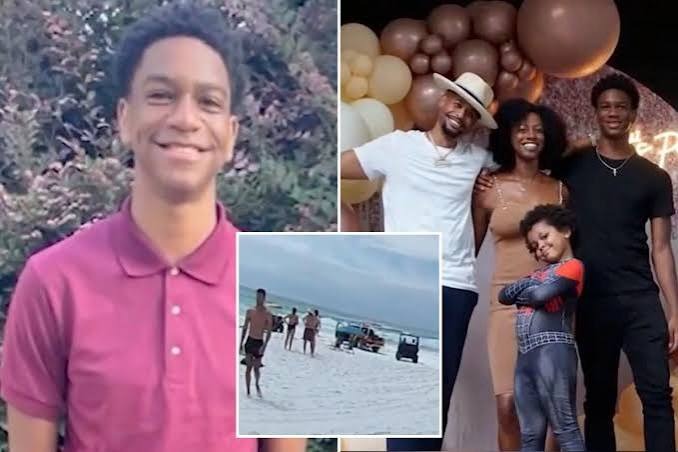
The most striking part of Bryce’s story is the fact that he did not know the children he was trying to help.
They were strangers who happened to be in the wrong place at the wrong moment.
According to his father, Bryce was calling for assistance for the younger children even while he was struggling himself.
That detail became central to how his family remembered him.
Shivy said he was incredibly proud of his son and described Bryce as a hero because of his willingness to think about others before himself.
For parents, there may be no more powerful memory than seeing their child demonstrate compassion.
Bryce’s parents have spoken about the pride they feel alongside their grief.
His mother, Crystal, also emphasized that the courage Bryce showed could never erase the family’s pain, but it gave them something meaningful to hold onto.
His actions became part of the story his family tells about him.
What Happened During the Florida Vacation?
The incident took place on April 6, 2023, in Pensacola, Florida.
According to reports, Bryce and his friends noticed four younger children being carried by a strong current.
At the time, yellow flags had reportedly been posted, indicating that water conditions required additional caution.
The area where the incident occurred did not have a lifeguard present.
Bryce and his friends entered the water to help the children.
During the rescue attempt, Bryce became caught in the current.
Charles Johnson II then went into the water to assist him.
Both Bryce and Johnson were transported to a local hospital.
Bryce was later pronounced gone after experiencing cardiac arrest.
The event left two families grieving and an entire community reflecting on the risks that can accompany unfamiliar water conditions.
Why Rip Currents Can Be So Difficult to Recognize
One of the most important lessons from Bryce’s story concerns rip currents.
Rip currents are narrow, powerful channels of water that move away from the shoreline. They can occur at beaches around the world and may not always look dangerous from the shore.
That can make them particularly challenging for inexperienced swimmers.
A common misconception is that someone caught in a rip current should simply try to swim directly back toward the beach.
Water safety organizations generally advise swimmers caught in a rip current to remain calm and avoid fighting directly against the current. If possible, they should swim parallel to the shoreline until they move out of the current before making their way back toward shore.
People who see someone struggling should also think carefully before entering the water themselves.
Calling a lifeguard or emergency services and using a flotation device from a safe position can be safer than entering unfamiliar water.
Bryce’s story demonstrates why these lessons matter.
The Difference Between Courage and Preparation
Bryce’s actions were courageous, but his story also raises an important question about rescue situations.
When someone sees another person struggling, the instinct to help can be extremely powerful.
That instinct comes from compassion.
However, water rescue can be unpredictable, particularly when currents are involved.
Even confident swimmers may find themselves in circumstances they did not anticipate.
This is why professional water-safety organizations emphasize preparation.
Knowing how to recognize dangerous conditions, understanding warning flags, learning basic swimming skills, and knowing how to contact trained rescuers can make a significant difference.
Bryce’s family has worked to turn his story into an opportunity for greater awareness.
The Bryce Brooks Foundation

Following Bryce’s passing, his family established the Bryce Brooks Foundation.
The organization’s mission centers on water safety and prevention education.
One of its goals is to provide swimming lessons for children and adults while also helping teenagers pursue lifeguard certification.
The foundation represents an important transformation of grief into community service.
Instead of allowing Bryce’s memory to remain only a painful reminder of what happened, his family chose to build something designed to help others.
The organization also provides scholarships.
According to the family’s reports, its first six scholarships helped recipients with college expenses, with one scholarship going to the son of Charles Johnson II.
That connection gives the foundation another deeply personal meaning.
Two families were changed by the same event, and the organization allows their families to continue supporting young people together.
Remembering Charles “Uncle Chuck” Johnson
Bryce was not the only person remembered for trying to help.
Charles Johnson II was a husband and father of three whom Shivy Brooks described as someone who was always looking out for others.
When Johnson saw Bryce struggling, he entered the water to assist him.
For the Brooks family, that decision reflected the character they already knew in Johnson.
Shivy described him as the kind of person who cared about those around him.
The foundation’s work has therefore become a way to honor both families.
It is a reminder that the story involves not just one teenager, but a community of people who cared deeply about helping others.
A Father’s Memories of His Son
For Shivy Brooks, remembering Bryce is both comforting and painful.
In the years following the incident, he has continued sharing memories and reflections about his son.
Social media posts have marked birthdays, family milestones, holidays, and other moments when Bryce’s absence is especially noticeable.
One of the most difficult parts of losing someone young is imagining the future they never had the opportunity to experience.
Shivy has spoken about wondering who Bryce would have become as an adult.
He has described his son as someone who made difficult things seem possible and someone who was always by his side.
These reflections reveal the personal side of the story that cannot be captured by a headline.
Bryce was not simply a teenager involved in a widely reported rescue attempt.
He was someone’s son.
He was someone’s brother.
He was a friend.
And he was a young person with an entire future ahead of him.
Why Bryce’s Story Continues to Inspire People

Stories of extraordinary courage often remain in the public memory because they reveal qualities that people admire.
Compassion is one of them.
Bryce saw children who needed assistance and chose to respond.
His family believes that decision says something fundamental about his character.
At the same time, his story can be remembered in a way that goes beyond simply celebrating bravery.
It can encourage people to learn more about water safety before an emergency occurs.
That may ultimately be one of the most meaningful ways to honor Bryce.
His family has consistently emphasized the importance of preventing similar tragedies through education, swimming instruction, and awareness.
Water Safety Can Begin Before a Vacation
A beach vacation often creates an atmosphere of relaxation.
People see the ocean, hear the waves, and may assume that familiar swimming habits are enough.
But natural water environments can change quickly.
Currents, waves, weather, tides, and underwater conditions can all affect how difficult it is to move through the water.
For families planning beach trips, learning about local conditions before entering the water is an important precaution.
Parents can also make sure children understand basic swimming rules and know what warning flags mean.
Swimming lessons can provide another important layer of preparation.
Most importantly, everyone should understand that helping another person in an emergency requires careful judgment.
The desire to help is admirable.
Knowing how to help safely is even more valuable.
The Science Behind Rip Currents
Rip currents are a natural feature of many beaches.
They typically form when waves push water toward the shore and that water needs a pathway to move back toward the ocean.
The returning flow can become concentrated in particular channels.
From the shoreline, these channels may not always be obvious.
That is why education is so important.
Scientists and water-safety experts study rip currents to better understand where they occur and how swimmers can identify them.
Some signs can include differences in water color, areas with fewer breaking waves, or visible movement away from the shore.
However, conditions vary, and beachgoers should pay attention to local safety warnings rather than relying only on visual judgment.
Turning a Difficult Memory Into a Positive Mission
The Bryce Brooks Foundation is perhaps the most lasting expression of the family’s determination to create something meaningful from their experience.
Its focus on swimming lessons and lifeguard certification reflects a practical approach.
Rather than simply asking people to remember Bryce, the foundation encourages them to learn.
That distinction matters.
A memorial can preserve someone’s name.
Education can potentially protect someone else’s future.
For Bryce’s family, both are important.
They want people to know who their son was, but they also want his story to encourage greater awareness around water.
What Bryce Brooks’ Story Teaches Us
There are several lessons that can be taken from Bryce’s story.
First, compassion can appear in unexpected places.
A teenager on vacation saw strangers in difficulty and responded with concern.
Second, natural environments deserve respect.
The ocean can look peaceful while conditions beneath the surface are much more complicated.
Third, preparation matters.
Swimming ability, awareness of warning flags, knowledge of currents, and understanding how to contact professional rescuers can all contribute to safer experiences.
Finally, Bryce’s family demonstrates how people can respond to profound grief by creating something that benefits others.
The Bryce Brooks Foundation ensures that his name remains connected not only with the event that changed his family, but also with education and opportunity.
A Legacy Built Around Helping Others
Bryce Brooks was only 16 when his story became known beyond his hometown.
He had no way of knowing how many people would eventually hear about his decision to help four younger children.
His family, however, has ensured that his memory continues to have a purpose.
Through the Bryce Brooks Foundation, swimming lessons, scholarships, and lifeguard certification opportunities have become part of that legacy.
The message is simple but powerful: awareness can matter, preparation can matter, and caring for other people matters.
Bryce’s story will always carry sadness for those who loved him.
But it can also carry gratitude for the qualities he demonstrated.
A Reflection on Human Courage and Curiosity
People are naturally drawn to stories of courage because they make us pause and consider what we might do in a difficult moment.
Bryce Brooks’ story is especially powerful because he was so young.
He saw strangers who needed help and responded instinctively.
His family has spent the years since then remembering not only what happened, but who Bryce was.
Perhaps that is the most meaningful way to understand his legacy.
He should be remembered as a teenager who cared about others, a son deeply loved by his parents, a brother and friend, and a young person whose family chose to turn a painful experience into a mission of education and water safety.
The ocean will always carry an element of unpredictability.
Human curiosity will always make us wonder what lies beyond the next wave.
But stories like Bryce’s remind us that curiosity should be accompanied by knowledge, and courage should be supported by preparation.
His family’s work ensures that his name can continue to inspire something positive: learning how to respect the water, helping others wisely, and making sure that future families can enjoy their time near the water with greater awareness and confidence.
Sources
For further reading and reliable information about Bryce Brooks, water safety, and the family’s foundation, readers can consult:
• USA Today coverage of Bryce Brooks and his family’s account
• 11Alive coverage of Bryce Brooks and Charles Johnson II
• National Weather Service information on rip currents and beach safety
• United States Lifesaving Association resources on beach and water safety
Để lại một bình luận